
Building a Partition Track Servicing Plan From Facility Failure Logs
Quick project answer
Review focus: servicing plan.
A partition track servicing plan facility failure logs framework turns everyday observations into a reviewable maintenance routine. For overseas contractors, architects, interior designers, owners and renovation teams, the value is not a list of guessed repair intervals. It is a disciplined way to record what was seen, compare it with the coordinated drawings, and route each item to the party able to confirm it. This article sets out that framework using only maintained EBUNGE product facts and clearly marked evidence limits.
Why Failure Logs Matter More Than Guesswork
Project review term: servicing plan.
Movable wall panels are individually movable, suspended from a top track, and cross the opening without a floor track. They park at a planned stacking position. Because the load path and movement path sit overhead, the most useful facility records describe what operators and maintenance staff actually observe along that route.
A log is not a diagnosis. A note that a panel “feels stiff” or that a junction “looks misaligned” is an observation, not proof of a cause. Treat every entry as a prompt for inspection against the layout drawing and the confirmed configuration.
What a Useful Log Entry Should Contain
Coordination scope: servicing plan.
Consistency matters more than volume. Ask staff to record the same fields each time so that patterns can be discussed with the installer, the designer and the owner’s facilities team.
- Date and time of the observation, plus who recorded it.
- Location described by room, opening or route segment, not by opinion.
- Route type: straight, turning or stacking, matching the reviewed layout.
- What was seen or heard, in plain descriptive language.
- Conditions at the time, such as whether panels were being moved or parked.
- Immediate action taken, including whether the panel was left parked.
- Follow-up owner and the drawing or document reference used.
The suitability of each route and parking arrangement depends on the approved layout, circulation, ceiling interfaces and operating sequence. Keep images as supporting evidence, not conclusions.
Reading the Layout Before Reading the Fault
Straight, turning and stacking routes
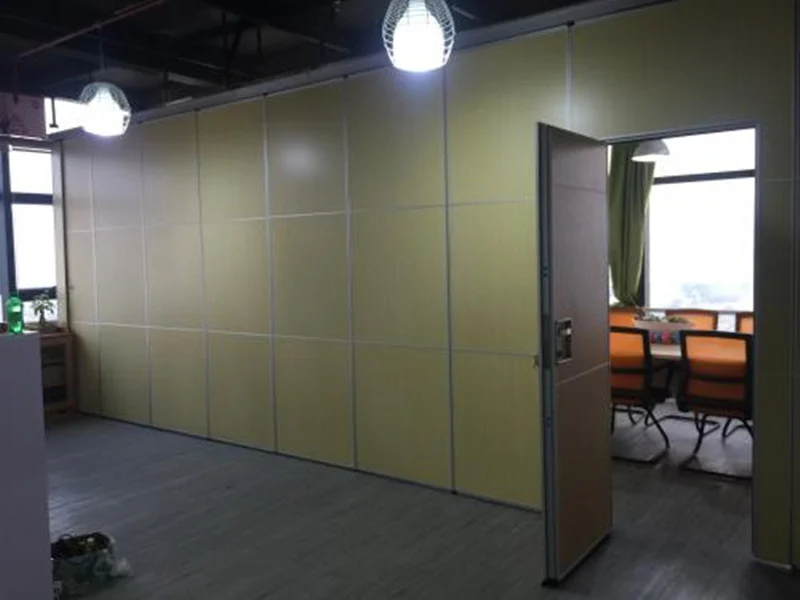
Straight, turning and stacking routes are reviewed from the layout. A log entry that says a panel “will not follow the corner” should be checked against the approved route drawing before any adjustment is discussed. The same applies at the stacking position, where panels are intended to gather.
Continuous overhead support
Every proposed movement path requires a continuous connected overhead route and project-specific support review. The exact route, junction arrangement, continuous overhead path and parking position must be confirmed from the coordinated project drawings.
A Six-Step Servicing Plan Process
- Collect existing records. Gather operator notes, handover documents and any previous inspection comments.
- Normalise the entries. Rewrite vague notes into the standard fields above without adding assumptions.
- Map each entry to the layout. Mark the route segment and parking zone on a copy of the reviewed drawing.
- Separate observation from question. List what was seen, then list what must be confirmed and by whom.
- Agree the review rhythm. Set a schedule for log review with the owner, installer and designer, without promising outcomes.
- Close the loop. Record the response, the reference document and the date, then archive the entry.
Evidence note: a servicing plan can organise observations and responsibilities. It cannot, by itself, confirm acoustic performance, structural adequacy, durability or compliance. Those require project-specific documentation and review.
Coordinating With Finishes and Pass Doors
Confirmed finish options include laminate, melamine, fabric, leather, glass and other approved surfaces. A log entry about a marked or damaged surface should name the finish and the location so the correct cleaning or repair guidance can be requested. Do not assume that a generic finish example proves cleaning compatibility.
Pass-door requirements can be discussed with the project team. Where a pass door is part of the layout, log entries should distinguish between the door element and the surrounding panels, because the review path and responsible party may differ.
Acoustic Language: Keep It Conceptual
Seals and acoustic concepts are often mentioned in facility complaints, but a log should not convert a comment into a rating. Where acoustic requirements matter, confirm them for the specific project with the responsible acoustic and design parties.
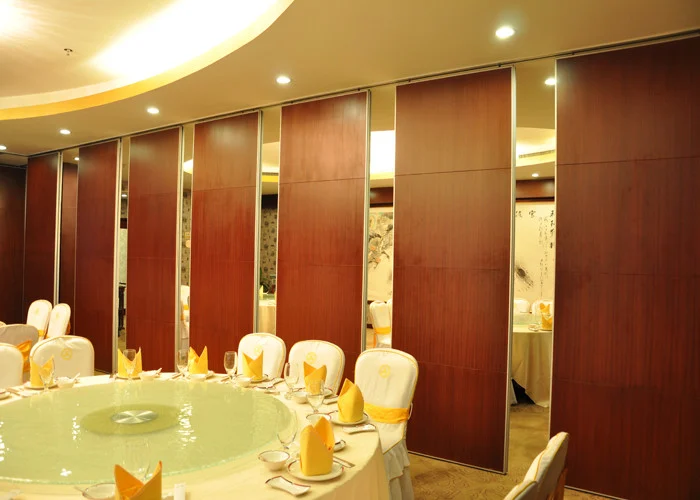
Record what was heard and where, then refer the question. Visible references can support layout discussion but do not verify hidden construction or performance.
Decision Checklist for Facility Teams
| Question | If yes | If no |
|---|---|---|
| Is the entry tied to a reviewed route segment? | Proceed to responsibility mapping | Return to the layout drawing first |
| Is the observation separated from the suspected cause? | Keep as a factual record | Rewrite without assumptions |
| Is the finish named? | Request matching care guidance | Add the finish before follow-up |
| Is a pass door involved? | Log it as a separate element | Keep the panel entry only |
| Is an acoustic claim implied? | Refer for project-specific confirmation | Keep the wording descriptive |
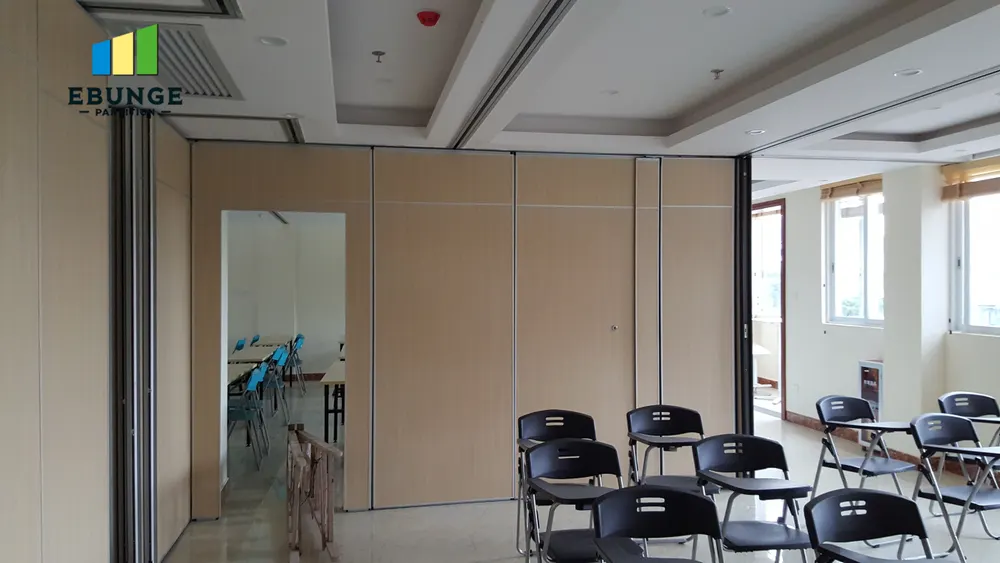
Use the movable wall product overview to align terminology, and the resources section for general planning context. Neither replaces drawing review for a specific project.
FAQ
How often should a partition track be serviced?
There is no universal interval that can be stated without project evidence. Agree a review rhythm with the owner, installer and designer based on the layout, usage pattern and documented observations.
Can failure logs prove what caused a fault?
No. Logs record observations.
Should operators adjust panels themselves?
Do not assume. Refer any adjustment question to the installer or responsible maintenance party, and record the referral in the log.
Do panels need a floor track for servicing?
EBUNGE movable panels are top-hung and cross the opening without a floor track. Servicing records should focus on the overhead route, the parking position and the reviewed layout.
Can a log entry confirm acoustic performance?
No. Acoustic requirements must be confirmed for the specific project.
What should a renovation team check first?
Start with the reviewed route drawing, the stacking position and the support review. Then align log fields and responsibilities before work begins.
Conclusion and Next Step
Keep every recommendation tied to maintained product facts and project-specific review, and confirm support, acoustic and dimensional requirements before any change is agreed.
To discuss pass-door requirements, finish options or project documentation, contact the EBUNGE team with your layout and open questions.