
Handover Pack Contents When Partition Tracks Were Set Out by Others
Quick project answer
When a partition track handover pack third party setting out arrangement is used on a project, the partition supplier is often not the party who first marked the track line. A separate contractor, setting-out engineer or site team may have positioned the route before the movable wall scope begins. The handover pack is the bridge between that earlier work and the panel installation. It should let the receiving team see what was set out, what was checked, and what still needs project-specific confirmation.
This article sets out a practical contents framework. The suitability of each route and parking arrangement depends on the approved layout, circulation, ceiling interfaces and operating sequence. Every item below should be confirmed against the application reference drawings and the responsibilities agreed in the contract.
Why a Track Handover Pack Matters on Split-Scope Projects
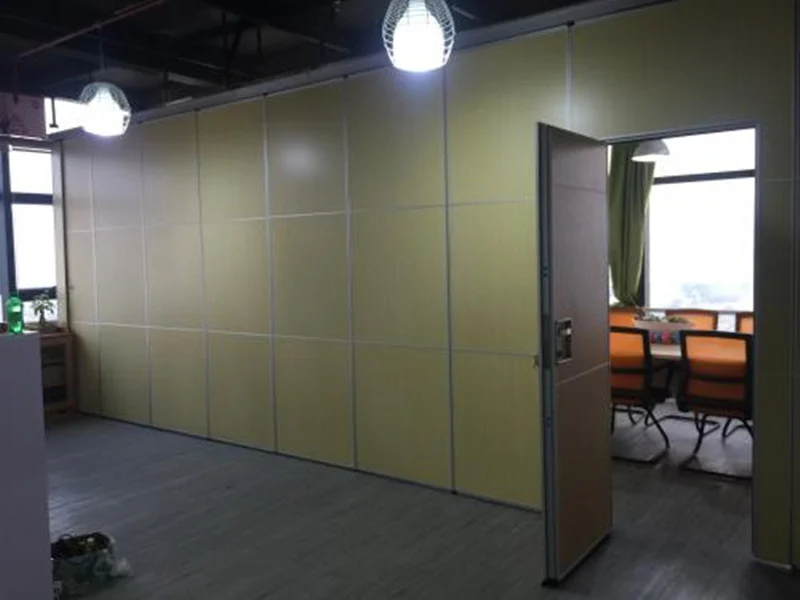
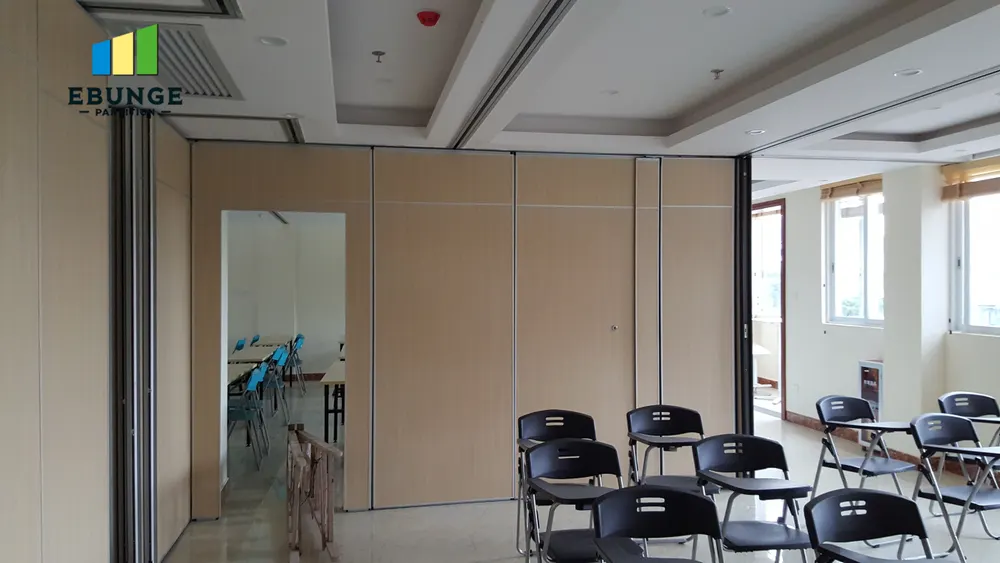
EBUNGE movable wall panels are individually movable, suspended from a top track, and cross the opening without a floor track. They park at a planned stacking position. That operating concept depends on a continuous, supported overhead route rather than a floor line. If the track route was set out by others, the receiving team needs evidence of what that route represents before panels are hung or moved.
A handover pack is not a certificate of correctness. It is a record of information transfer. Its value lies in making assumptions visible early, while adjustments are still practical to discuss.
Core Contents of the Handover Pack
The exact list should follow the project’s document control requirements. As a working baseline, the pack should be able to answer the questions below without relying on verbal site knowledge.
Drawings and setting-out records
- Current-issue layout drawings showing the track line, opening, turning points and planned stacking position.
- Setting-out records from the party who positioned the route, including revision status and date.
- Marked-up drawings showing any deviation between the design intent and what was set out.
- Interface drawings showing how the track route relates to adjacent construction.
Route and support confirmations
- Confirmation that the straight, turning and stacking routes have been reviewed from the layout.
- Confirmation of who is responsible for the supporting structure above the track.
- Notes on any unresolved items, with an owner and a target date for resolution.
Product and finish information
- Confirmed finish selections from the approved options: laminate, melamine, fabric, leather, glass and other approved surfaces.
- Pass-door requirements, if the layout calls for them, recorded for discussion with the supplier.
- Any project documentation the supplier has issued, with revision numbers.
Evidence Boundaries the Pack Should Respect
A handover pack often travels between parties who did not attend the same site meetings. That makes it easy for a drawing note to be read as a performance promise. Keep the following boundaries explicit in the document itself.
Evidence note: a setting-out drawing shows intended geometry. It does not, by itself, demonstrate structural capacity, acoustic performance, fire performance or compliance with any standard. Those matters require separate, project-specific confirmation from the responsible parties.
The handover pack should record what acoustic requirement was specified and who is confirming it, not imply a result from a drawing.
A Step-by-Step Handover Review Process
- Agree the pack owner. Name the party responsible for compiling and issuing the pack, and the party receiving it.
- Freeze the drawing revision. Confirm that all setting-out records refer to the same current layout revision.
- Walk the route on paper. Check the straight run, turning points and stacking position against the layout, and note any gaps in the described route.
- Separate facts from assumptions. Mark each item as confirmed, to be confirmed, or outside the pack’s scope.
- Record open items. Give each unresolved point an owner and a review date.
- Issue and acknowledge. Send the pack formally and obtain written acknowledgement of receipt and of any open items.
Checklist for the Receiving Team
| Check | What to look for | If missing |
|---|---|---|
| Drawing revision | One consistent revision across all records | Request reissue before review |
| Route continuity | Straight, turning and stacking routes shown as connected | Raise as an open item for drawing review |
| Support responsibility | Named party for the structure above the track | Confirm in writing before installation planning |
| Finish schedule | Selections from approved finish options | Confirm with the supplier and designer |
| Pass doors | Requirements recorded for discussion | Add to the supplier query list |
| Open items | Owner and review date for each | Do not treat the pack as complete |

Coordinating With the Partition Supplier
Once the pack is assembled, share it with the movable wall supplier alongside the layout. The supplier can then review the straight, turning and stacking routes from the layout and identify where project-specific information is still needed. This is also the point to discuss pass-door requirements and the project documentation the supplier can provide.
Keep the conversation evidence-based. Ask which items the supplier can confirm from maintained product facts, and which depend on the building structure, the specified acoustic requirement or the site conditions. Review the movable wall product range for the operating concept, and use the resources section for general planning context. Neither replaces a project drawing review.
Common Gaps and How to Close Them
Three gaps appear repeatedly in split-scope handovers. First, the setting-out record and the installation drawing are on different revisions. Second, the support responsibility above the track is assumed rather than written down. Third, finish and pass-door decisions are still open when the pack is issued.
Each gap is closable with a written query and a revised issue. None of them should be resolved by inference from a photograph or a previous project. Where a point cannot be confirmed, record it as open rather than filling the space with an assumption.
Frequently Asked Questions
Who should compile the partition track handover pack?
The party responsible for the setting-out scope should normally compile the records, but the contract should name the pack owner and the receiving party. Confirm this in writing at the start of the interface, not at handover.
Does the handover pack confirm acoustic performance?
No. It records information transfer.
What if the track route was set out differently from the drawing?
Record the deviation on a marked-up drawing, raise it as an open item, and have it reviewed against the layout before installation planning continues. Do not assume the difference is acceptable.
Can the pack include finish and pass-door information?
Yes. Record confirmed finish selections from the approved options and any pass-door requirements for discussion with the supplier. These remain project-specific decisions.
Is a verbal site walk sufficient instead of a pack?
A walk can support the review, but it does not replace a written record. Issue the pack formally and obtain acknowledgement, especially where several parties share the interface.
What should happen to unresolved items?
They should stay visible on an open-items list with an owner and a review date. A pack with unresolved items is still useful, provided it does not present them as closed.
Conclusion and Next Step
Its job is to make the setting-out record, the layout revision, the support responsibility and the open items visible to everyone who will plan or install the movable wall. That discipline protects the project from quiet assumptions.
If your team is preparing a split-scope handover, contact EBUNGE to discuss the layout, pass-door requirements and the project documentation you need. Confirm project-specific support, acoustic and dimensional requirements with the responsible parties before proceeding.