
What a Track Zone Handover File Must Record About Site Instructions
Quick answer: handover file
A track zone handover file site instruction records set is the written bridge between what a project team decided on site and what the next team will actually build, inspect or maintain. For top-hung movable partitions, that bridge matters because the overhead route, the parking position and the opening all depend on coordinated drawings rather than on assumptions made at handover.
This guide sets out what such a file should capture, how to keep instructions traceable, and where the evidence boundary sits. It is written for contractors, architects, interior designers, owners and renovation teams who need a defensible record without overstating what any document can prove.
Why the Track Zone Deserves Its Own Instruction Record
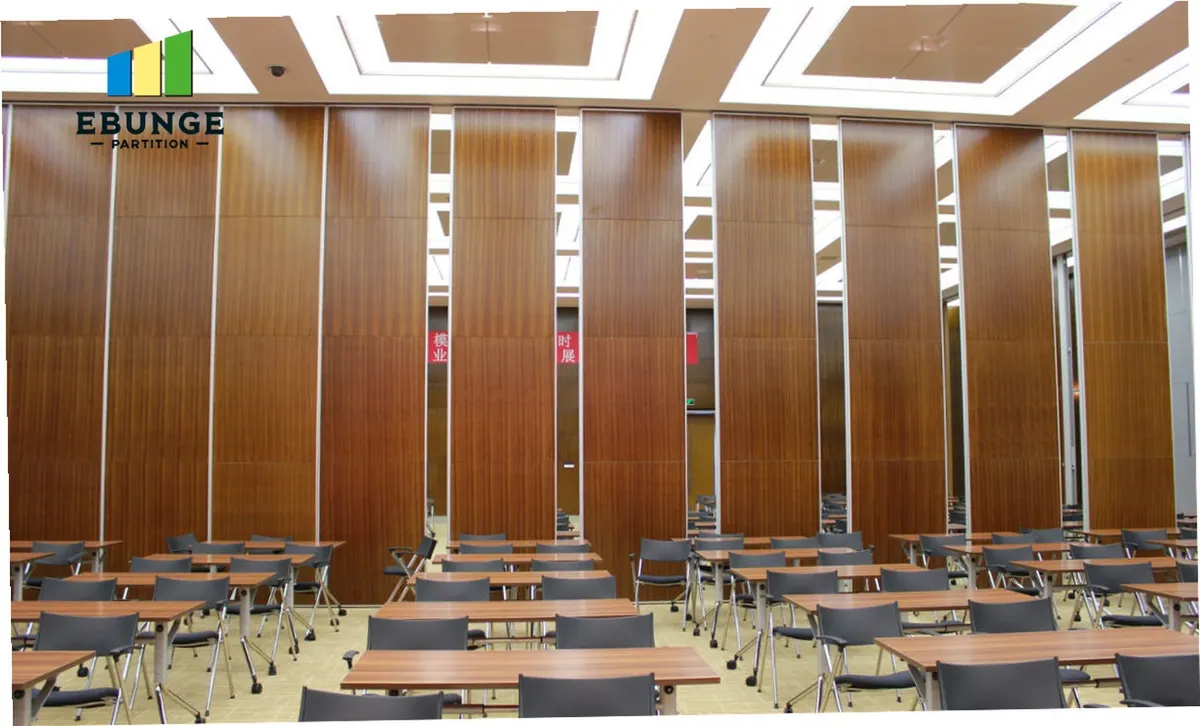
EBUNGE movable wall panels are individually movable and suspended from a top track. They cross the opening without a floor track and park at a planned stacking position. The suitability of each route and parking arrangement depends on the approved layout, circulation, ceiling interfaces and operating sequence.
A general site instruction register often treats the partition as one line item. That is rarely enough. The exact route, junction arrangement, continuous overhead path and parking position must be confirmed from the coordinated project drawings. The handover file should show which instruction changed which route, and which revision superseded it.
What the file is not
It records instructions and their status. Visible references can support layout discussion but do not verify hidden construction or performance.
Core Contents of a Track Zone Instruction Record
A useful record is short enough to read and specific enough to audit. Each entry should identify the instruction, its origin, its date, the affected drawing or zone, and its current status.

| Field | What to record | Why it matters |
|---|---|---|
| Instruction reference | Unique number and issue date | Allows later tracing and supersession checks |
| Origin | Who raised it and in what capacity | Clarifies authority without implying approval of unverified items |
| Affected zone | Track run, turning point or stacking area | Links the instruction to the reviewed layout |
| Drawing reference | Revision number of the affected drawing | Prevents work proceeding from superseded information |
| Status | Open, incorporated, superseded or closed | Shows what remains unresolved at handover |
Keep the table format consistent across the project. Panel handling and the operating sequence must be confirmed for the selected layout and project conditions.
Recording Route and Layout Instructions Clearly
Movement routes are the most common source of ambiguity. A note such as “adjust track” tells the next reader almost nothing.
Straight, turning and stacking routes
Record each route type separately where the layout includes them. Straight runs, turns and stacking approaches may be reviewed together, but they should not be merged into one vague instruction.
Continuous overhead support
Every proposed movement path requires a continuous connected overhead route and project-specific support review. The handover file should record that the support review was requested and by whom, and should reference the relevant drawing.
Pass Doors, Finishes and Other Coordinated Items
Pass-door requirements can be discussed as part of the project scope. Where a pass door is part of the agreed layout, the instruction record should note the related drawing and any open coordination points. Avoid describing a pass door as resolved unless the supporting documentation exists.
Confirmed finish options include laminate, melamine, fabric, leather, glass and other approved surfaces. Finish selections belong in the handover file where they affect the track zone, the stacking area or adjacent interfaces.
Acoustic concepts, stated carefully
Where acoustic requirements exist, record them as project requirements to be confirmed against project-specific documentation.
A Practical Handover Checklist
- Instruction register is numbered, dated and free of duplicate references.
- Each entry names the affected track zone, route or stacking area.
- Drawing revisions are cited, and superseded revisions are marked.
- Open items are listed separately from closed items.
- Pass-door and finish coordination points are referenced where relevant.
- Acoustic and support questions are recorded as requirements, not conclusions.
- Contact details for clarification are included for each open item.
Use this checklist at each handover stage rather than only at final completion. Early checks reduce the volume of unresolved instructions later.
Evidence Boundaries and Revision Control
Handover documentation coordination depends on knowing what a document can and cannot support. A site instruction records a decision or a request. It does not, by itself, verify installation quality, acoustic results or dimensional fit.
Evidence note: the handover file should distinguish recorded instructions from verified outcomes. Where verification is required, name the document or review that provides it, and mark the item open until that evidence exists.
Revision control is equally important. When an instruction changes, mark the earlier entry as superseded rather than deleting it. Deletion removes the audit trail and makes later questions harder to answer.
Working with overseas project teams
Time-zone differences make written records more important, not less. Clear references, consistent numbering and explicit status fields let a remote reviewer understand the current position without relying on memory of a call.

Frequently Asked Questions
What is a track zone handover file?
It is a project document set that records instructions, drawing references and open items relating to the overhead track zone of a movable partition, so that the next team can see what was decided and what remains unresolved.
Does the file prove acoustic performance?
No. It records requirements and instructions.
Should every site instruction be included?
Include instructions that affect the track zone, movement routes, stacking position, pass doors, finishes or interfaces. Unrelated instructions can stay in the main project register with a cross-reference.
How should superseded instructions be handled?
Mark them as superseded and keep them visible. Retaining the history supports later review and avoids ambiguity about which revision governs the work.
Can EBUNGE help clarify documentation requirements?
Pass-door requirements and project documentation can be discussed with the EBUNGE team. Project-specific support, acoustic and dimensional requirements should be confirmed against the drawings and evidence for that project.
Where can I review product information?
Review the movable partition wall product page and the resources section for maintained context, then confirm configuration details for your project.
Conclusion and Next Steps
A well-kept track zone handover file does not need to be long. It needs to be traceable, current and honest about what has been confirmed. Record each instruction against a drawing revision, separate open items from closed ones, and resist the temptation to describe unverified performance as fact.
For projects involving top-hung movable partitions, confirm support, acoustic and dimensional requirements with the relevant project specialists before work proceeds. To discuss documentation expectations for your project, contact the EBUNGE team.