
Contractor’s Daily Reset Routine for Partition Track Fixing Crews
Quick project answer
Review focus: daily reset.
A partition track fixing crew daily reset routine is not paperwork for its own sake. It is the short, repeatable check that stops yesterday’s assumptions from becoming today’s rework. On top-hung movable wall installations, the panels are individually movable, suspended from a top track, cross the opening without a floor track and park at a planned stacking position. Every one of those behaviours depends on the overhead route being continuous and correctly supported, so the reset should focus on the track line, the movement path and the parking zone before any fixing work begins.
This guide sets out a reset framework that overseas contractors, architects, interior designers, owners and renovation teams can adapt to their own site conditions. It deliberately avoids fixed times, crew numbers and performance figures, because those belong to project-specific documentation rather than a generic article. Use it as a coordination tool, then confirm the details against your own approved drawings.
Why a Daily Reset Beats a Long Morning Briefing
Project review term: daily reset.
Panel handling and the operating sequence must be confirmed for the selected layout and project conditions. The suitability of each route and parking arrangement depends on the approved layout, circulation, ceiling interfaces and operating sequence. It also creates a natural moment to catch drawing revisions, access changes or newly installed services that affect the track line.
The reset should be led by whoever holds the current drawing set, with input from the site supervisor and the trade responsible for the supporting structure. Keep it brief, but keep it documented. A signed daily check sheet is more useful than a verbal reminder when questions arise later.
The Five-Point Reset Checklist
Run the same five checks at the start of every shift. Each one maps to a confirmed product behaviour, so the checklist stays relevant as the installation progresses.
- Drawing currency: confirm the crew is working from the latest approved layout, including straight, turning and stacking routes.
- The exact route, junction arrangement, continuous overhead path and parking position must be confirmed from the coordinated project drawings.
- Parking position: verify the planned stacking location is clear, accessible and matches the coordinated layout.
- Finish protection: check that delivered panels and approved finish surfaces are protected from site traffic and dust.
- Open items: record any deviation, unanswered request for information or access restriction before work starts.

Evidence note: this checklist verifies coordination and visible site conditions. It does not confirm acoustic performance, structural capacity or dimensional suitability. Those require project-specific review of the approved drawings and supporting documentation.
Route Verification Before Any Fixing Work
Walk the straight run first
Start at the opening and walk the full straight section, checking that the intended track line is unobstructed and that the supporting structure follows it.
Then walk the turning and stacking routes
Confirm that the path from the opening to the parking position is continuous overhead and that the parking zone matches the coordinated design. If the layout shows a turn, verify it on site rather than assuming the drawing and the structure agree.
Where a route cannot be confirmed, stop and raise it. The correct response is a drawing review with the project team, not a site workaround.
Parking Zone and Finish Protection
Parking style is customized to the customer layout and project requirements, and compact stacking may be possible when the coordinated design permits it. The daily reset should therefore confirm that the parking zone is still available and has not been claimed by other trades overnight.
Finish protection deserves equal attention. Confirmed finish options include laminate, melamine, fabric, leather, glass and other approved surfaces, and each behaves differently on site. The reset should confirm that protection measures agreed for the project are still in place and that no wet trade or abrasive activity is occurring next to stored panels.
Coordination With Other Trades
Track fixing rarely happens in isolation. Ceiling, mechanical, electrical and fire-stop trades may all be working in the same zone. The reset is the moment to confirm who owns which area today and whether any activity could disturb the track line or the parking zone.

| Check | Owner | Record |
|---|---|---|
| Drawing revision confirmed | Site supervisor | Revision number and date |
| Route walked and clear | Track fixing lead | Route sections checked |
| Parking zone available | Coordinator | Zone status |
| Finish protection intact | Installation lead | Protection condition |
| Open items raised | Any crew member | Item and responsible party |
Keep the table short enough to complete honestly. A checklist that takes too long gets skipped, and a skipped checklist provides no protection.
Closing the Shift and Preparing Tomorrow’s Reset
Before leaving, the crew should record what was completed, what remains open and any change in site conditions that tomorrow’s reset must pick up.
Handover notes should reference the drawing revision in use. If a new revision arrives mid-shift, the reset should be repeated for the affected sections rather than assumed to carry over.
Documentation and Project-Specific Confirmation
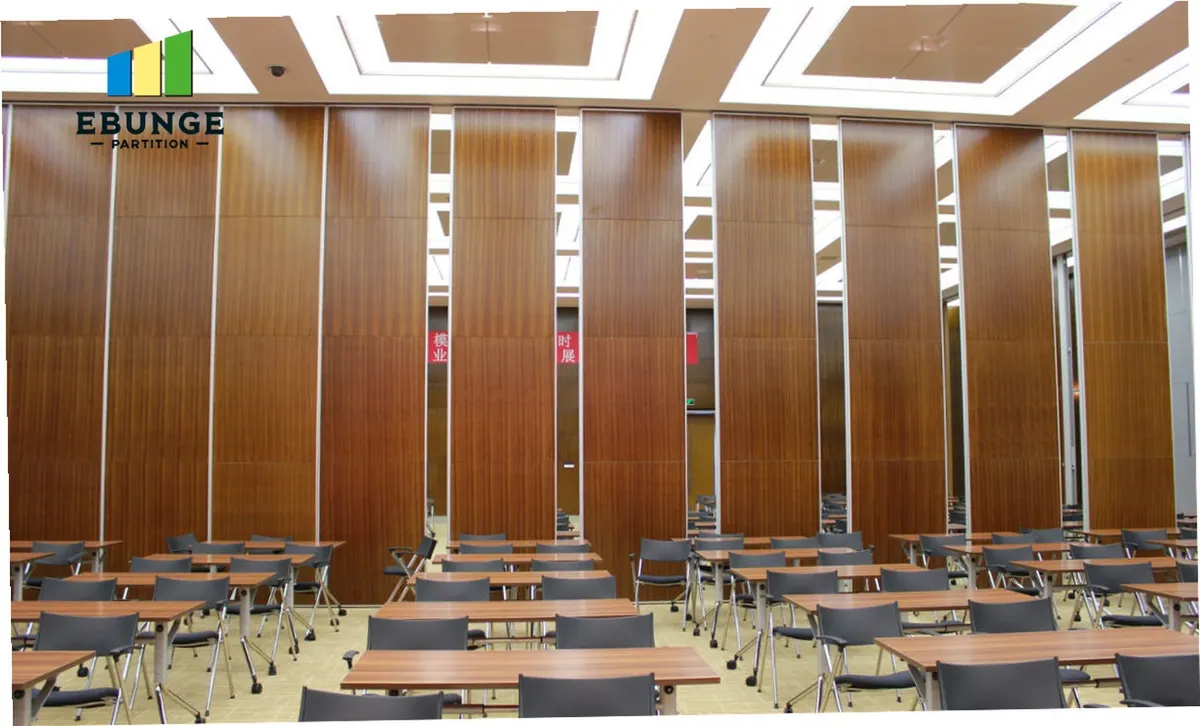
Pass-door requirements and project documentation can be discussed with the EBUNGE team, and the resources section is a sensible starting point for planning material. Review the movable wall product information alongside your own layout drawings so that the reset checklist reflects the actual configuration.
Visible references can support layout discussion but do not verify hidden construction or performance. Confirm acoustic, dimensional and support requirements for your specific project before relying on any figure.
Frequently Asked Questions
How long should the daily reset take?
Duration depends on the size of the route and the number of trades on site. The priority is that every checkpoint is genuinely verified, not that the reset finishes within a fixed time.
Who should lead the reset?
Responsibility should be named in the project documentation.
What if the parking zone is occupied by another trade?
Record the conflict and escalate it before fixing work continues. The parking position is part of the coordinated layout, so a change needs agreement rather than an improvised alternative.
Can the crew change the route on site?
No. Straight, turning and stacking routes are reviewed from the layout. Any proposed change should go back through drawing review with the project team.
Does the reset confirm acoustic performance?
No. The reset confirms coordination and visible site conditions. Acoustic and dimensional requirements need separate project-specific confirmation.
How should the reset be recorded?
Use a short signed checklist referencing the drawing revision, the route sections checked and any open items. Keep it with the project documentation.
Conclusion
A disciplined partition track fixing crew daily reset routine protects the overhead route, the parking zone and the finish surfaces that the whole installation depends on. It also gives contractors and designers a clear record of what was verified each day, without implying performance that has not been confirmed for the project.
Adapt the checklist to your layout, confirm support and acoustic requirements with your project team, and keep the drawing revision visible at every shift. To discuss pass-door requirements, documentation or layout coordination, contact the EBUNGE team.