
Stacking Pocket Corridor Threshold Turning Circle Check
Quick project answer
Review focus: turning circle check.
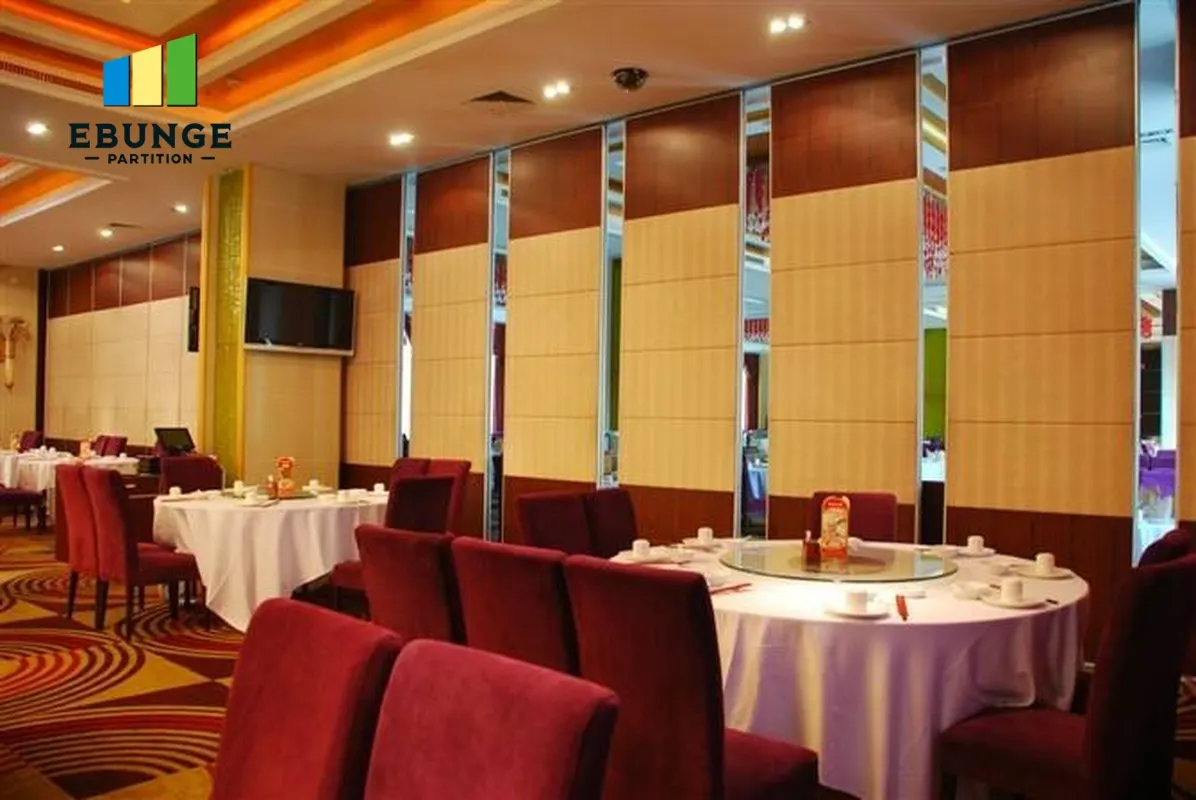
A stacking pocket corridor threshold turning circle check is a drawing-stage review of how people, carts and door leaves move where a movable wall parks and a corridor changes condition. It is not a single measurement. It is a conversation between the partition layout, the corridor geometry and the evidence your team can actually show. Because EBUNGE panels are individually movable and suspended from a top track, the floor along the partition line stays clear of a running track, which changes what the threshold review needs to cover.
Why the Pocket Threshold Deserves Its Own Review
Project review term: turning circle check.
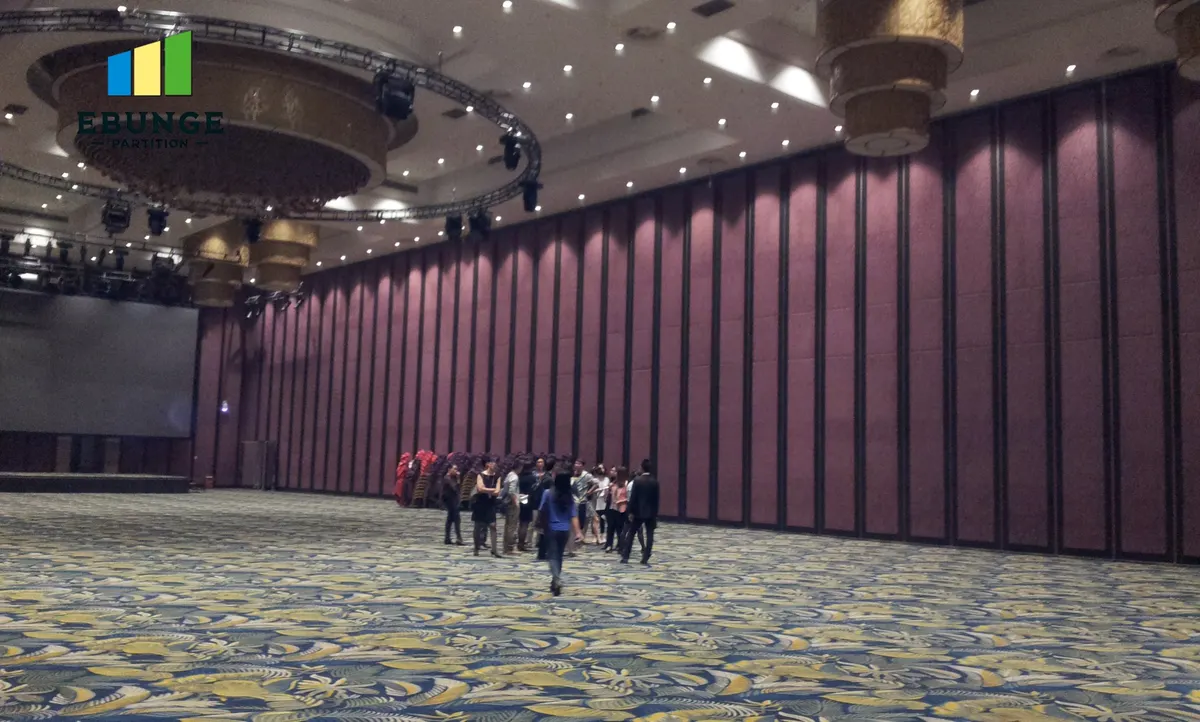
A stacking pocket is a planned parking position, not leftover space. Panels cross the opening without a floor track and gather at that position, so the pocket mouth often sits beside a corridor, a lobby edge or a change of floor finish. That junction is where circulation questions concentrate.
Treat the threshold as a zone rather than a line. The review should ask what happens in front of the pocket, beside it and beyond it when the wall is open, closed and part-way through a move. Confirm project-specific support, acoustic and dimensional requirements with the responsible parties before drawings are frozen.
What the Turning Circle Check Actually Tests
The phrase describes a method, not a certified result. Teams test whether a notional turning envelope fits the available floor area at the pocket mouth without conflicting with walls, columns, doors, furniture or the parked panels themselves.
Route logic before geometry
Straight, turning and stacking routes are reviewed from the layout. If the route from the opening to the pocket requires a turn, the turn belongs in the review. A route that reads cleanly on a plan can still fail once door swings and fixed joinery are drawn in.
Clear floor versus overhead continuity
Clear floor at the threshold does not mean the panels can travel anywhere. Every proposed movement path requires a continuous connected overhead route and project-specific support review. The turning circle check should therefore be read alongside the track route drawing, not instead of it.
A Step-by-Step Coordination Sequence
- Mark the pocket footprint, the pocket mouth and the corridor threshold on the same plan.
- Draw the open, closed and parked conditions as separate overlays.
- Plot the turning envelope at the mouth and check it against door swings, columns and fixed furniture.
- Confirm the overhead route is continuous from opening to parking position.
- Record sightline and wayfinding questions at the threshold, including signage positions.
- List every item that needs project-specific confirmation and assign an owner.
- Re-issue the drawing after each design change and re-run the check.
This sequence keeps the movable wall system context visible while the corridor design is still fluid. It also produces a traceable record of what was reviewed and when.
Decision Checklist for the Design Team
- Is the parking position shown as a planned location rather than assumed spare area?
- Does the threshold drawing show all three wall conditions?
- Are turning envelopes checked against every fixed obstruction at the mouth?
- Is the overhead route continuous and supported along its full length?
- Are pass-door requirements identified where a leaf is needed within the run?
- Are finish choices at the pocket face recorded, including laminate, melamine, fabric, leather, glass or other approved surfaces?
- Is there a named reviewer for accessibility and circulation coordination?
- Are unresolved items flagged rather than closed by assumption?
Evidence Boundaries: What Drawings Cannot Tell You
A plan view shows geometry. The suitability of each route and parking arrangement depends on the approved layout, circulation, ceiling interfaces and operating sequence. Those require matching project evidence, and a visible finish or drawing shape must not be read as proof of hidden performance.
Evidence note: the turning circle check is a coordination tool. It does not certify accessibility compliance, acoustic separation or structural adequacy. Each of those needs its own project-specific confirmation.
Where acoustics matter at the threshold, discuss the concept generically. Confirm acoustic requirements with the responsible acoustic specialist.
Comparing Review Conditions at the Pocket Mouth
| Condition | What to review | Evidence needed |
|---|---|---|
| Wall fully open | Parked panel footprint and corridor clear width | Coordinated layout drawing |
| Wall closed | Threshold junction, seals and finish transitions | Detail drawing and approved finish schedule |
| During movement | Turning envelope and route to parking position | Route drawing with continuous overhead path |
Use the table as a meeting agenda rather than a compliance statement. Each row should end with an owner and a date.
Common Coordination Gaps to Catch Early
The most frequent gap is treating the pocket as a storage afterthought. When the pocket is drawn late, the corridor threshold is often fixed first, leaving little room to adjust the mouth. Bring the pocket into the earliest layout conversation.
A second gap is separating the partition drawing from the accessibility and circulation review. Keep them in one coordination set so that turning envelopes, door swings and signage are checked together. Further planning context is available in the EBUNGE resources section.
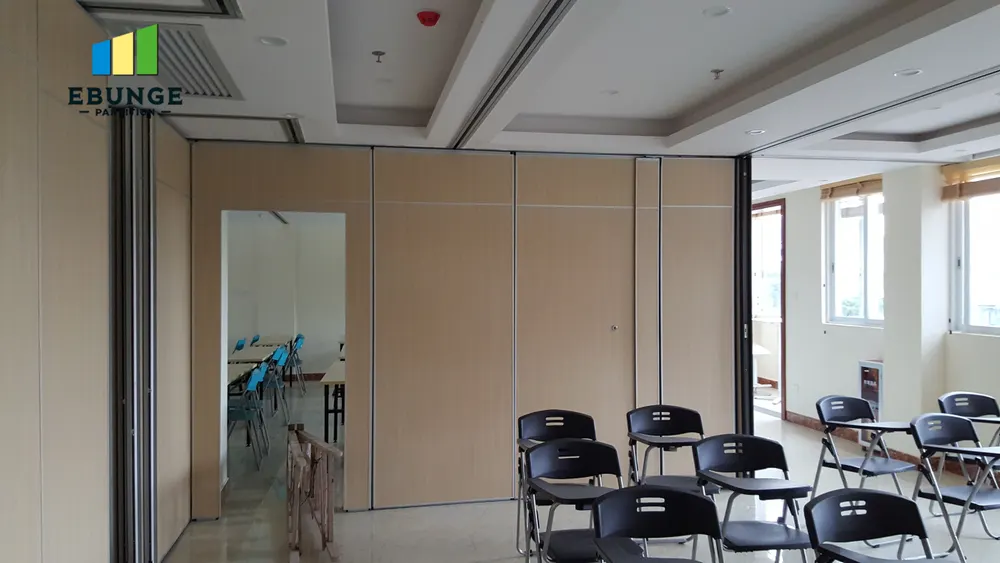
A third gap is silence on pass doors. Where a pass-door requirement exists, raise it during the same review so the threshold logic is not reopened later.
Frequently Asked Questions
Does a movable wall need a floor track at the corridor threshold?
EBUNGE movable wall panels are individually movable, suspended from a top track, and cross the opening without a floor track. The threshold review still matters because people and door leaves move across that zone.
Who should run the turning circle check?
Typically the design team coordinates it, with input from the owner and contractor. The check should be recorded in the drawing set so later changes can be re-tested.
Can the pocket be placed anywhere along the run?
Parking style is customized to the customer layout and project requirements. The position must suit the reviewed straight, turning and stacking routes and the continuous overhead route.
Does the check prove acoustic performance?
No. It is a circulation and geometry review.
Which finishes can be discussed for the pocket face?
Confirmed options include laminate, melamine, fabric, leather, glass and other approved surfaces. Suitability for a specific project should be confirmed against the approved schedule.
What documentation should accompany the review?
Project documentation can be discussed with EBUNGE. Bring layout drawings, route drawings and any pass-door requirements to the conversation.
Conclusion and Next Step
Keep every recommendation tied to maintained product facts and project-specific review rather than assumed performance.
To take the discussion further, contact EBUNGE with your layout and route drawings so the pocket, threshold and pass-door questions can be reviewed together.