
Turning Circle Check Where a Stacking Pocket Narrows a Corridor
Quick project answer
A stacking pocket corridor approach turning circle check is a drawing review, not a product selection shortcut. Where movable panels park in a pocket beside a corridor, the approach becomes a shared zone: people, trolleys and door swings all use the same floor area that the pocket occupies. The exact route, junction arrangement, continuous overhead path and parking position must be confirmed from the coordinated project drawings.
Why the Pocket Changes the Corridor Approach
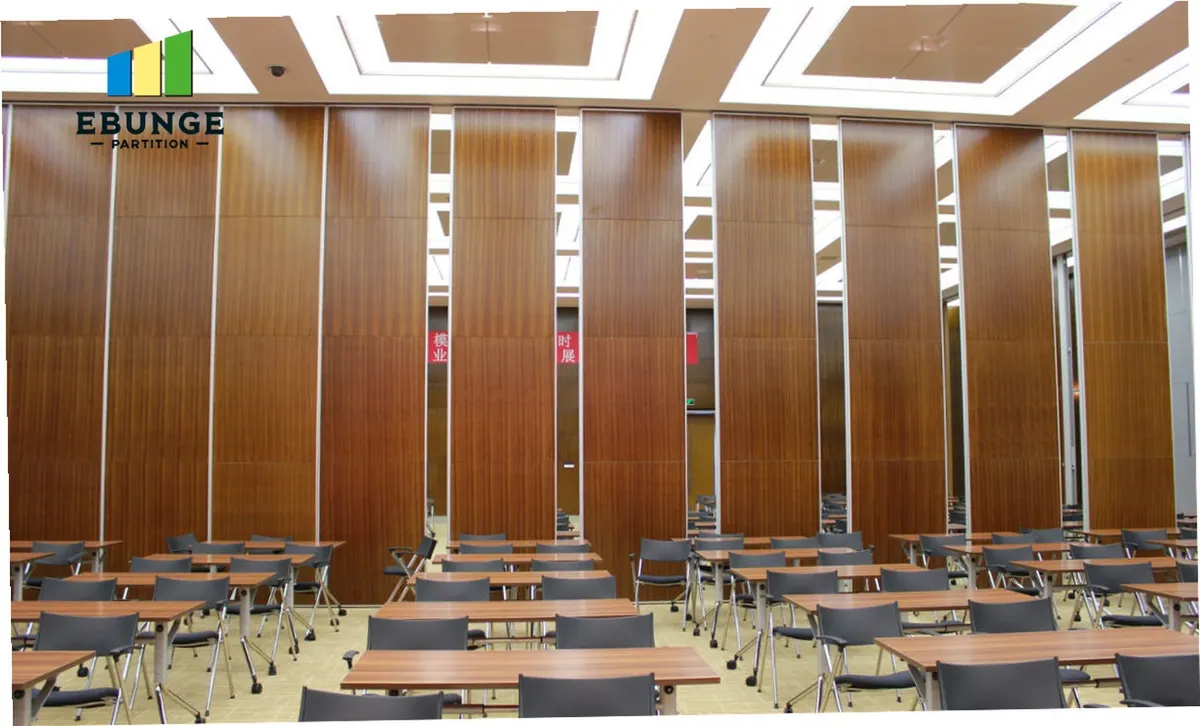
EBUNGE movable wall panels are individually movable and suspended from a top track. They cross the opening without a floor track and park at a planned stacking position. That operating model is efficient in open rooms, but it concentrates activity at the pocket mouth: panels arrive, turn and settle into the stack.
When the pocket sits beside a corridor, the approach geometry is no longer only about the opening. The route from the corridor into the pocket, and the route people take past the pocket, occupy overlapping space. A turning circle check makes that overlap visible on the drawing before finishes, doors and signage are fixed.
What the Turning Circle Check Should Show
The check is a plan-view exercise. It asks whether a turning movement can be completed within the space actually available, using the dimensions and obstructions shown on the coordinated layout. It does not certify accessibility compliance, and it does not replace the project’s own code review.
Movements to plot
- Entry from the corridor toward the pocket mouth.
- The turn from the approach line into the stacking position.
- Exit from the pocket back into the corridor.
- Passage past the pocket while panels are being moved.
Obstructions to mark
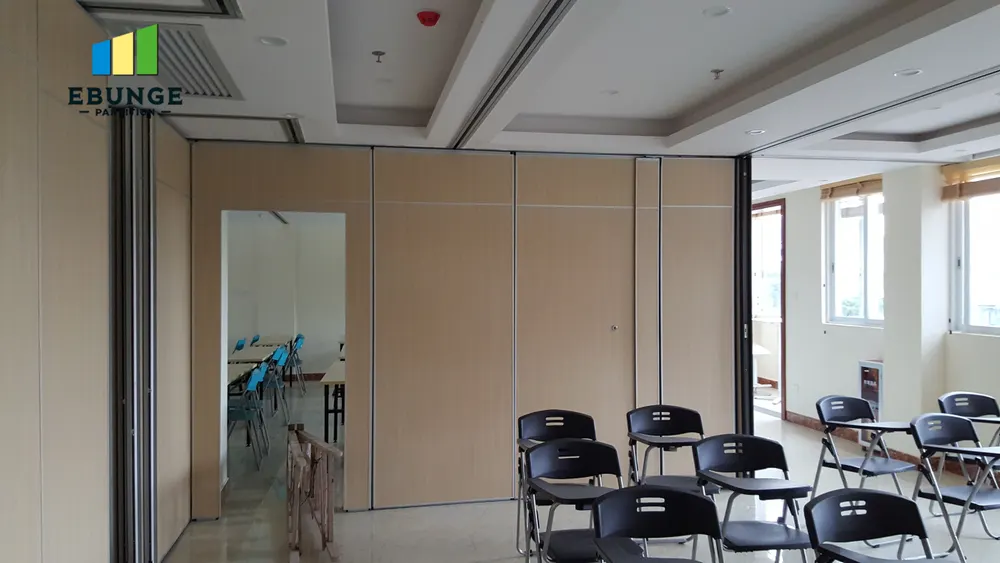
Plot door leaves, columns, risers, casework, fire equipment, signage and any fixed furniture. Mark the pocket footprint itself, including the space needed to reach the stack. If a route passes through a doorway, show the door in its open position, because a swing can consume the same floor area as the turn.
Route Types Reviewed From the Layout
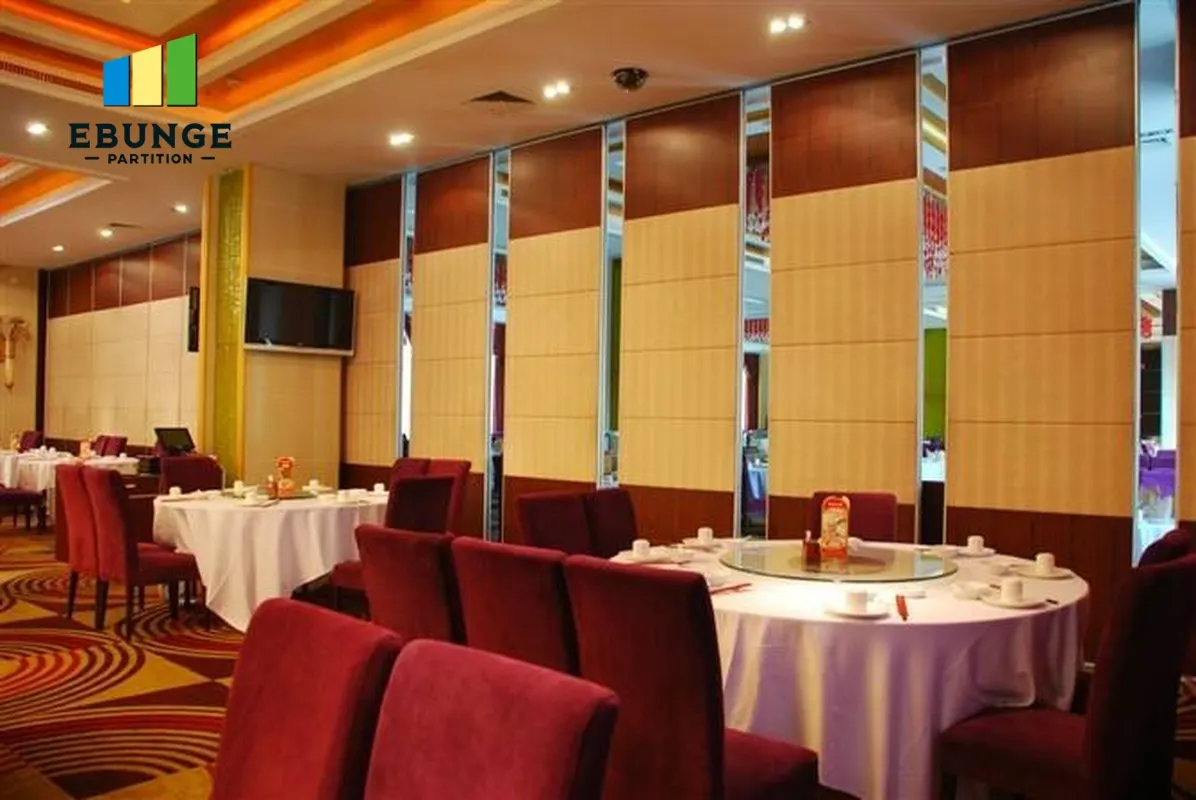
Straight, turning and stacking routes are reviewed from the layout. The suitability of each route and parking arrangement depends on the approved layout, circulation, ceiling interfaces and operating sequence. A stacking route ends with panels gathering at the planned position.
Each route type should be drawn as a continuous connected overhead path. Where the layout shows a break, the drawing needs correction before any circulation conclusion is drawn.
Evidence Boundaries for the Review
Visible geometry on a drawing shows intended movement, not measured performance. Clear width, turning space and support conditions must be confirmed against the project’s own dimensions, structure and applicable requirements.
Three boundaries matter. First, a turning circle drawn on a plan is a planning aid; it is not a compliance certificate. Second, the pocket footprint depends on the coordinated design and the parking style agreed for the project, so it should not be assumed from a similar layout. Third, acoustic intent is separate from circulation.
Coordination Steps for the Project Team
- Issue the current architectural plan with the pocket position and corridor width marked.
- Overlay the intended routes and the turning movements at the pocket mouth.
- Mark every obstruction, including door swings and fixed equipment.
- Confirm the overhead route is continuous from opening to pocket.
- Agree the parking style and pocket footprint with the supplier’s layout review.
- Record open questions, then reissue the drawing for sign-off.
This sequence keeps the movable wall system discussion tied to the drawing rather than to assumptions. It also gives the design team a clear point at which to pause if the corridor approach cannot accommodate the intended turn.
Decision Checklist Before Specification
| Check | Drawing evidence | Status |
|---|---|---|
| Pocket position fixed | Plan with pocket footprint | Confirm |
| Corridor approach clear | Dimensioned approach zone | Confirm |
| Turning movement plotted | Overlay at pocket mouth | Confirm |
| Overhead route continuous | Route line to stack | Confirm |
| Pass-door need identified | Door position on plan | Discuss |
Finish choices such as laminate, melamine, fabric, leather, glass and other approved surfaces are selected separately from this circulation review.
Where the Review Commonly Stalls
Reviews often stall when the pocket is treated as a storage detail rather than a circulation element. If the pocket is added late, the corridor approach may already be fixed by doors, services or finishes. Raising the turning circle check early gives the team room to adjust the pocket position or the approach before those decisions harden.
Another stall point is documentation. Pass-door requirements and project documentation can be discussed with the supplier, but the outcome depends on the specific layout. Teams should ask what drawing information is needed and keep a record of what has been confirmed and what remains open. The resources section is a useful starting point for planning questions.
Frequently Asked Questions
Does a turning circle check prove the corridor is accessible?
No. It is a planning exercise on the project drawing. Accessibility compliance depends on the project’s applicable requirements and must be confirmed by the responsible design professionals.
Can the pocket footprint be assumed from a similar project?
No. Parking style is customized to the customer layout and project requirements, and compact stacking may be possible when the coordinated design permits it. The footprint should be confirmed for each layout.
Do movable panels need a floor track along the corridor?
EBUNGE panels are top-hung and move without a continuous floor running track or floor hardware along the partition line. The overhead route must still be continuous and supported, and that condition is reviewed from the layout.
Can acoustic performance be read from the turning circle drawing?
No. Acoustic requirements are a separate project discussion.
What should be sent for a layout review?
Send the current plan showing the pocket position, corridor approach, obstructions and intended routes. Pass-door requirements and project documentation can then be discussed against that information.
When should the check happen in the programme?
Before the corridor approach, pocket position and adjacent doors are fixed. Earlier review leaves more room to adjust the layout without reworking finished areas.
Conclusion and Next Step
A stacking pocket corridor approach turning circle check is most useful when it stays evidence-bounded: plot the movements, mark the obstructions, confirm the continuous overhead route and record what still needs project-specific confirmation. Confirm project-specific support, acoustic and dimensional requirements with the responsible team before specification.
To take the review forward, share your layout with EBUNGE through the contact page and set out the pocket position, corridor approach and pass-door questions you need resolved.