
Handover File Gaps When Track Zones Were Value-Engineered Mid-Build
Quick answer: handover file
When a movable partition is value-engineered mid-build, the physical change is often small and the paperwork change is often invisible. That is how track zone value engineering handover file gaps appear: the installed overhead route, the parking position and the reviewed drawings no longer tell the same story. This article offers an evidence-bounded way for contractors, architects, designers, owners and renovation teams to find those gaps before handover, using only maintained product facts and project-specific drawing review.
Why the Track Zone Is the First Place Gaps Hide
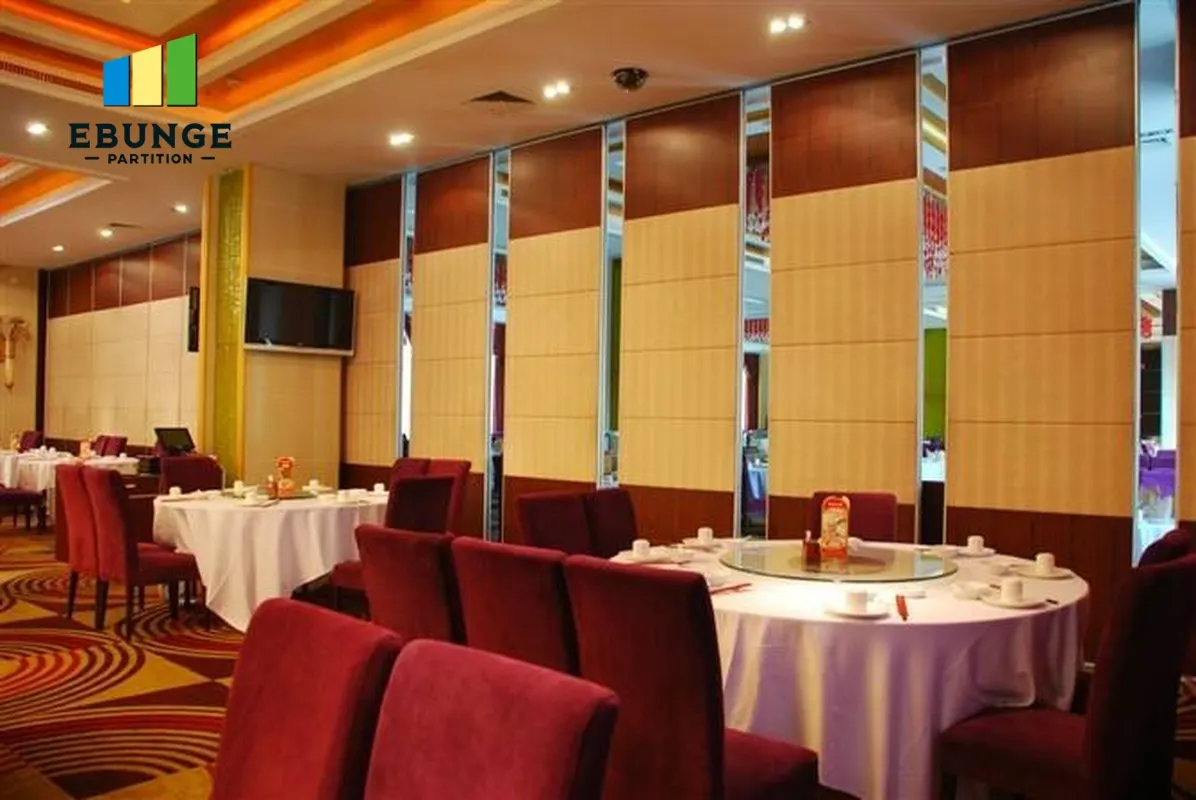
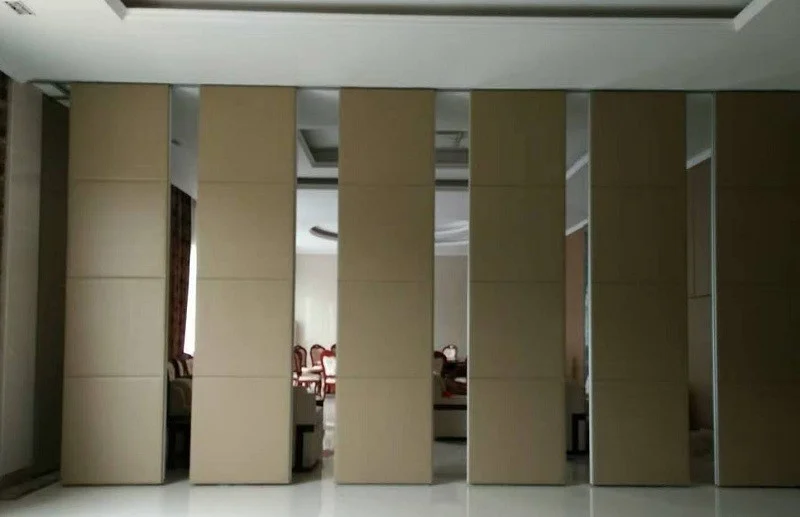
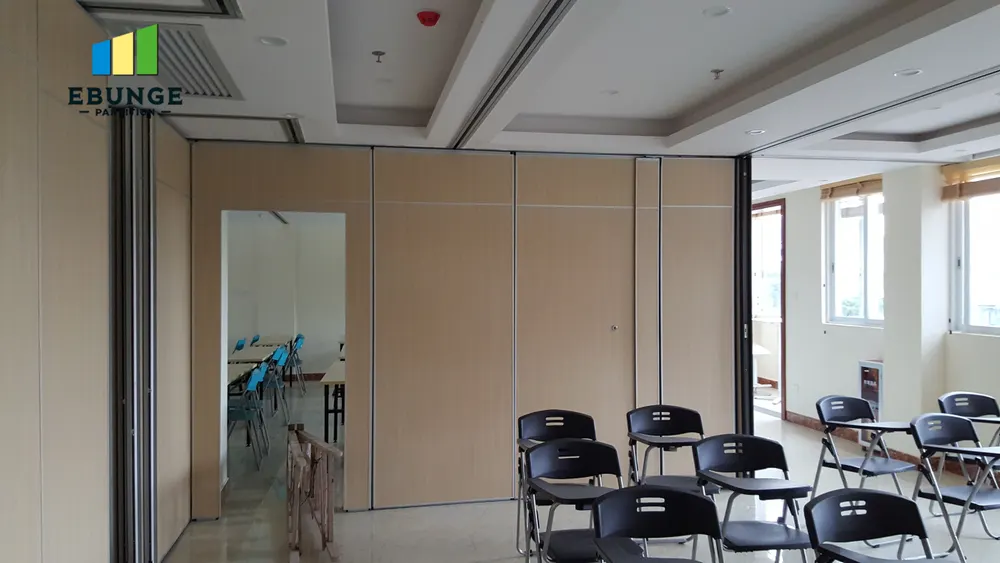
EBUNGE movable wall panels are individually movable, suspended from a top track, and cross the opening without a floor track. Each panel parks at a planned stacking position. The exact route, junction arrangement, continuous overhead path and parking position must be confirmed from the coordinated project drawings.
Value engineering usually touches the parts that look interchangeable on a drawing — the track zone, its supports, the parking area. When those elements change after the partition package was documented, the handover file can keep describing the earlier arrangement. Nothing on site necessarily looks wrong, yet the record no longer matches what was built.
What a Complete Track Zone Record Should Show
A handover file is only useful if a future reader can reconstruct the installed arrangement without guessing. For a top-hung system, that means the record should describe the route the panels actually travel and where they actually park.
Route and parking information
- The reviewed layout showing straight, turning and stacking routes as coordinated.
- The planned stacking position and how it relates to adjacent walls, openings and services.
- Confirmation that the overhead route is continuous and connected along every proposed movement path.
- Notes on any pass-door requirement agreed for the project.
Finish and interface information
Confirmed finish options include laminate, melamine, fabric, leather, glass and other approved surfaces. The handover file should record the approved finish for each panel group, plus the interfaces the track zone shares with ceilings, structure and neighbouring trades. These are documentation items, not performance evidence.
An Evidence Note Before You Rely on Any File
Drawings, photographs and finish samples show appearance and intent. They do not, by themselves, prove acoustic performance, structural capacity, fire behaviour, durability or compliance. Those conclusions require matching project-specific evidence, and any statement about them should be confirmed for the actual configuration rather than inferred from a visible shape or a generic example.
This boundary matters most after value engineering, because a substituted detail can look identical in a rendered view while changing what the documentation should say. Treat the file as a claim set to be verified, not as proof.
A Reconciliation Checklist for Mid-Build Changes
Use this checklist as a working agenda for the next coordination meeting. It is deliberately about documents and decisions, not about promising outcomes.
- Collect every revision that touched the track zone, including sketches, mark-ups and meeting notes.
- Compare the latest reviewed layout against the routes and parking position shown in the handover file.
- Confirm that straight, turning and stacking routes are each described, not only the main opening.
- Check that the continuous overhead route is documented for every proposed movement path.
- Record the approved finish per panel group and note any substitution still awaiting approval.
- List open pass-door questions and assign each to a named reviewer.
- Mark every performance or compliance statement as confirmed, pending or out of scope.
- Re-issue the file with a revision reference so later readers know which version was accepted.
Coordinating Handover Documentation Across Disciplines
Handover Documentation coordination fails quietly when each discipline keeps its own version of the track zone. The ceiling team may hold one set of levels, the partition supplier another, and the owner a third. Value engineering widens that gap because changes arrive late and travel through informal channels.
Who should sign the track zone record
Assign one owner for the consolidated record and require reviewers from design, construction and operations to acknowledge it. The goal is a single accepted description of the installed arrangement, not a collection of parallel files.
What to do when evidence is missing
Do not fill a gap with an assumption. Mark it open, state what confirmation is required, and keep the item visible until it is closed. A file that names its own uncertainties is more trustworthy than one that reads as complete.
Acoustic Language: Keep It Conceptual
The suitability of each route and parking arrangement depends on the approved layout, circulation, ceiling interfaces and operating sequence. Seals, junctions and the surrounding construction all influence how a partition behaves in service, and those interactions belong to project-specific review.
Visible references can support layout discussion but do not verify hidden construction or performance.
Reviewing the Specification After Value Engineering
A track zone value engineering handover file gaps specification review should ask three plain questions. Does the document describe the arrangement that was installed? Does it distinguish confirmed facts from pending items? Does it point a future reader to the drawings that govern?
| File element | Acceptable state at handover | Warning sign |
|---|---|---|
| Route description | Straight, turning and stacking routes described | Only the main opening is mentioned |
| Parking position | Matches the reviewed layout | Described as ‘to be decided’ |
| Finish record | Approved finish listed per panel group | Generic ‘as selected’ wording |
| Performance statements | Marked confirmed, pending or out of scope | Unqualified claims with no reference |
| Revision control | Latest accepted version identified | Multiple undated copies in circulation |
For broader planning context, the EBUNGE resources page collects buyer-facing guidance, while the movable walls product page sets out the maintained product facts this article relies on.
Frequently Asked Questions
What exactly counts as a track zone handover gap?
Any mismatch between the installed overhead route, parking position or approved finishes and the documentation issued at handover. It can be a missing drawing, an outdated revision or an unrecorded decision.
Can a value-engineered track zone still meet the original design intent?
That depends on the specific change and must be confirmed through project-specific drawing review. This article cannot certify equivalence; it only helps you document what was decided and what remains open.
Do movable partitions need a floor track?
EBUNGE movable wall panels are top-hung and cross the opening without a continuous floor running track or floor hardware along the partition line.
Can the file simply state an acoustic rating?
Only where matching evidence exists for the actual configuration.
How should pass-door questions be handled at handover?
Pass-door requirements can be discussed with EBUNGE and should be recorded as agreed or explicitly open. Leaving them unmentioned is itself a documentation gap.
Who should we contact about a specific track zone layout?
Share the current layout and revision history through the EBUNGE contact page so the route, parking and documentation questions can be reviewed against your project.
Conclusion: Close the Record, Not Just the Wall
Track zone value engineering handover file gaps are rarely dramatic, which is why they survive to handover. Confirm project-specific support, acoustic and dimensional requirements with the responsible reviewers before acceptance.
If your team is preparing a handover and the track zone changed mid-build, contact EBUNGE to discuss the layout, pass-door requirements and project documentation.