
Compare Bidder Track Interface Exclusions in a Tender Review
Quick project answer
Review focus: track interface.
To compare bidder track interface exclusions tender review submissions fairly, you need more than a price column. Movable wall panels are individually movable, suspended from a top track, cross the opening without a floor track and park at a planned stacking position. Each of those facts creates an interface with the building structure, and each bidder may draw the boundary of its scope in a different place. The purpose of this review is to make those boundaries visible and comparable before award.
Why Track Interface Exclusions Decide More Than Price
Project review term: track interface.
The top track carries the panels and defines the route they travel. If a bidder excludes the supporting structure above the track, the fixing method, the coordination with other trades or the preparation of the opening, the apparent lowest bid may not describe the same physical installation as the others.
Exclusions are not automatically a problem. A clear exclusion tells you who is responsible. The risk lies in exclusions that are vague, inconsistent between bidders or silent on a drawing that shows a different assumption. Your review should convert every exclusion into a question with a drawing reference and a named responsible party.
Evidence note: this article offers a review framework only. It does not confirm structural capacity, acoustic performance, dimensions, loads or installation outcomes for any project. Those require project-specific drawings and confirmation.
Build a Common Baseline Before Reading Any Bid
Coordination scope: track interface.
Comparing exclusions only works when all bidders respond to the same baseline. Issue the current architectural layout, the intended opening positions and the planned parking location with the tender, and state that bidders must describe their assumptions where the drawings are incomplete.
Ask each bidder to identify the route type it has priced: straight, turning or stacking. These routes are reviewed from the layout, so a bidder working from an older drawing may exclude work that the current plan requires. Record which drawing revision each bidder used.
A Seven-Step Review Process for Track Exclusions
Checklist focus: track interface.
- Collect every bidder’s exclusion list and convert it into a single comparison sheet.
- Mark each exclusion against the drawing revision it references.
- Identify which party is named as responsible for the excluded item.
- Flag exclusions that affect the continuous overhead route.
- Flag exclusions that affect the planned parking position or stacking arrangement.
- Send identical clarification questions to all bidders so answers remain comparable.
- Re-score bids only after written answers are received and logged.
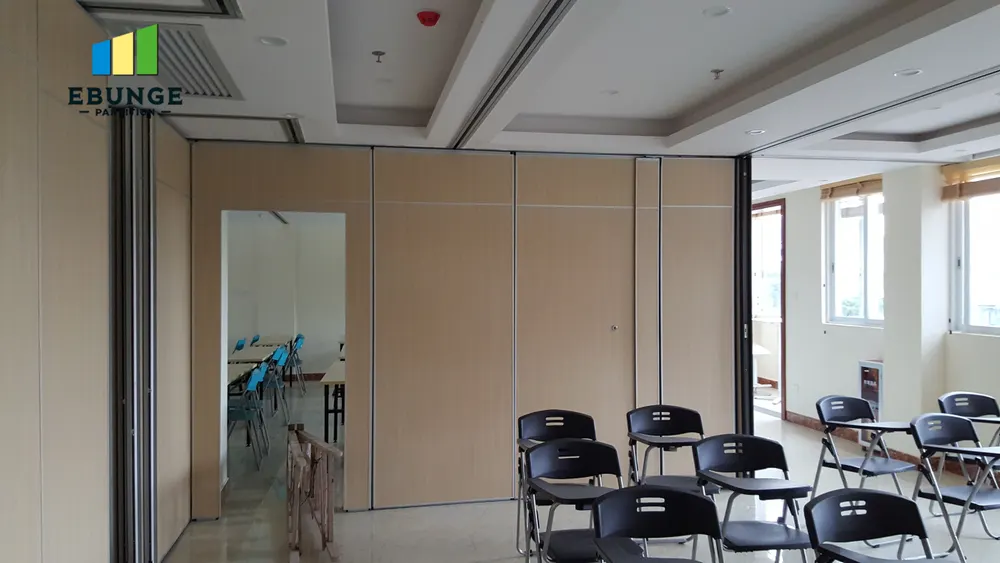
This sequence keeps the review factual. It also prevents a late verbal clarification from one bidder becoming an invisible advantage over the others.
Compare Exclusions by Interface Category
The suitability of each route and parking arrangement depends on the approved layout, circulation, ceiling interfaces and operating sequence. The table below is a review aid, not a statement of what any bidder must exclude.
| Interface category | What to look for in each bid | Evidence to request |
|---|---|---|
| Overhead route | Whether the bidder has priced a continuous connected route for the full travel path | Marked-up plan showing the route and any turning points |
| Support structure | Who is responsible for the structure above the track and its coordination | Referenced structural drawings and a written scope boundary |
| Parking position | Whether the planned stacking location is included and coordinated | Layout extract showing the parking zone and its clearance |
| Floor line | Confirmation that no continuous floor track is proposed along the partition line | Section drawing and a written statement of the system type |
| Finishes | Which finish options are included and which are excluded | Finish schedule referencing approved surfaces |
| Pass doors | Whether pass-door requirements are included, excluded or to be discussed | Written clarification against the door schedule |
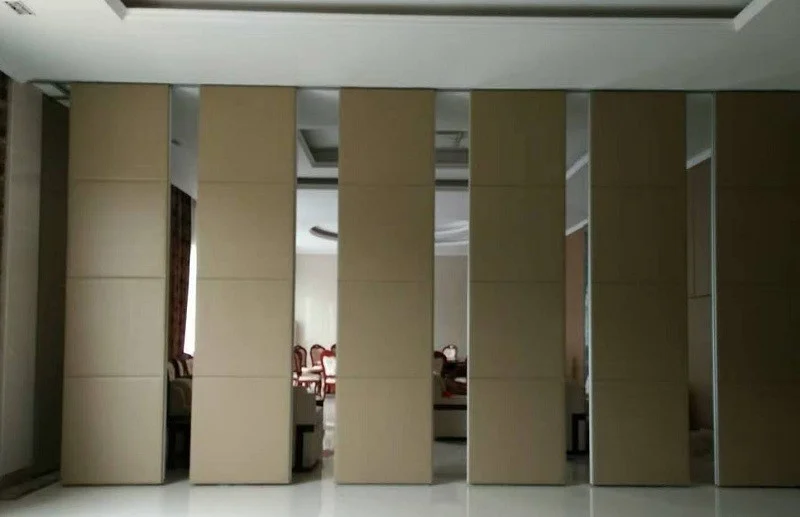
Do not infer hidden performance from a drawing or a finish sample.
Read the Wording of Each Exclusion Carefully
Absolute exclusions versus conditional exclusions
An absolute exclusion removes an item from the bid entirely. A conditional exclusion depends on a site condition or another trade. Conditional wording needs a defined trigger, otherwise it becomes an open cost at a later stage.
Silence is not agreement
If a bidder says nothing about the support structure above the track, do not assume it is included. Ask directly and require a written answer that references the drawing.
Separate product scope from installation scope
Some bids describe the panels and track but leave installation coordination to others. Others include coordination but exclude preparation by other trades. Both can be valid, but they are not directly comparable until the boundary is written down.
Use a Decision Checklist Before Award
- Every bidder has priced the same drawing revision.
- Each bid states whether the route is straight, turning or stacking.
- The continuous overhead route is shown on a marked-up plan.
- Responsibility for the structure above the track is named in writing.
- The parking position is identified and coordinated with the layout.
- Finish options are listed against an approved schedule.
- Pass-door requirements are confirmed as included, excluded or to be discussed.
- All clarifications were sent to every bidder and answered in writing.
Where an item remains unresolved, record it as an open point rather than filling the gap with an assumption. Review the movable wall systems overview and the technical resources for general product context before finalising questions.
Handle Acoustic and Sealing Language With Care
Bidders may describe seals and acoustic concepts in different ways. Ask each bidder to state what its acoustic statement is based on and which project conditions it assumes.
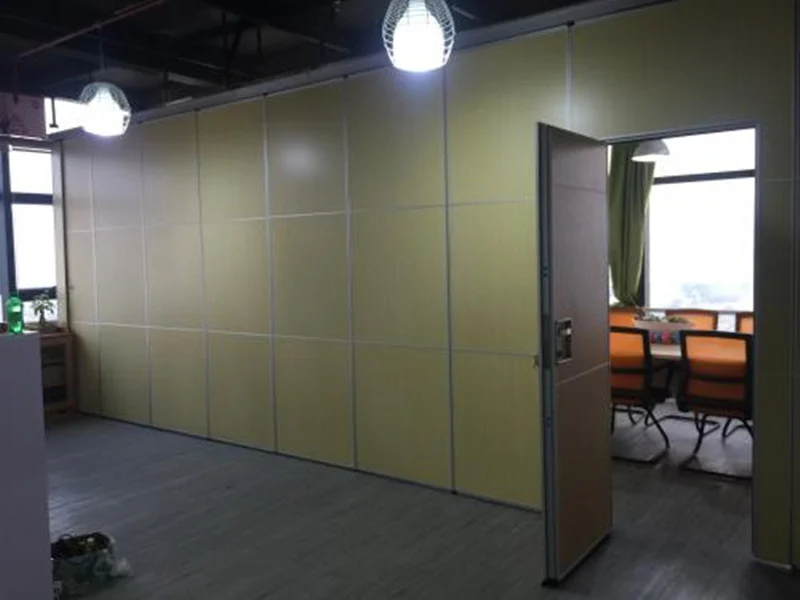
Confirm acoustic requirements separately with the project team.
Document the Outcome of the Review
Close the review with a short record: the baseline drawings, the clarification questions, the written answers and the final scope boundary for each bidder.
If the review reveals that the layout itself needs adjustment, revisit the route and parking assumptions before reissuing the tender. A revised layout may change which exclusions are relevant.
Frequently Asked Questions
What does track interface exclusion mean in a movable wall tender?
It describes work related to the top track and its connections that a bidder has left outside its scope, such as supporting structure or coordination with other trades. The exact boundary must be confirmed in writing for each project.
Should I reject a bid that contains exclusions?
Not automatically. Exclusions can be legitimate. The review should test whether they are clear, consistent with the drawings and comparable with other bids.
How do I compare bids that used different drawing revisions?
Ask each bidder to re-state its scope against the current revision, or record the difference explicitly. Comparing bids based on different layouts is not a like-for-like exercise.
Can a bidder leave the parking position out of scope?
Parking is planned from the layout, so the position should be identified in the tender documents. If a bidder excludes it, ask for a written clarification and record the answer.
Do I need to confirm acoustic performance during tender review?
Acoustic requirements should be confirmed with the project team and supported by project-specific evidence. A tender review should not convert a generic statement into a performance promise.
What should the final comparison sheet contain?
It should list each exclusion, the drawing reference, the responsible party, the clarification question and the written answer. Keep it with the tender record.
Conclusion and Next Step
To compare bidder track interface exclusions tender review work properly, treat every exclusion as a scope statement that needs a drawing reference and a named owner. Build a common baseline, group exclusions by interface, ask identical questions and record the answers. Confirm project-specific support, acoustic and dimensional requirements with your project team before award.
If you are preparing a tender and need to discuss pass-door requirements, finish options or project documentation, contact the EBUNGE team with your layout and drawing revision so the conversation starts from the same baseline.