
Quick project answer
Review focus: tender evaluation matrix.
For project teams, tender evaluation matrix partition track interfaces should be reviewed against the opening, ceiling interface, operating sequence and approved finish requirements. A tender evaluation matrix for partition track interfaces helps project teams compare submissions on the same evidence base instead of on presentation quality. The matrix should translate the drawing set, the specification, and the interface responsibilities into scored criteria that bidders can answer consistently. For movable walls, the interface is where the top track, the opening, the parking position, and the surrounding structure meet. Because those conditions are project-specific, the matrix must separate confirmed product facts from items that require drawing review and written confirmation.
This guide is written for overseas contractors, architects, interior designers, owners, renovation teams, distributors, and construction teams who need a repeatable review method. It does not replace engineering review, acoustic design, or local code checks. The suitability of each route and parking arrangement depends on the approved layout, circulation, ceiling interfaces and operating sequence.
Why Track Interfaces Deserve Their Own Evaluation Section
Project review term: tender evaluation matrix.
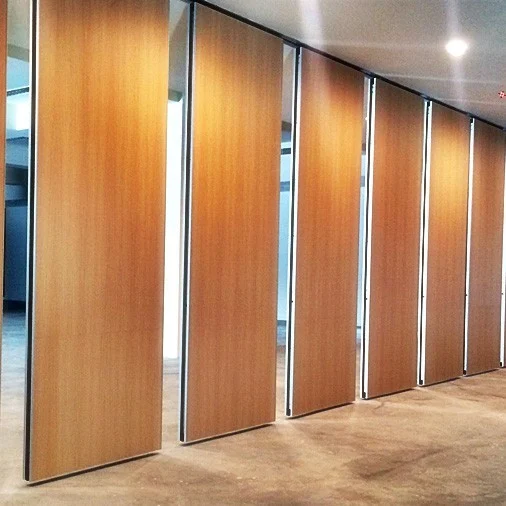
Many tender templates treat movable partitions as a single line item. That approach hides the interface risk. A top-hung movable partition is suspended from a top track, crosses the opening without a floor track, and parks at a planned stacking position. The track route, the support condition above it, and the parking zone all interact with the base building.
If the matrix does not isolate these items, bidders may price different scopes without saying so. One submission may assume a continuous overhead route; another may leave the route to others. The evaluation matrix should force each bidder to state assumptions in writing.
Separate product scope from interface scope
Product scope covers the panels, finishes, and operating hardware described in the confirmed offer. Interface scope covers the track route, the support structure, the opening dimensions, and the parking area. Keeping these separate prevents a low product price from hiding an unclear interface price.
Record what is confirmed and what is not
Confirmed finish options include laminate, melamine, fabric, leather, glass, and other approved surfaces. Pass-door requirements and project documentation can be discussed.
Define the Evidence Standard Before Scoring
Coordination scope: tender evaluation matrix.
An evaluation matrix is only as good as its evidence rules. Before opening bids, agree on what counts as acceptable proof for each criterion. This protects the team from comparing a written commitment against a marketing statement.
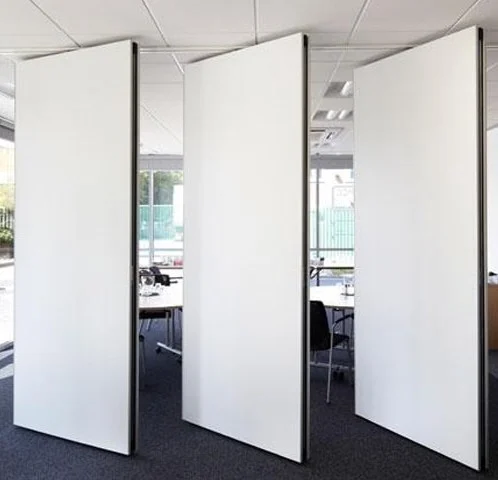
Evidence note: a visible finish, a photograph, or a generic drawing does not prove acoustic performance, structural capacity, or cleaning compatibility. Those items require matching project evidence.
Use three evidence levels
- Confirmed: the bidder states a fact that matches maintained product information and the project drawing set.
- To be confirmed: the bidder identifies a project-specific item that needs drawing review, support review, or acoustic review.
Score confirmed items highest, to-be-confirmed items neutrally, and unsupported items as a clarification request rather than a rejection.
Build the Matrix Criteria Step by Step
Checklist focus: tender evaluation matrix.
A useful matrix has a small number of weighted criteria. Too many criteria dilute the review; too few hide interface risk. The following sequence works for most flexible-space tenders.
Step 1: Confirm the movement route
Ask each bidder to describe the straight, turning, and stacking routes from the layout. The matrix should score whether the bidder has reviewed the route and identified where the overhead path must be continuous and supported.
Step 2: Confirm the parking strategy
Parking style is customized to the customer layout and project requirements and may support compact stacking when the coordinated design permits it. Score whether the bidder has matched the parking position to the available space.
Step 3: Confirm finish and pass-door scope
Score whether the bidder has listed finishes from the approved options and has addressed pass-door requirements in writing.
Step 4: Confirm documentation deliverables
Score the drawing, schedule, and coordination documents the bidder will provide. Project documentation can be discussed, so the matrix should state what is expected at tender stage.
Compact Comparison Table for Scoring
| Criterion | What to look for | Evidence level |
|---|---|---|
| Track route | Straight, turning, and stacking paths reviewed from the layout | Confirmed or to be confirmed |
| Support interface | Overhead support condition identified for project review | To be confirmed |
| Parking position | Stacking zone matched to the coordinated design | Confirmed or to be confirmed |
| Finish scope | Finishes selected from approved options | Confirmed |
| Pass-door scope | Requirement stated and discussed | Confirmed or to be confirmed |
| Acoustic concept | STC or Rw referenced as a rating concept, not a decibel count | To be confirmed |
Any acoustic target needs project-specific confirmation.
Weighting and Clarification Rules
Weights should reflect project priorities, not personal preference. A hospital, school, hotel, office, or conference venue may weight the same criteria differently. The matrix should record the weighting rationale so the decision is auditable.
Use clarification rounds, not assumptions
When a bidder leaves an interface item open, issue a clarification request. Do not fill the gap with an assumption. The clarification response becomes part of the scored record.
Keep commercial and technical scores separate
Technical scoring should be completed before commercial comparison where possible. This reduces the risk that a low price influences the technical judgment.
Common Pitfalls in Track Interface Tenders
Teams often accept a bidder’s statement that the track is included without checking the route. Both mistakes weaken the matrix.
Another pitfall is comparing submissions that use different assumptions about the parking zone. The matrix should require each bidder to mark the parking position on the layout. If the position is not marked, the submission is incomplete for evaluation.
Do not infer hidden performance
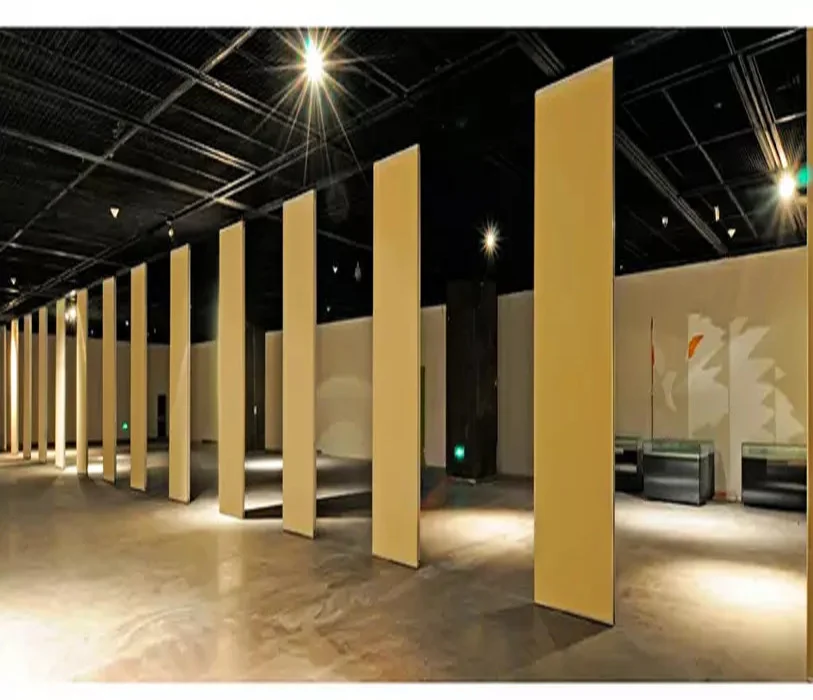
Visible references can support layout discussion but do not verify hidden construction or performance. If the project needs those outcomes, request matching evidence.
FAQ: Tender Evaluation Matrix for Partition Track Interfaces
What is a tender evaluation matrix for partition track interfaces?
It is a scored comparison tool that separates product scope from interface scope, so bidders are judged on the same track, support, parking, finish, and documentation criteria.
Which project information is required before scoring?
You need the layout, the opening dimensions, the proposed parking position, the finish schedule, and any pass-door requirements. Support and acoustic items should be marked for project-specific confirmation.
Can the matrix include acoustic criteria?
Provide the current layout, opening dimensions, ceiling information, intended room use, and relevant project drawings for review. The exact overhead route and support arrangement must be confirmed by the responsible project team from coordinated drawings.
How should bidders prove the track route is workable?
Ask them to mark the straight, turning, and stacking routes on the layout and to identify where the overhead path must be continuous and supported. The route requires project-specific support review.
What should happen when a bidder makes an unsupported claim?
Record it as a clarification request. Do not score it as confirmed. The response should be added to the tender record before final evaluation.
Does a floor track need to be evaluated?
EBUNGE movable partition panels are top-hung and move without a continuous floor running track or floor hardware along the partition line. The matrix should still confirm the overhead route and support condition.
Conclusion and Next Step
A tender evaluation matrix for partition track interfaces works when it is built on confirmed facts, visible evidence limits, and drawing review. Keep the criteria focused, separate technical and commercial scoring, and use clarification rounds instead of assumptions. Confirm project-specific support, acoustic, and dimensional requirements before finalizing any award.
To discuss your project documentation, pass-door requirements, or layout review, contact the EBUNGE team. You can also review movable wall products and browse project resources for further planning context.