
Quick answer: compare bidder track interface method
Review focus: compare bidder track interface method.
When you compare bidder track interface method statements tender submissions can look similar at first glance. Each bidder may describe a top-hung movable partition, a suspended route and a parking position. The differences usually sit in how clearly the method statement connects the partition system to the building structure, the ceiling zone and the finished floor. This article gives project teams a structured way to read those statements without inferring performance that the documents do not prove.
The goal is not to rank bidders on presentation style. It is to identify which statements are complete enough for drawing review, which need project-specific confirmation, and which leave gaps that could affect coordination later. The suitability of each route and parking arrangement depends on the approved layout, circulation, ceiling interfaces and operating sequence.
Start with the maintained product facts
Project review term: compare bidder track interface method.
Before comparing method statements, agree on the baseline facts that apply to the product being offered. EBUNGE movable wall panels are individually movable, suspended from a top track, cross the opening without a floor track, and park at a planned stacking position. Straight, turning and stacking routes are reviewed from the layout.
These facts give you a neutral reference point. A bidder statement that contradicts them, or that adds unsupported detail, should be queried rather than accepted. The same applies to finish options: confirmed finishes include laminate, melamine, fabric, leather, glass and other approved surfaces.
Check how the bidder describes the overhead route
Coordination scope: compare bidder track interface method.
The overhead route is the backbone of a top-hung system. A useful method statement should show how the track follows the opening, how it turns where required, and where panels will park. It should also identify the interface with the supporting structure above.
The exact route, junction arrangement, continuous overhead path and parking position must be confirmed from the coordinated project drawings. Every proposed movement path requires a continuous connected overhead route and project-specific support review. If a statement is vague about turns or parking, ask for a marked-up layout rather than a general description.
Route evidence checklist
- Does the statement show the full route from closed position to parking position?
- Are turning points and stacking zones indicated on the layout?
- Is the supporting structure interface identified for review by the project engineer?
- Does the statement avoid claiming performance that is not supported by project evidence?
Compare support and interface assumptions
Checklist focus: compare bidder track interface method.
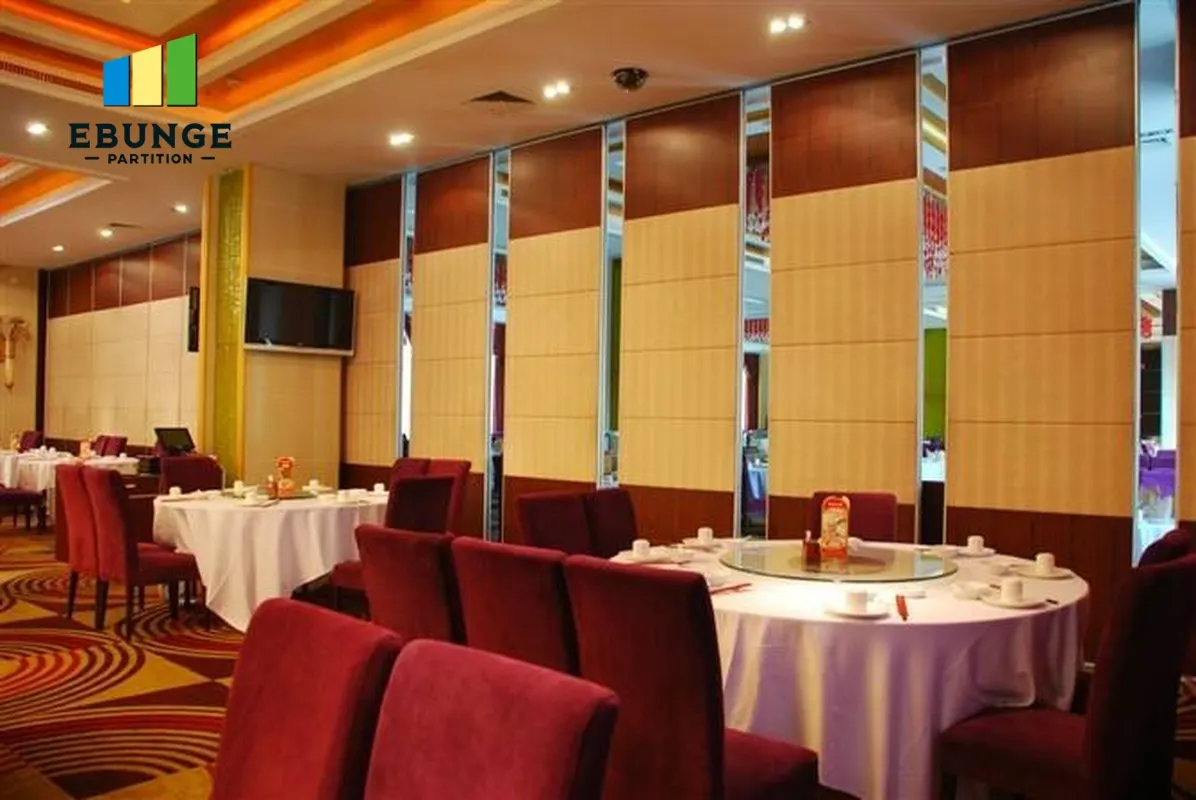
A bidder may assume a suitable support is available, while another may list it as a coordination item. Neither approach is automatically wrong, but the tender review should make the assumption visible.
This turns hidden assumptions into reviewable items. It also helps you compare bids on the same basis instead of comparing polished language.
Evidence note: a method statement is a coordination document, not proof of acoustic, fire, structural or durability performance. Those topics require separate project-specific evidence and confirmation.
Review parking and stacking logic
Review focus: compare bidder track interface method.
Parking style is customized to the customer layout and project requirements and may support compact stacking when the coordinated design permits it. In tender review, look for how the bidder describes the parking position, how panels are intended to gather there, and whether the layout shows enough space for the planned arrangement.
If a statement says panels will stack in a location that conflicts with doors, services or adjacent finishes, raise it early. Parking is a layout decision, not a generic feature. The same review applies whether the room is a hotel ballroom, a school hall, an office training room or another flexible space.
Use a compact comparison table for bidder responses
A simple table can keep the review consistent across bidders. Adapt the columns to your project and record only what the documents actually say.
| Review item | What to look for | Action if unclear |
|---|---|---|
| Overhead route | Continuous connected path shown from closed to parked position | Request marked-up layout |
| Support interface | Named interface with structure or ceiling zone | Refer to project engineer |
| Parking position | Planned stacking location consistent with layout | Ask for coordination drawing |
| Finish scope | Confirmed finish option stated without inferred performance | Confirm sample and specification |
| Pass-door needs | Requirement identified for discussion | Clarify with project team |
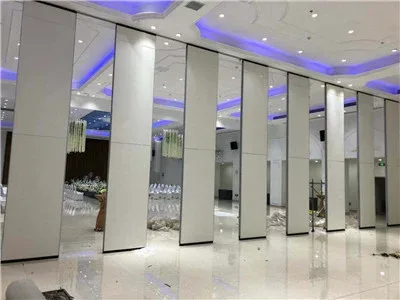
Separate acoustic concepts from acoustic claims
If acoustic separation matters, ask for project-specific documentation and confirm how the interface, seals and surrounding construction are addressed.
The tender review should identify what evidence is missing and who will provide it.
Coordinate documentation and pass-door requirements
Pass-door requirements and project documentation can be discussed with the supplier during tender review. A bidder statement should indicate whether a pass door is included, how it relates to the panel route, and what information is needed to coordinate it. If the statement is silent, add it to the clarification list.
Documentation review should also cover drawings, finish schedules and interface responsibilities. The aim is to compare completeness, not to assume that a longer document is more accurate.
Numbered tender review process
- Issue the same layout and specification to every bidder.
- Ask for a marked-up route drawing with the method statement.
- List support, parking and finish assumptions in a common format.
- Query any statement that implies untracked movement or unsupported performance.
- Confirm acoustic, dimensional and support requirements with the project team.
- Record agreed clarifications before comparing commercial submissions.
Frequently asked questions
What should I compare first in track interface method statements?
Start with the overhead route and support interface. These determine whether the proposed system can be coordinated with the building structure and layout. Then review parking, finish scope and documentation.
Can a bidder statement prove acoustic performance?
No. A method statement is not a substitute for project-specific acoustic evidence.
How do I handle a statement that does not mention parking?
Ask the bidder to show the planned stacking position on the layout. Parking style is customized to the customer layout and project requirements, so it should be reviewed as part of the drawing set.
Should I accept a generic finish description?
Treat it as a starting point only.
What if the bidder assumes a support structure?
Make the assumption visible and refer it to the project engineer. Support requirements are project-specific and should be confirmed before the tender comparison is finalized.
How should pass doors be compared?
Check whether each statement identifies the pass-door requirement and how it relates to the panel route. If it is unclear, add it to the clarification list and discuss it with the project team.
Conclusion and next steps
To compare bidder track interface method statements tender review should focus on evidence, not adjectives. Check the overhead route, support interface, parking logic, finish scope and documentation. Where a statement is silent or assumes performance, ask for project-specific confirmation rather than filling the gap yourself.
Use the same checklist for every bidder, keep the layout at the centre of the discussion, and confirm acoustic, dimensional and support requirements with the responsible project professionals. For product context, visit movable walls and the resources page. To discuss pass-door requirements and project documentation, contact EBUNGE.