
Quick answer: corridor intersection circulation audit
Review focus: corridor intersection circulation audit.
A stacking pocket corridor intersection circulation audit is a drawing-based review of how people, doors, services and parked panels share the same junction. It matters because a stacking pocket is not just a storage detail; it changes what the corridor must do at the point where routes meet. This guide sets out an evidence-bounded framework for overseas contractors, architects, interior designers, owners and renovation teams. It does not replace project-specific support, acoustic or dimensional confirmation.
Why the Intersection Is the Critical Review Point
In a straight corridor, circulation is mostly linear. At an intersection, several routes compete for the same floor area: through movement, turning movement, door swings, service access and the parked panel stack. A stacking pocket placed here can be efficient, but only when the layout is reviewed as one connected system rather than as separate architectural and partition packages.
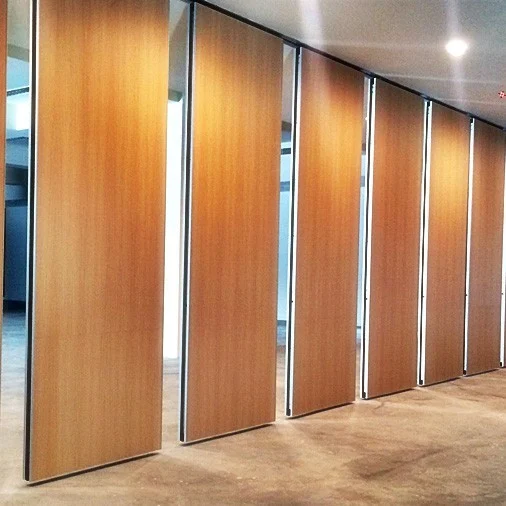
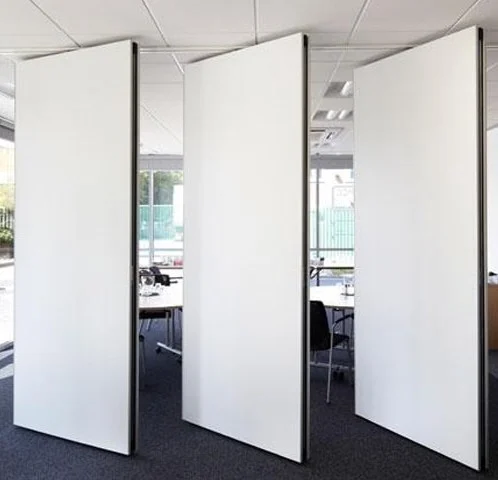
EBUNGE movable partition panels are individually movable, suspended from a top track, cross the opening without a floor track and park at a planned stacking position. That maintained fact shapes the audit: the overhead route must be continuous and supported, while the floor remains clear along the partition line. It does not tell you whether a specific intersection will work. That depends on the project drawings, the coordinated design and the confirmed requirements.
What the Audit Should Cover
Treat the audit as a structured conversation between the layout, the partition route and the people who use the space. The goal is to expose conflicts early, when they can still be resolved on paper.
Route and parking logic
Review straight, turning and stacking routes from the layout. Confirm where panels travel, where they park and how the parked position relates to the corridor intersection. Parking style is customized to the customer layout and project requirements, and may support compact stacking when the coordinated design permits it.
Clear width and door coordination
Check the proposed clear width at the intersection, including the effect of open pass doors and adjacent door swings. Pass-door requirements can be discussed as part of the project documentation. Do not assume that a drawing dimension alone proves compliance; confirm it against the applicable project requirements.
Evidence Boundaries You Should State in the Audit
An audit is only useful if it separates what is known from what still needs confirmation. Visible references can support layout discussion but do not verify hidden construction or performance. Comparative or absolute statements need matching evidence.
Evidence note: a continuous connected overhead route and project-specific support review are required for every proposed movement path. Do not infer hidden performance from a visible shape, finish or drawing.
The suitability of each route and parking arrangement depends on the approved layout, circulation, ceiling interfaces and operating sequence.
A Practical Circulation Audit Sequence
- Mark the intersection and all routes that pass through it on the current layout.
- Overlay the partition opening, travel path and planned stacking position.
- Identify conflicts with doors, services, sightlines and adjacent circulation.
- Confirm the overhead route is continuous and supported for the proposed path.
- Review pass-door and access requirements with the project team.
- Record open items that require project-specific support, acoustic or dimensional confirmation.
This sequence keeps the discussion on observable layout facts. It also gives reviewers a clear place to stop when evidence is missing.
Coordination Questions for the Project Team
Use these questions to align disciplines before specification. They are deliberately open because the answers depend on the project.
- Does the stacking pocket corridor intersection circulation audit project planning assume a route that is not yet shown on the coordinated drawings?
- Has the Accessibility and Circulation Review coordination confirmed clear width and turning expectations at the junction?
- Does the stacking pocket corridor intersection circulation audit specification identify who confirms support, acoustics and dimensions?
- Are pass-door requirements and project documentation discussed with the relevant reviewers?
- Are finish selections such as laminate, melamine, fabric, leather, glass or other approved surfaces recorded without implying performance?
Common Assumptions That Weaken the Review
One recurring problem is treating the stacking pocket as a minor storage item. At an intersection, the parked position can affect how people read and use the space. Another problem is assuming that a clear floor along the partition line means every route is automatically clear; the overhead route still needs a continuous connected path and project-specific support review.
A third assumption is that a finish or application example proves more than it does. A named venue or room type is an example only; movable partitions can be considered wherever flexible spatial division, combination or reconfiguration is required. The audit should stay within maintained product facts and confirmed project information.
Documentation to Bring to Review
Bring the current architectural layout, the proposed partition route, the intended parking position and any coordinated services drawings. Include door schedules and any known pass-door requirements. If acoustic separation is part of the brief, state the project requirement and the reviewer who will confirm it.
Project documentation can be discussed with EBUNGE through the contact page. For general product context, see the movable walls page and the resources section. These links support planning; they do not replace project-specific confirmation.
FAQ
What is a stacking pocket corridor intersection circulation audit?
It is a drawing-based review of how circulation, doors, services and a planned panel stacking position interact at a corridor intersection. It focuses on observable layout facts and open items.
Does a floor track affect the audit?
EBUNGE movable partition panels cross the opening without a floor track and park at a planned stacking position. The audit still needs to confirm the overhead route is continuous and supported for the proposed path.
Can the audit confirm acoustic performance?
No.
Which finishes can be considered?
Confirmed finish options include laminate, melamine, fabric, leather, glass and other approved surfaces.
What should be confirmed before specification?
Confirm project-specific support, acoustic and dimensional requirements, pass-door needs and documentation responsibilities. Parking style is customized to the customer layout and project requirements.
Conclusion
A stacking pocket corridor intersection circulation audit is most useful when it stays close to the drawings and honest about evidence limits. Review the routes, the parking position, the overhead path and the open questions together. Then confirm project-specific support, acoustic and dimensional requirements before the design is fixed.
To discuss pass-door requirements and project documentation, contact EBUNGE with your current layout and coordination questions.