
Quick project answer
Review focus: track interface exclusions.
In a bidder track interface exclusions tender review, the most expensive line is often the one that is not there. A bidder may price panels and track while excluding the overhead structure, blocking, or coordination needed to make the route work. Reading those exclusions carefully protects the project from late variations and site delays.
This guide is for contractors, architects, interior designers, owners, renovation teams, distributors, and construction teams comparing movable partition bids. It focuses on visible scope boundaries and project-specific drawing review, not on hidden performance assumptions.
Why Track Interface Exclusions Matter in Tender Review
Project review term: track interface exclusions.
Movable wall panels are individually movable, suspended from a top track, cross the opening without a floor track, and park at a planned stacking position. That simple description depends on a continuous connected overhead route and support that suits the project. When a bidder excludes part of that interface, the gap becomes someone else’s risk.
Exclusions are not automatically wrong. They define where one scope ends and another begins. The problem is when they are vague, buried in qualifications, or inconsistent between bidders. A clear tender review separates commercial exclusions from technical interfaces that must be resolved before award.
Common exclusion categories to look for
- Overhead structural support or blocking by others
- Continuous track route and turning or stacking geometry
- Ceiling openings, finishes, or access panels
- Electrical or fire coordination around the track line
- Final connections, adjustments, or site attendance
How to Read the Bidder’s Scope Statement
Coordination scope: track interface exclusions.
Start with the scope narrative, not the price. A bidder who describes the top track, suspension, panel movement, and parking position is showing what they intend to supply. A bidder who lists only panels may be leaving the route and support to others.
Read every qualification as a boundary. Words such as “by others,” “not included,” “subject to site conditions,” or “to be confirmed” are not filler. They tell you which decisions remain open and which party is expected to close them.
Questions that reveal the real boundary
- Which party supplies and fixes the overhead support for the track?
- Is the full movement route, including turns and parking, shown on the bidder’s drawings?
- Who confirms the ceiling opening and finish around the track?
- What site conditions must be verified before fabrication?
- Which documents will be issued for coordination after award?
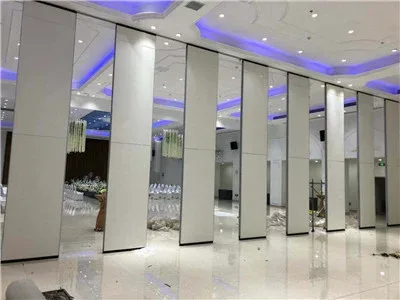
Comparing Bidders Without Assuming Hidden Performance
A compact comparison table helps normalize exclusions across bidders. Do not treat a blank cell as included. Treat it as unconfirmed until the bidder states it in writing.
| Interface item | Bidder A | Bidder B | Action |
|---|---|---|---|
| Overhead support | By others | Included | Clarify structural responsibility |
| Track route drawings | Not shown | Shown | Request route layout |
| Parking position | To confirm | Planned | Confirm stacking space |
| Ceiling interface | Excluded | By others | Coordinate finish scope |
This table is a reading tool, not a performance ranking. It shows where the bid documents leave decisions open. The next step is to ask each bidder to confirm the same items in the same format.
Drawing Review: What to Check Before Award
Drawings turn exclusions into visible scope. The exact route, junction arrangement, continuous overhead path and parking position must be confirmed from the coordinated project drawings. Straight, turning, and stacking routes should be reviewed from the layout, because each route affects support and coordination.
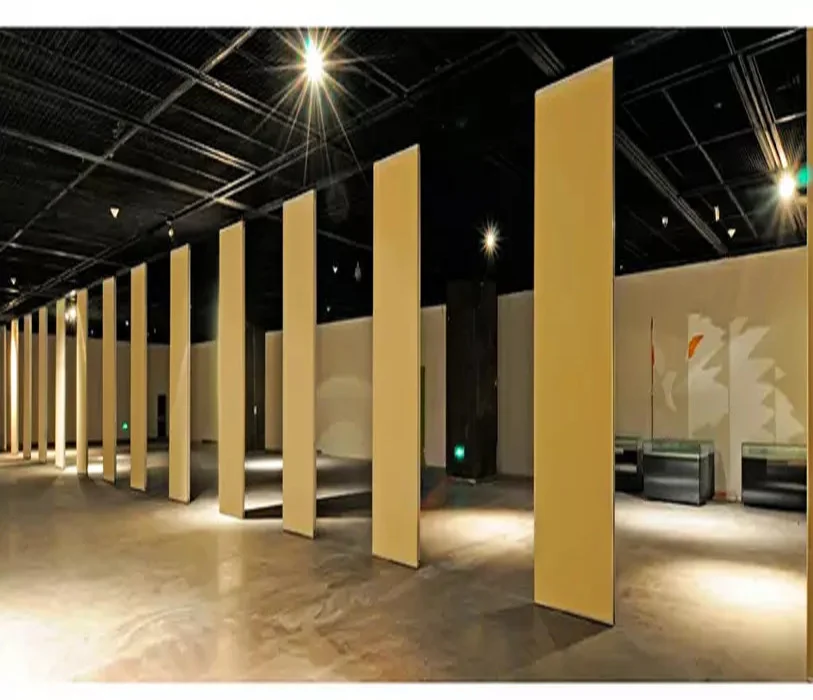
Check that the route is continuous and connected overhead. If the layout shows a gap, ask how the route is completed and who supplies that part.
Evidence note
Confirm project-specific support, acoustic, and dimensional requirements with the responsible engineer and the selected supplier. A drawing or finish sample does not prove structural capacity, acoustic performance, or site suitability.
Acoustic and Finish Exclusions in the Same Review
The suitability of each route and parking arrangement depends on the approved layout, circulation, ceiling interfaces and operating sequence. If acoustic separation matters, ask which party confirms the requirement and how it will be documented.
Confirmed finish options include laminate, melamine, fabric, leather, glass, and other approved surfaces. Visible references can support layout discussion but do not verify hidden construction or performance. Treat finish exclusions as separate from track interface exclusions, and confirm both in the tender review.
Pass doors and documentation
Pass-door requirements and project documentation can be discussed with the supplier. If a pass door is needed, confirm whether it is inside or outside the bidder’s scope and how it interacts with the track route and parking position.
Turning Exclusions into a Coordination Checklist
Use a short checklist to close the gaps before award.
- List every exclusion in one register with an owner and due date.
- Request a route drawing for straight, turning, and stacking conditions.
- Confirm who supplies overhead support and who verifies it.
- Confirm ceiling, finish, and access coordination around the track.
- Confirm pass-door scope and documentation deliverables.
- Confirm acoustic and dimensional requirements with the responsible parties.
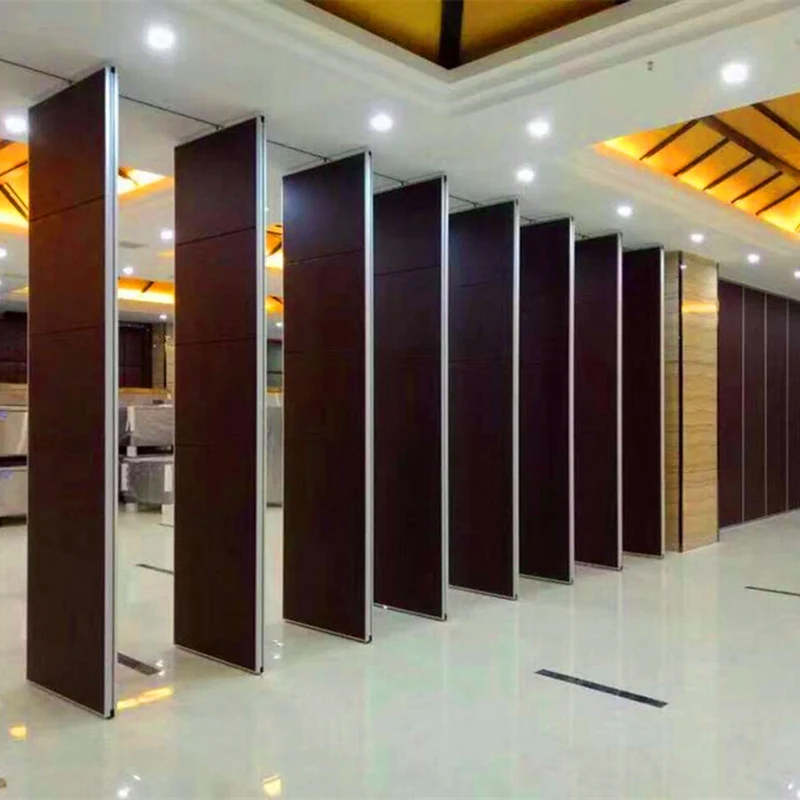
For product context, see movable walls. For planning references, visit resources. To discuss project documentation, use contact.
FAQ: Bidder Track Interface Exclusions
What does a track interface exclusion mean in a tender?
It means the bidder has stated that part of the track-related work is outside their scope. That part may include overhead support, route drawings, ceiling coordination, or final connections. The exclusion is a boundary, not proof that the item is unnecessary.
Should I reject a bidder who excludes overhead support?
Not automatically. The key is to confirm who owns the support, who verifies it, and how it will be coordinated before fabrication. An unclear exclusion is more risky than a clearly stated one.
How do I compare exclusions between bidders fairly?
Use the same checklist for every bidder and ask for written confirmation of each interface item. A comparison table helps, but only if blank or vague answers are treated as unconfirmed rather than included.
Do movable partitions need a floor track?
EBUNGE movable partition panels are top-hung and move without a continuous floor running track or floor hardware along the partition line.
Can acoustic performance be confirmed from the tender exclusion alone?
No. Confirm acoustic requirements with the responsible parties and matching evidence.
What should be in the post-award documentation?
Ask the bidder to list the drawings, coordination notes, and confirmations they will issue. Pass-door requirements and project documentation can be discussed so the team knows what to expect. The exact deliverables depend on the project.
Conclusion: Read Exclusions as Scope Decisions
A bidder track interface exclusions tender review is not about finding the cheapest line. It is about finding the clearest boundary. When exclusions are visible, comparable, and tied to drawings, the project team can assign responsibility before award instead of during installation.
Keep the review evidence-bounded. Confirm project-specific support, acoustic, and dimensional requirements with qualified parties. Use the bidder’s own documents to test whether the route, parking, and interfaces are truly covered.
To discuss your project documentation and coordination needs, contact EBUNGE. The team can review pass-door requirements and project documentation with you.