
Quick answer: stacking pocket corridor circulation loop audit
Review focus: stacking pocket corridor circulation loop audit.
A stacking pocket corridor circulation loop audit is a drawing-based review of how people, carts and doors move when movable wall panels leave the opening and park at a planned stacking position. The suitability of each route and parking arrangement depends on the approved layout, circulation, ceiling interfaces and operating sequence. It checks whether the proposed route is continuous, supported and coordinated with the corridor’s everyday use.
For contractors, architects, interior designers, owners and renovation teams, the value is early coordination. EBUNGE movable wall panels are individually movable, suspended from a top track, cross the opening without a floor track, and park at a planned stacking position. Straight, turning and stacking routes are reviewed from the layout. That makes the corridor-to-pocket interface a layout question before it becomes a site question.
Why the Pocket-to-Corridor Interface Deserves Its Own Review
Project review term: stacking pocket corridor circulation loop audit.
A corridor is rarely empty. It carries circulation, door swings, service access and sometimes waiting or queuing. A stacking pocket adds a destination point where panels gather. If the pocket and corridor are reviewed separately, the transition can hide conflicts that only appear when the wall is open or closed.
The audit therefore treats the pocket, the opening and the corridor as one loop. The goal is not to prove performance. It is to expose assumptions that need project-specific confirmation, such as support locations, route continuity and dimensional coordination.
What the audit can and cannot show
From drawings and maintained product facts, a team can review route logic, parking position and clear-floor movement. Visible references can support layout discussion but do not verify hidden construction or performance. Those items require separate project evidence and specialist review.
Start With the Route, Not the Panel
Coordination scope: stacking pocket corridor circulation loop audit.
Begin by tracing the full path a panel follows from the closed position to the parked position. Mark every straight run, turn and stacking movement. Confirm that the proposed path connects to a continuous overhead route. The exact route, junction arrangement, continuous overhead path and parking position must be confirmed from the coordinated project drawings.
Next, mark the corridor’s normal circulation. Include primary walking lines, door swings, emergency egress routes and any regular service movement. The audit question is simple: when panels are parked, does the corridor still work for its intended use?
Route review prompts
- Is the overhead route continuous from the opening to the stacking position?
- Does any turn or stacking movement cross a corridor’s primary circulation line?
- Are there fixed elements, such as columns or service risers, near the pocket entry?
- Does the parked panel group reduce corridor width at any point?
- Are pass-door requirements and project documentation discussed with the supplier?
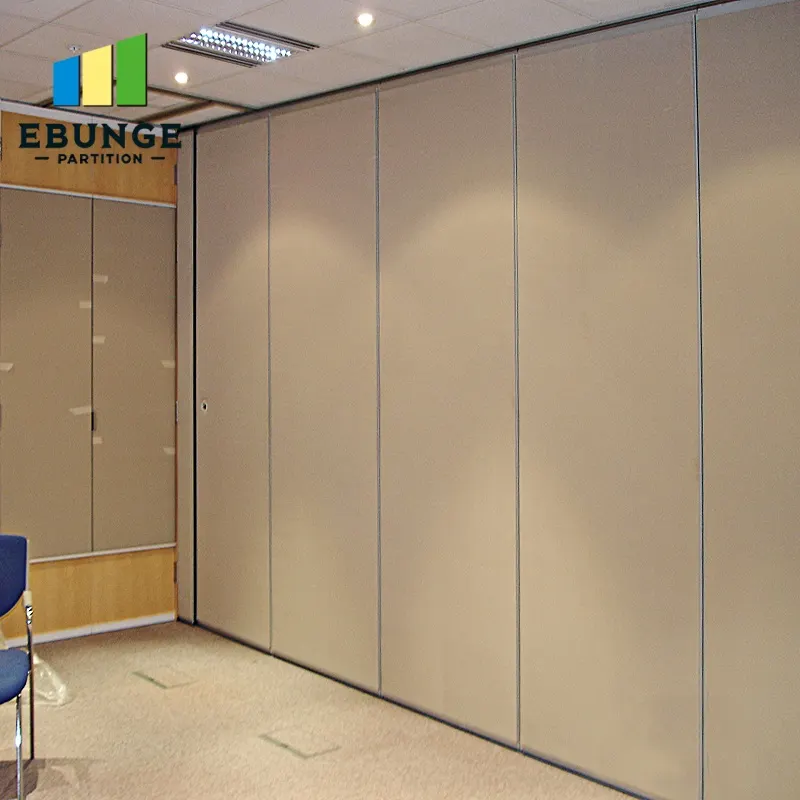
Audit the Stacking Pocket as a Working Zone
Checklist focus: stacking pocket corridor circulation loop audit.
The stacking pocket is not just storage. It is a working zone where panels are gathered, and it may need to be approached from one or both sides. Review how the pocket is entered, how panels are guided into it and whether the parked group blocks any adjacent door, panel or service point.
Parking style is customized to the customer layout and project requirements and may support compact stacking when the coordinated design permits it. That means the audit should confirm the intended parking arrangement rather than assume a default. If the layout changes, the pocket review should be repeated.
Evidence note
This article provides an audit framework, not a performance conclusion. Support, acoustic and dimensional requirements must be confirmed for each project. Visible finishes or drawings do not prove hidden performance.
Coordinate the Loop With Adjacent Systems
Review focus: stacking pocket corridor circulation loop audit.
A corridor loop interacts with ceilings, lighting, signage, doors, security and finishes. The audit should note where the overhead route meets other services and where the pocket opening affects wall or ceiling lines. These are coordination items, not product claims.
For renovation projects, existing conditions matter. A pocket that fits a new layout may need different coordination in an existing corridor. The team should compare the proposed route with measured site conditions and raise conflicts before fabrication or installation planning.
Coordination checklist
- Confirm the opening width and the intended clear passage when panels are open.
- Confirm the stacking position and how it relates to corridor circulation.
- Confirm the overhead route is continuous and supported per project requirements.
- Confirm adjacent doors, frames and services do not conflict with the route.
- Confirm finish selections, such as laminate, melamine, fabric, leather, glass or other approved surfaces, are coordinated with the surrounding interior.
- Confirm pass-door needs and project documentation with the supplier.
Use a Simple Decision Table for Drawing Reviews
The table below is a review aid. It does not replace project-specific engineering, acoustic or dimensional confirmation. Use it to decide what needs more information before the layout is frozen.
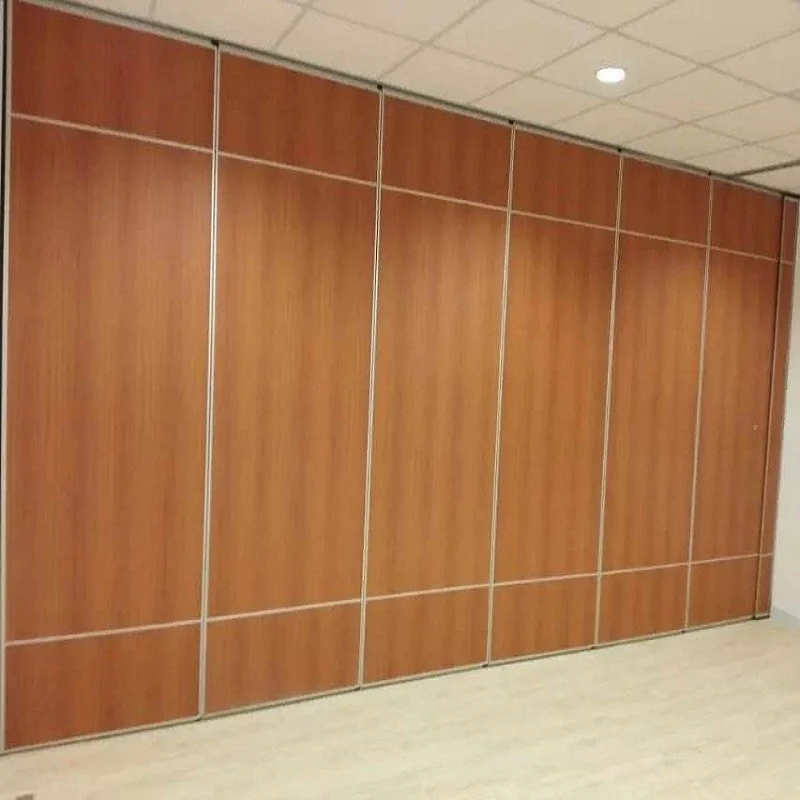
| Audit item | What to check | Action if unclear |
|---|---|---|
| Route continuity | Straight, turning and stacking paths connect to a supported overhead route | Request layout review and confirm support requirements |
| Corridor circulation | Parked panels do not block primary movement or egress routes | Adjust pocket position or parking arrangement |
| Pocket access | Panels can be guided into the planned stacking position | Confirm parking style and approach clearances |
| Adjacent elements | Doors, services and finishes do not conflict with the loop | Coordinate with relevant trades and designers |
| Documentation | Pass-door and project documentation requirements are discussed | Contact the supplier for project-specific guidance |
Common Assumptions That Weaken an Audit
One common assumption is that a pocket is only a storage detail. In practice, it shapes how the corridor performs when the wall is open. It does not.
A third assumption is that the route can be adjusted later without consequence. The exact overhead route and support arrangement must be confirmed by the responsible project team from coordinated drawings.
What to confirm before sign-off
Before sign-off, confirm the route, the parking position, the corridor’s clear circulation and the project-specific support, acoustic and dimensional requirements. Confirm that the finish direction and approved surface selection are coordinated. Confirm that any pass-door requirement is documented. These confirmations belong to the project team and the supplier, not to a generic article.
Frequently Asked Questions
What is a stacking pocket corridor circulation loop audit?
It is a drawing-based review of how movable panels travel from an opening to a stacking position and how that movement affects corridor circulation. It focuses on route continuity, parking and coordination, not on unverified performance.
Does the audit require a floor track?
No. EBUNGE movable wall panels are top-hung and cross the opening without a floor track. The audit still confirms that the overhead route is continuous and supported per project requirements.
Can the audit confirm acoustic performance?
No.
What finish options can be considered?
Confirmed finish options include laminate, melamine, fabric, leather, glass and other approved surfaces. Finish selection should be coordinated with the interior design and project requirements.
When should the audit happen?
It should happen during layout planning, before the pocket position and route are frozen. Early review helps avoid conflicts with corridor circulation, adjacent doors and services.
Who should be involved?
Contractors, architects, interior designers, owners and renovation teams should coordinate. The supplier can discuss pass-door requirements and project documentation, while support, acoustic and dimensional requirements remain project-specific.
Conclusion: Audit the Loop Before the Layout Is Fixed
A stacking pocket corridor circulation loop audit is a practical way to connect the opening, the route and the parked panels into one coordinated layout. It does not replace engineering, acoustic or dimensional confirmation.
Review the route, the pocket and the corridor together. Confirm support, acoustic and dimensional requirements for the specific project. Discuss pass-door needs and project documentation with the supplier. For product context, visit movable walls and the resources page. To discuss a project-specific review, contact EBUNGE.