
Quick answer: room scheduling rules changeover policy
Review focus: room scheduling rules changeover policy.
A room scheduling rules changeover policy review trigger is the point where booking patterns, room-use rules or occupancy expectations no longer match how a flexible space is actually reconfigured. For contractors, architects, interior designers, owners and facility teams, that mismatch is a planning signal, not a performance claim. It means the project team should revisit drawings, operating assumptions and documentation before the next phase. Movable partitions are top-hung, individually movable panels that travel on a continuous overhead route and park at a planned stacking position, so scheduling rules and changeover policy are directly connected to layout decisions.
Why Scheduling Rules and Changeover Policy Drift Apart
Project review term: room scheduling rules changeover policy.
Scheduling rules describe who may book a room, for how long, and with what setup expectations. Changeover policy describes how the room is returned to a neutral or next-use condition. These two documents are often written by different people at different times.
Drift appears when a room is booked for back-to-back sessions with different layouts, when a space is used for both open discussion and divided breakout use, or when storage and circulation assumptions change after handover. None of these situations automatically proves a problem, but each one is a reason to review the policy against the approved layout.
Signals That Should Start a Changeover Policy Review
Coordination scope: room scheduling rules changeover policy.
Treat the following as review triggers rather than automatic conclusions. The goal is to gather evidence and confirm project-specific requirements with the responsible parties.
- Booking rules allow consecutive sessions with different room configurations.
- Room names or categories no longer match how the space is divided or combined.
- Stacking or parking positions conflict with storage, circulation or furniture zones.
- Pass-door use is assumed in schedules but not reflected in the reviewed layout.
- Finish or surface expectations change after the original specification.
- Operations and design teams describe the same room differently in meetings.
A Practical Review Sequence for Project Teams
Checklist focus: room scheduling rules changeover policy.
A short, structured review keeps the conversation evidence-based. The steps below are a coordination framework, not an engineering method.

- Collect the current scheduling rules, room list and booking categories.
- Compare them with the latest reviewed partition layout and stacking plan.
- Mark every point where the schedule assumes a configuration the drawings do not show.
- List open questions about support, acoustics and dimensions for project-specific confirmation.
- Record agreed changes in one document shared by operations, design and procurement.
- Re-check the policy after any layout revision or room-use change.
What the Drawings Should Show Before You Decide
Review focus: room scheduling rules changeover policy.
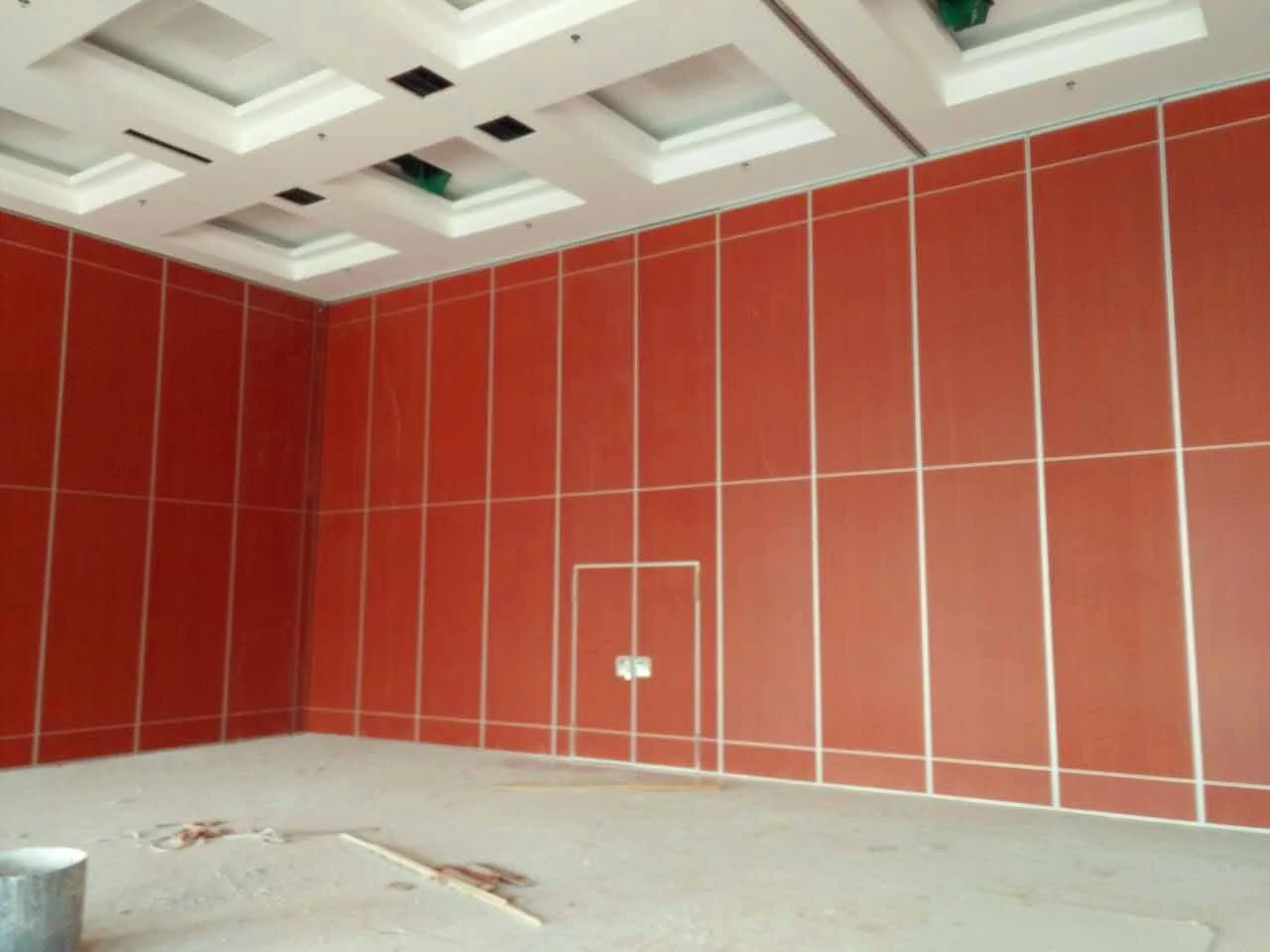
Straight, turning and stacking routes are reviewed from the layout. That review is the foundation for any changeover discussion, because a route that is not shown cannot be assumed.
Route and parking checks
Confirm that the proposed movement path is continuous and connected overhead, and that the planned parking position suits the room’s other uses. The exact route, junction arrangement, continuous overhead path and parking position must be confirmed from the coordinated project drawings.
Pass-door and access questions
Pass-door requirements can be discussed with the supplier and should be reflected in the reviewed layout if they affect daily circulation. Access assumptions belong in the same conversation as scheduling rules, because they change how a room is used between bookings.
Evidence Boundaries: What You Can and Cannot Infer
Visible references can support layout discussion but do not verify hidden construction or performance. Do not derive those conclusions from appearance alone.
Acoustic ratings such as STC or Rw are laboratory or field descriptors used in project documentation. They are not a simple count of decibels, and they should be confirmed for the specific assembly, layout and project conditions rather than assumed from a general description.
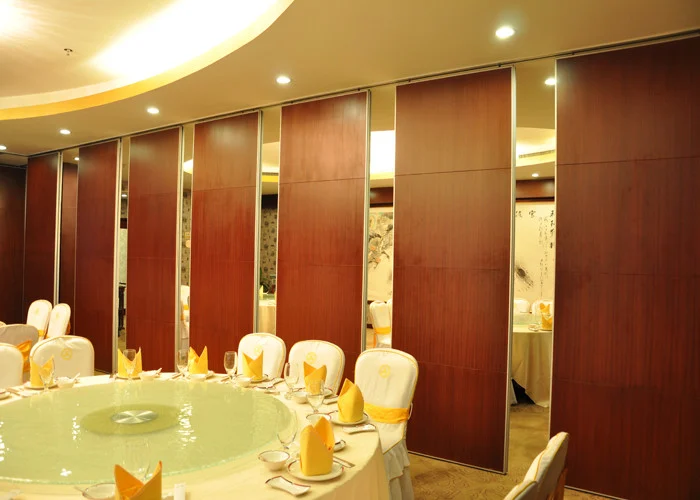
Confirmed finish options include laminate, melamine, fabric, leather, glass and other approved surfaces. The suitability of each route and parking arrangement depends on the approved layout, circulation, ceiling interfaces and operating sequence. Those items require matching project evidence.
Coordination Between Operations and Design
If the booking system says “divisible room” but the layout shows one stacking position, the policy review should resolve that difference before it becomes a daily workaround.
Assign one owner for the changeover policy and one reviewer for the layout. Keep a simple decision log so later revisions can be traced. This is administrative discipline, not a performance guarantee.
Checklist for the Next Policy Review Meeting
| Item | Question to confirm |
|---|---|
| Scheduling rules | Do booking categories match the reviewed room configurations? |
| Movement route | Is the overhead route continuous and shown on the layout? |
| Parking position | Does the planned stacking position suit storage and circulation? |
| Pass doors | Are access needs reflected in the reviewed drawings? |
| Finishes | Are approved surfaces listed without inferring performance? |
| Documentation | Is one shared record kept for operations, design and procurement? |
How to Document the Review Outcome
Record what was confirmed, what remains open, and who will confirm it.
Where a question cannot be answered from available evidence, state the boundary plainly instead of filling the gap with an assumption.
Frequently Asked Questions
What is a changeover policy review trigger?
It is a signal that scheduling rules and actual room use no longer align, prompting a documented review of layout, access and operating assumptions.
Do movable partitions need a floor track?
EBUNGE movable partition panels are top-hung and move without a continuous floor running track or floor hardware along the partition line. Project-specific support still requires review.
Can I confirm acoustic performance from a finish sample?
No.
When should the review happen?
Before handover, after any layout revision, and whenever booking rules or room categories change in a way that affects daily reconfiguration.
Who should join the review?
Operations, design, procurement and the responsible supplier contact should align on one shared record of confirmed and open items.
Does a review guarantee a specific outcome?
No. It is a coordination step. The exact overhead route and support arrangement must be confirmed by the responsible project team from coordinated drawings.
Conclusion and Next Step
Room scheduling rules changeover policy review trigger points are easiest to manage when they are written down and tied to the reviewed layout. Start with the booking rules, compare them with the drawings, and confirm every open item with the right project evidence.
Review the movable wall systems and the planning resources for background, then contact the team to discuss your project-specific support, acoustic and dimensional requirements.