
Quick answer: track interface assumptions before award
Review focus: track interface assumptions before award.
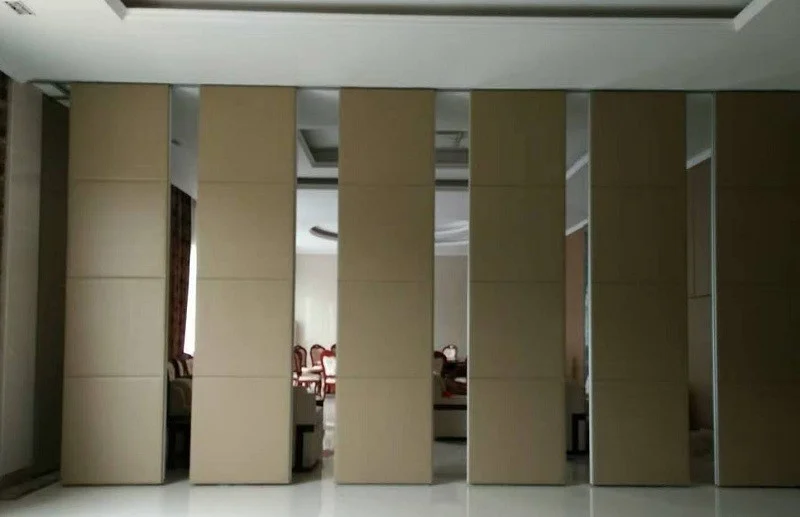
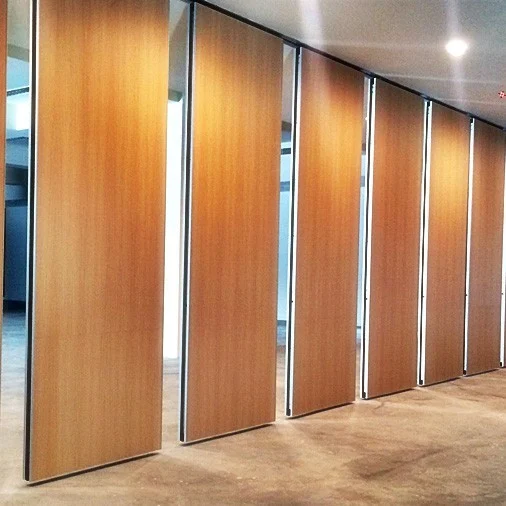
To audit bidder track interface assumptions before award, treat the overhead route as a design decision, not a line item. Movable wall panels are individually movable, suspended from a top track, cross the opening without a floor track, and park at a planned stacking position. If a bidder assumes a different route, support condition or parking arrangement, the award decision rests on an unverified premise. This guide gives project teams a drawing-led review method.
Why Track Interface Assumptions Deserve a Pre-Award Audit
Project review term: track interface assumptions before award.
The track interface connects the partition system to the building structure. The suitability of each route and parking arrangement depends on the approved layout, circulation, ceiling interfaces and operating sequence. When that interface is assumed rather than confirmed, responsibility can become unclear after award.
A bid may look complete while leaving the overhead route, support condition or stacking position unresolved. The audit is not about distrust. It is about making visible what each bidder has assumed so the project team can compare offers on the same basis.
What the Maintained Product Facts Actually Confirm
Coordination scope: track interface assumptions before award.
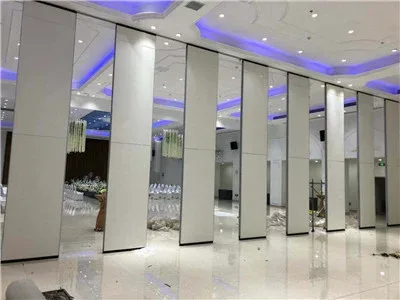
EBUNGE movable partition panels are top-hung and move without a continuous floor running track or floor hardware along the partition line. Straight, turning and stacking routes are reviewed from the layout. Parking style is customized to the customer layout and project requirements and may support compact stacking when the coordinated design permits it.
Confirmed finish options include laminate, melamine, fabric, leather, glass and other approved surfaces. Pass-door requirements and project documentation can be discussed.
A Drawing-Led Audit Method
Checklist focus: track interface assumptions before award.
Ask every bidder to mark up the same base drawings. Then compare the markups side by side. The goal is to expose differences in assumptions before they become change orders.
- Overhead route: Ask the bidder to draw the full path from the parked position, across the opening, to the opposite parking position. Confirm the route is continuous and connected.
- If the answer is an assumption, record it as an open item.
- Parking position: Ask where panels park and how that location interacts with adjacent walls, columns, doors or services.
- Openings and pass doors: Ask how pass-door requirements affect the panel layout and the parking stack.
- Documentation: Ask for the drawings, schedules and coordination notes that will be issued after award.
Questions That Reveal Hidden Assumptions
Review focus: track interface assumptions before award.
Good questions are specific and answerable. Avoid asking for performance conclusions that require project-specific evidence. Instead, ask how the bidder reached each assumption.
Route and geometry questions
- Does the proposed route include any turning or stacking movement, and how is it shown on the layout?
- Is the overhead route continuous across the full opening, including any junction between track sections?
- What happens at the parking position if adjacent finishes or services are installed later?
Support and coordination questions
- Which structural drawings or survey information were used to define the support condition?
- Which trade is responsible for preparing or confirming the supporting structure?
- What information is still missing before the interface can be finalized?
Evidence Boundaries: What a Bid Cannot Prove
A bid drawing is a proposal, not a measured result. The exact overhead route and support arrangement must be confirmed by the responsible project team from coordinated drawings.
Evidence note: If a bidder states a performance figure without a project-specific basis, mark it as unverified. Ask for the supporting document or remove the claim from the comparison.
This boundary protects the project team. It also keeps the evaluation fair to bidders who describe their assumptions honestly.
Comparing Bidders on the Same Basis
Use a compact comparison table to record what each bidder has assumed. The table is a coordination tool, not a scoring system.
| Audit item | Bidder A | Bidder B | Open action |
|---|---|---|---|
| Overhead route shown | Yes / No | Yes / No | Request markup |
| Support condition source | Drawing / Assumption | Drawing / Assumption | Confirm with structure |
| Parking position defined | Yes / No | Yes / No | Check adjacent finishes |
| Pass-door requirement noted | Yes / No | Yes / No | Discuss with bidder |
| Documentation list provided | Yes / No | Yes / No | Request schedule |
After the table is complete, hold a clarification round. Ask each bidder to resolve the same open items in writing so the final comparison reflects confirmed assumptions rather than verbal intent.
Documentation to Request Before Award
Ask for the documents that will govern the interface after award. The exact list depends on the project, but a useful request includes layout drawings showing the route and parking position, a schedule of interface points, and a written list of assumptions that still require confirmation.
Also ask how pass-door requirements and finish selections will be documented. Confirmed finish options include laminate, melamine, fabric, leather, glass and other approved surfaces. Finish selection can affect coordination, so it should be recorded before award rather than left to a later stage.
For general planning context, see the EBUNGE resources page. For product context, review the movable walls range.
Frequently Asked Questions
What is a track interface assumption in a movable wall bid?
It is any statement a bidder makes about the overhead route, support condition, parking position or junction details without confirmed project information. The audit makes those statements visible before award.
Can a bidder confirm acoustic performance at tender stage?
Only with project-specific evidence. Visible references can support layout discussion but do not verify hidden construction or performance. Ask for the supporting document or treat the claim as unverified.
Do movable partitions need a floor track?
EBUNGE movable partition panels are top-hung and move without a continuous floor running track or floor hardware along the partition line. The overhead route still requires project-specific review.
How should parking position be reviewed?
Ask the bidder to show the parking position on the layout and confirm how it interacts with adjacent walls, columns, doors and finishes. Parking style is customized to the layout and project requirements.
What if the structural support information is not available yet?
Record it as an open item. Ask the bidder to state what information is needed and who will confirm it. Do not accept an assumed support condition as final.
Which finishes can be discussed for the panels?
Confirmed finish options include laminate, melamine, fabric, leather, glass and other approved surfaces. Final selection should be documented with the project requirements.
Conclusion: Award on Confirmed Assumptions
Auditing track interface assumptions before award is a practical way to reduce ambiguity. Compare bidders on the same drawings, ask specific questions, and separate confirmed information from assumptions. Confirm project-specific support, acoustic and dimensional requirements before finalizing the award.
To discuss pass-door requirements, project documentation or layout review, contact the EBUNGE team.