
Quick answer: track fixing sequence wet trades
Review focus: track fixing sequence wet trades.
Planning a track fixing sequence wet trades handover is rarely a single decision. It sits between wet trades completing their work and the movable partition installation beginning. The exact overhead route and support arrangement must be confirmed by the responsible project team from coordinated drawings. This article gives contractors, architects and project teams a structured way to coordinate that handover using confirmed EBUNGE product facts and clearly stated evidence limits.
EBUNGE movable wall panels are individually movable, suspended from a top track, cross the opening without a floor track, and park at a planned stacking position. Straight, turning and stacking routes are reviewed from the layout. That means the overhead route, not the floor, carries the movement logic. The sequence around wet trades must protect that route and its support conditions.
Why the Wet Trades Handover Matters for Track Fixing
Project review term: track fixing sequence wet trades.
Wet trades include screeding, plastering, tiling, painting and similar processes that introduce moisture, dust and temporary access restrictions. If track fixing is sequenced without considering these activities, the overhead route may be exposed to contamination, blocked access or premature loading. The handover point is when responsibility and site conditions shift.
For a top-hung system, the critical interface is the overhead support and the continuous connected route. A gap in that route cannot be crossed by panels. The sequence must therefore confirm that the route is continuous and supported before any panel movement is planned.
What the handover should confirm
- Wet trades have completed in the affected zone or have a defined protection plan.
- Overhead support conditions are visible and match the reviewed layout.
- The straight, turning and stacking routes remain clear and connected.
- Parking position is accessible and does not conflict with wet trade access.
- Finish protection and cleaning responsibilities are agreed.
Sequence Options: Early Fixing vs Deferred Fixing
Coordination scope: track fixing sequence wet trades.
There is no universal answer. Early fixing can allow support preparation before finishes, but it may expose the track to wet processes. Deferred fixing can reduce contamination risk, but it may compress the installation programme. The right choice depends on project-specific drawings, support design and trade sequencing.
| Approach | Potential benefit | Coordination risk |
|---|---|---|
| Fix track before wet trades finish | Support work is completed while access is available | Track may need protection from moisture, dust or impact |
| Fix track after wet trades finish | Reduced exposure to wet processes | Access and programme may be tighter |
| Partial fixing by zone | Matches zone handover and parking needs | Requires clear zone boundaries and route continuity |
Each option must be checked against the project layout. Visible references can support layout discussion but do not verify hidden construction or performance.
Step-by-Step Track Fixing Sequence Around Handover
Checklist focus: track fixing sequence wet trades.
- Review the layout and routes. Confirm straight, turning and stacking routes from the approved drawings.
- Confirm overhead support requirements. The exact route, junction arrangement, continuous overhead path and parking position must be confirmed from the coordinated project drawings.
- Agree the handover zone. Define which wet trades must finish before track fixing begins.
- Protect the overhead route. Use agreed protection methods where wet processes continue nearby.
- Fix and verify the track. Check continuity, alignment and connection to the support structure.
- Confirm parking position. Ensure the planned stacking area is clear and accessible.
- Install panels only when conditions allow. Panel delivery and hanging follow the reviewed sequence.
- Document completion. Record the handover, protection and any project-specific confirmations.
Coordinating Finishes, Parking and Panel Movement
Review focus: track fixing sequence wet trades.
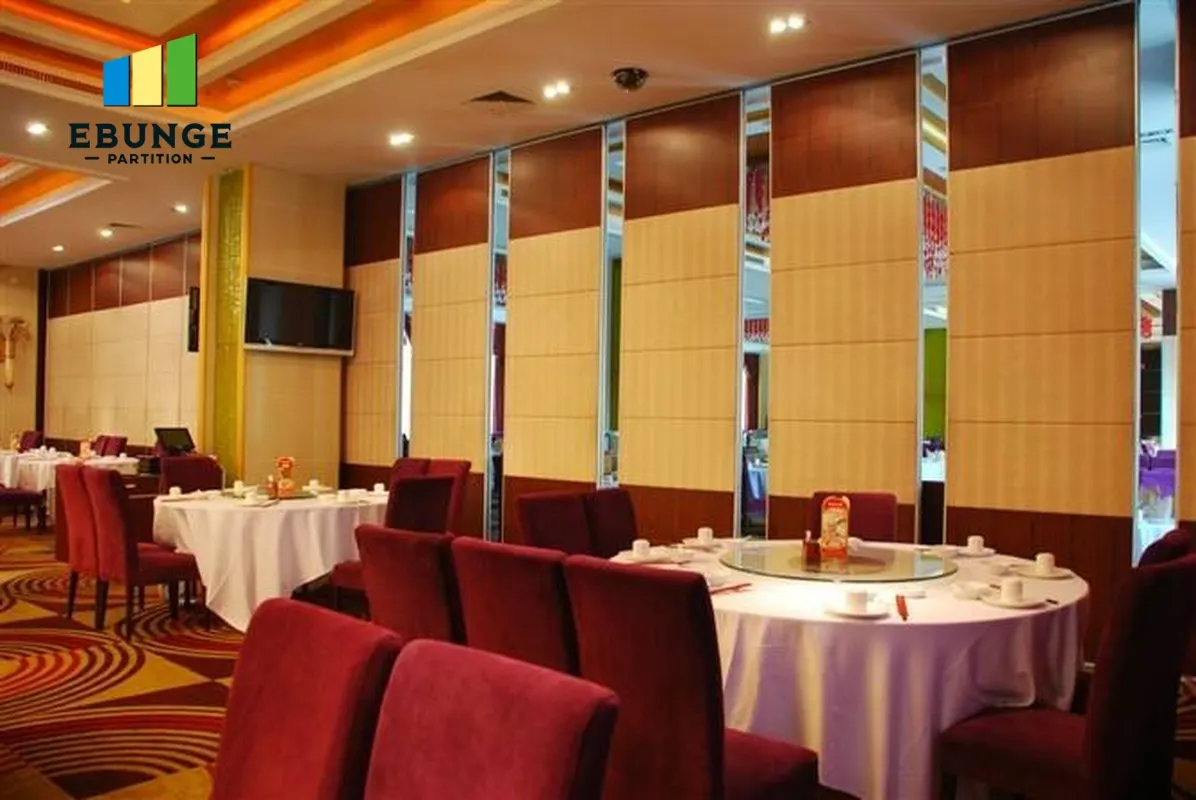
Confirmed finish options include laminate, melamine, fabric, leather, glass and other approved surfaces. The sequence should protect finishes from wet trade dust and moisture where required.
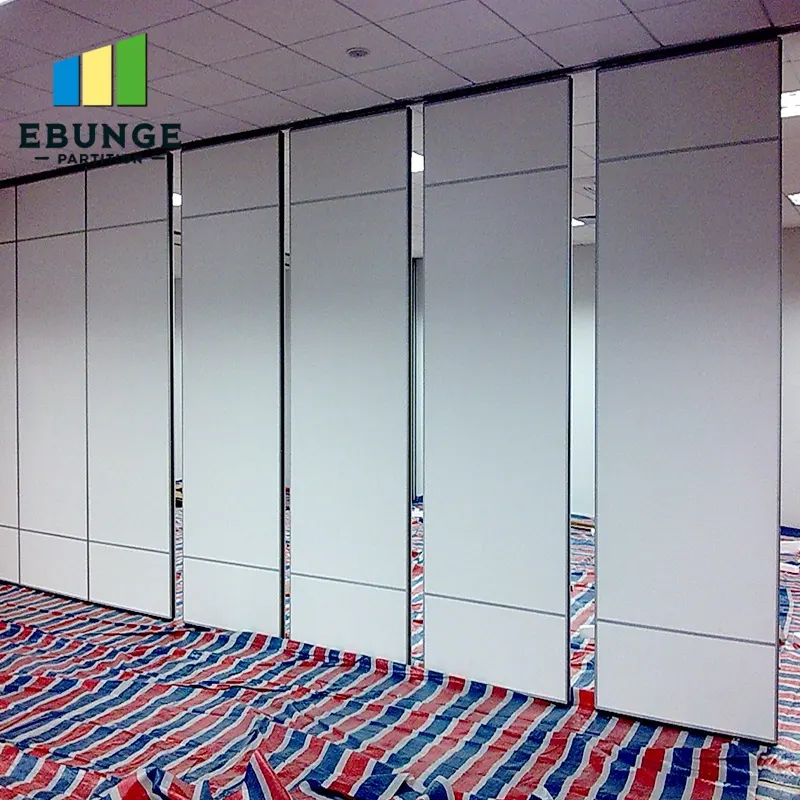
Parking style is customized to the customer layout and project requirements and may support compact stacking when the coordinated design permits it. The parking position must be planned before track fixing so that the route and stacking area remain usable after handover.
Evidence note: what drawings and samples do not prove
Do not derive hidden acoustic, fire, durability, load, maintenance, certification or commercial performance from a visible shape, finish, photograph or drawing. Comparative, absolute and causal statements require corresponding evidence; otherwise remove them or state the exact project-specific confirmation boundary.
The suitability of each route and parking arrangement depends on the approved layout, circulation, ceiling interfaces and operating sequence. Confirm acoustic requirements with project-specific evidence.
Common Coordination Mistakes and How to Avoid Them
One frequent mistake is treating the track as a floor-level item. EBUNGE panels are top-hung and move without a continuous floor running track or floor hardware along the partition line. The sequence must focus on the overhead route and support.
Every proposed movement path requires a continuous connected overhead route and project-specific support review. If the route is interrupted by wet trade access or temporary works, the sequence must restore continuity before panel movement.
- Do not fix track before confirming support conditions.
- Do not leave the overhead route unprotected during wet processes.
- Do not finalize parking without checking the layout.
- Do not treat a finish sample as performance evidence.
Documentation and Project-Specific Confirmation
Pass-door requirements and project documentation can be discussed with EBUNGE. For each project, confirm support, acoustic and dimensional requirements against the approved drawings. The sequence should be recorded so that wet trades, track fixing and panel installation teams share the same assumptions.
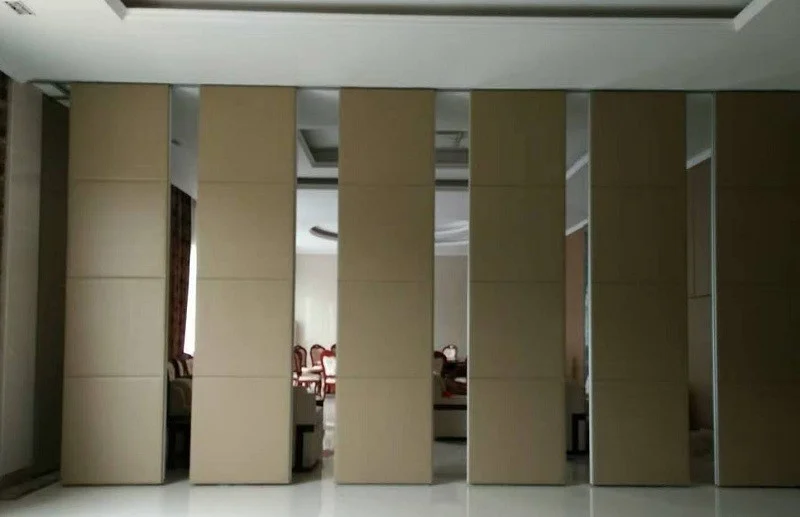
Use the movable walls product page for maintained product context and the resources page for planning material. Where project conditions differ from the reviewed layout, pause and confirm before proceeding.
FAQ: Track Fixing Sequence and Wet Trades Handover
Can track fixing start before wet trades finish?
It can be considered, but only with a defined protection plan and confirmation that support conditions are ready. The sequence must protect the overhead route from moisture, dust and impact.
Does the movable partition need a floor track?
No. EBUNGE movable wall panels are top-hung and move without a continuous floor running track or floor hardware along the partition line. The overhead route carries the movement logic.
How is the parking position decided?
Parking style is customized to the customer layout and project requirements and may support compact stacking when the coordinated design permits it. It should be planned before track fixing.
What finishes are available?
Confirmed finish options include laminate, melamine, fabric, leather, glass and other approved surfaces.
Can panels move across a gap in the track?
No. Every proposed movement path requires a continuous connected overhead route and project-specific support review.
How should acoustic requirements be confirmed?
Acoustic requirements are project-specific. Confirm the complete assembly and site conditions with matching evidence.
Conclusion: Sequence with Evidence, Not Assumptions
A reliable track fixing sequence wet trades handover depends on reviewed drawings, confirmed support conditions and a clear protection plan. Keep the overhead route continuous, plan parking early, and treat finishes as visible choices rather than performance evidence.
To discuss pass-door requirements, project documentation or layout review, contact EBUNGE and share your project drawings for a coordinated response.