
Quick answer: corridor junction circulation audit
Review focus: corridor junction circulation audit.
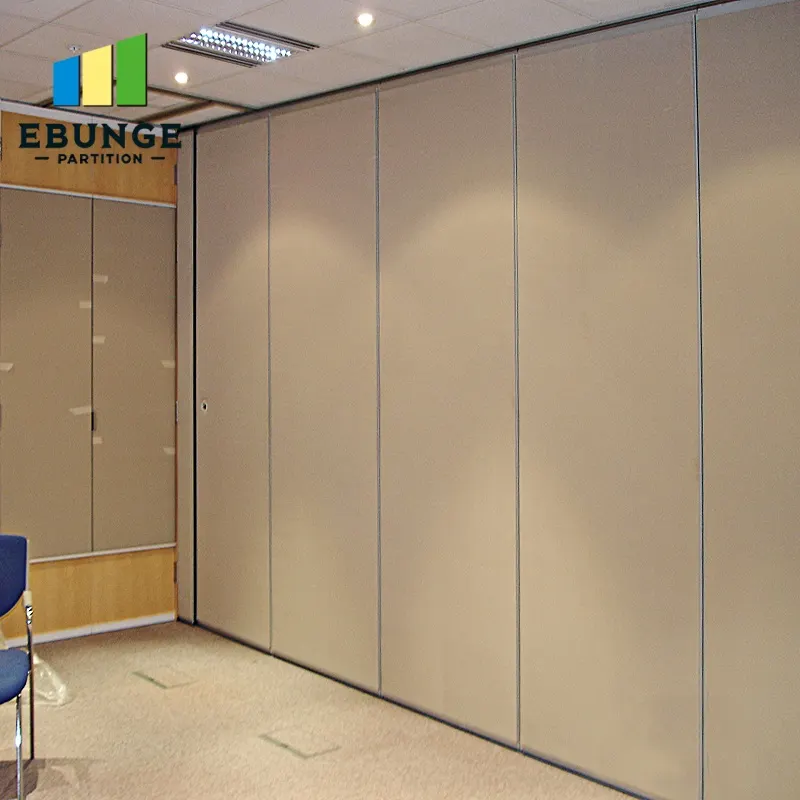
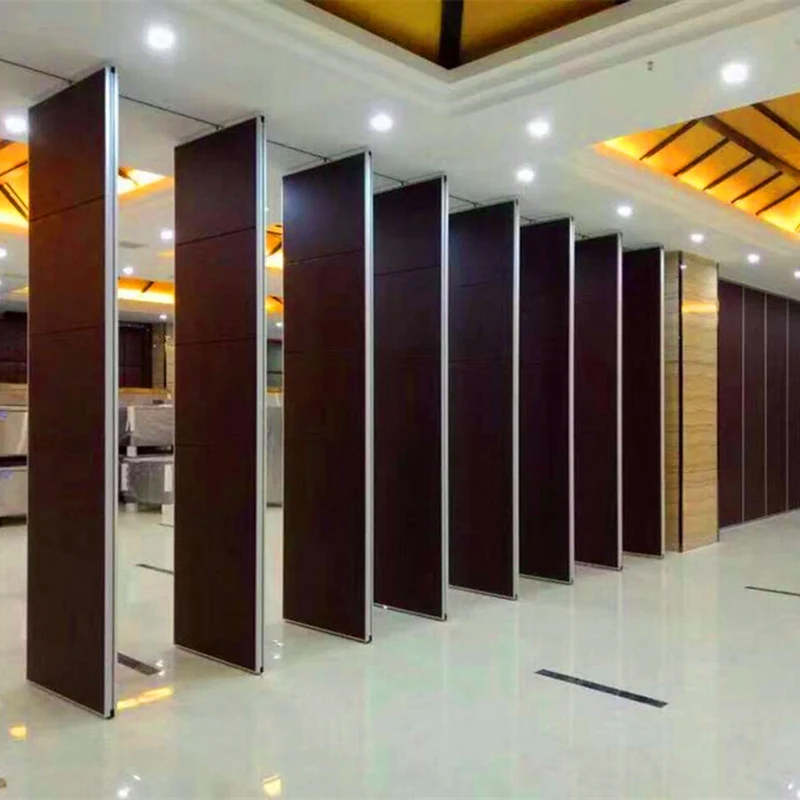
A stacking pocket corridor junction circulation audit is a drawing-based review of how people, doors, services and parked panels share the same constrained space. It matters most where a corridor meets another corridor, a lobby, a stair core or a service zone, because the pocket competes with through-traffic and turning movements. EBUNGE movable wall panels are individually movable, suspended from a top track, cross the opening without a floor track, and park at a planned stacking position. That confirmed behaviour gives the audit a clear starting point, but it does not answer project-specific support, acoustic or dimensional questions. Those must be confirmed against the actual layout.
Why a Corridor Junction Changes the Review
Project review term: corridor junction circulation audit.
A mid-corridor pocket is usually reviewed as a single opening. A junction pocket is reviewed as an intersection. Several routes converge, sightlines cross, and the parked panels occupy floor area that may already be tight. The audit therefore looks at the pocket as part of the circulation network rather than as an isolated product location.
The goal is not to prove that a layout works. It is to expose the questions that drawings must answer before fabrication, delivery and installation planning proceed. Where information is missing, the correct output is a confirmation request, not an assumption.
Start With the Confirmed Movement Model
Coordination scope: corridor junction circulation audit.
Every recommendation in this article is bound to maintained product facts. Panels are top-hung and move without a continuous floor running track or floor hardware along the partition line. Parking style is customised to the customer layout and project requirements, and may support compact stacking when the coordinated design permits it.
Two consequences follow. First, the overhead route must be continuous and connected wherever panels are expected to travel. Second, the stacking position must be planned, not improvised. A pocket at a junction is only workable when the route from the opening to the parking position is reviewed as one connected path.
What the audit can and cannot conclude
The audit can map routes, flag conflicts, list missing dimensions and record coordination actions. The suitability of each route and parking arrangement depends on the approved layout, circulation, ceiling interfaces and operating sequence. Those require matching project evidence and specialist review.
A Six-Step Circulation Audit Process
Checklist focus: corridor junction circulation audit.
- Mark the junction. Identify every corridor, door, lift lobby, stair and service route that meets or crosses the pocket zone.
- Trace the panel route. Draw the straight, turning and stacking paths from the closed position to the parked position, and confirm the overhead route is continuous.
- Overlay pedestrian movement. Show primary, secondary and accessible routes through the junction, including turning circles where relevant.
- Check the parked footprint. Confirm the stacking position does not block egress, door swings, service access or required clear widths.
- Record interfaces.
- Issue confirmations. The exact route, junction arrangement, continuous overhead path and parking position must be confirmed from the coordinated project drawings.
Drawing Checks That Prevent Rework
Review focus: corridor junction circulation audit.
Most junction problems appear on drawings before they appear on site. A disciplined check set keeps the review factual and comparable between design stages.
| Check | Question to answer | Evidence needed |
|---|---|---|
| Overhead route | Is the track route continuous from opening to parking position? | Coordinated reflected ceiling and partition plans |
| Turning path | Can panels move through the junction without conflicting with fixed elements? | Dimensioned route drawing |
| Parked footprint | Does the stacking position clear doors, egress and services? | Layout with pocket zone marked |
| Clear width | Is the remaining corridor width acceptable to the design team? | Project-specific dimensional confirmation |
| Support review | Has the supporting structure been reviewed for the proposed condition? | Structural coordination record |
This table is a coordination tool, not a compliance statement. The exact overhead route and support arrangement must be confirmed by the responsible project team from coordinated drawings.
Accessibility and Circulation Review Coordination
The pocket zone touches many disciplines, and late changes are expensive to absorb.
Who needs to be in the conversation
- Architect or interior designer, for layout intent and finish coordination.
- Contractor or construction team, for buildability and sequencing questions.
- Owner or operator, for how the space is expected to be used day to day.
- Distributor or supplier contact, for product-specific confirmation requests.
Keep the conversation evidence-based. A drawing does not prove that a route is clear unless it is dimensioned and coordinated.
Seals, Acoustics and Honest Boundaries
Seals are generally used to close gaps at panel edges, heads, jambs and meeting points. Their contribution depends on the whole assembly and the quality of the interface.
Documentation to Prepare Before Enquiry
Clear inputs shorten the confirmation cycle. Prepare a layout showing the junction, the intended opening, the proposed parking position and the routes that must remain usable.
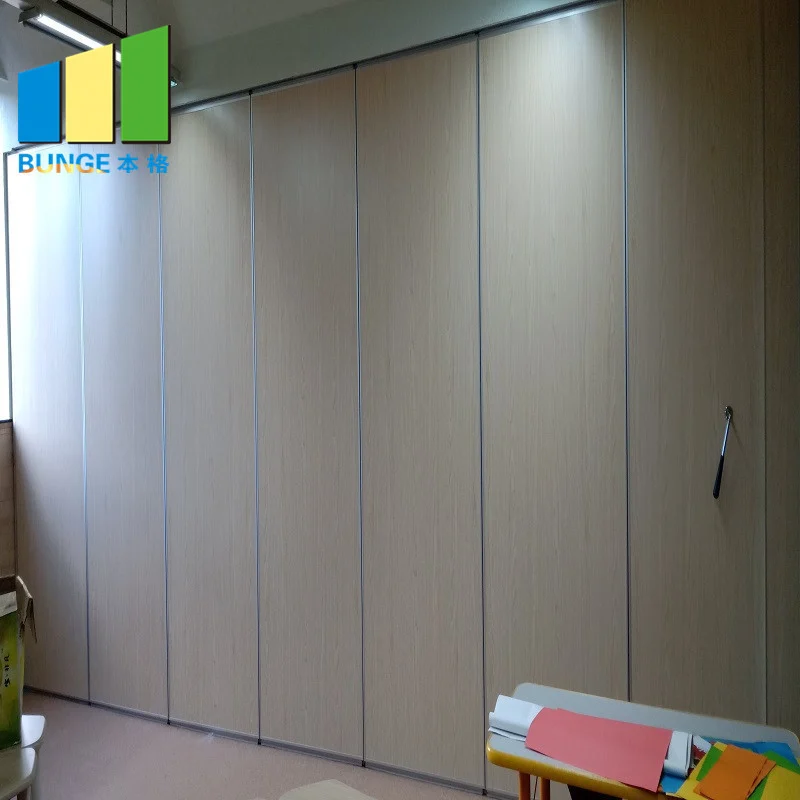
Confirmed finish options include laminate, melamine, fabric, leather, glass and other approved surfaces.
FAQ
What is a stacking pocket corridor junction circulation audit?
It is a drawing-based review of how a movable partition pocket interacts with converging routes, doors and services at a corridor junction. It maps movement and records confirmation items.
Does a movable wall need a floor track at the junction?
EBUNGE movable wall panels are top-hung and move without a continuous floor running track or floor hardware along the partition line. The overhead route must still be continuous and supported, which is a project-specific review.
Can the stacking position be decided later on site?
Parking style is customised to the customer layout and project requirements. Deciding late increases the risk of conflicts with doors, egress routes and services, so the position should be planned during drawing review.
Can you confirm acoustic performance from the layout alone?
No. Acoustic behaviour depends on the whole assembly, interfaces and project conditions.
What should we send with our enquiry?
This helps the team identify what must be confirmed.
Are pass doors possible?
Pass-door requirements and project documentation can be discussed with the EBUNGE team. Feasibility and detailing depend on the specific layout and must be confirmed for the project.
Conclusion and Next Step
A stacking pocket at a corridor junction deserves an early, evidence-bounded circulation audit. Confirm the connected overhead route, plan the parking position, overlay pedestrian movement, and record every dimension and support condition that still needs verification.
Review the movable wall product range, browse the planning resources, and then contact EBUNGE with your drawings so the team can help you identify the confirmations your project needs.