
Quick answer: stacking pocket refuge call point
Review focus: stacking pocket refuge call point.
A stacking pocket refuge call point circulation review brings two different planning concerns into one drawing area: the route people use every day and the route people may need in an emergency. When a movable wall parks beside a refuge call point, the review should confirm that the everyday movement path, the parking position and the refuge approach remain legible on the coordinated layout. This article sets out an evidence-bounded framework for that review. The suitability of each route and parking arrangement depends on the approved layout, circulation, ceiling interfaces and operating sequence.
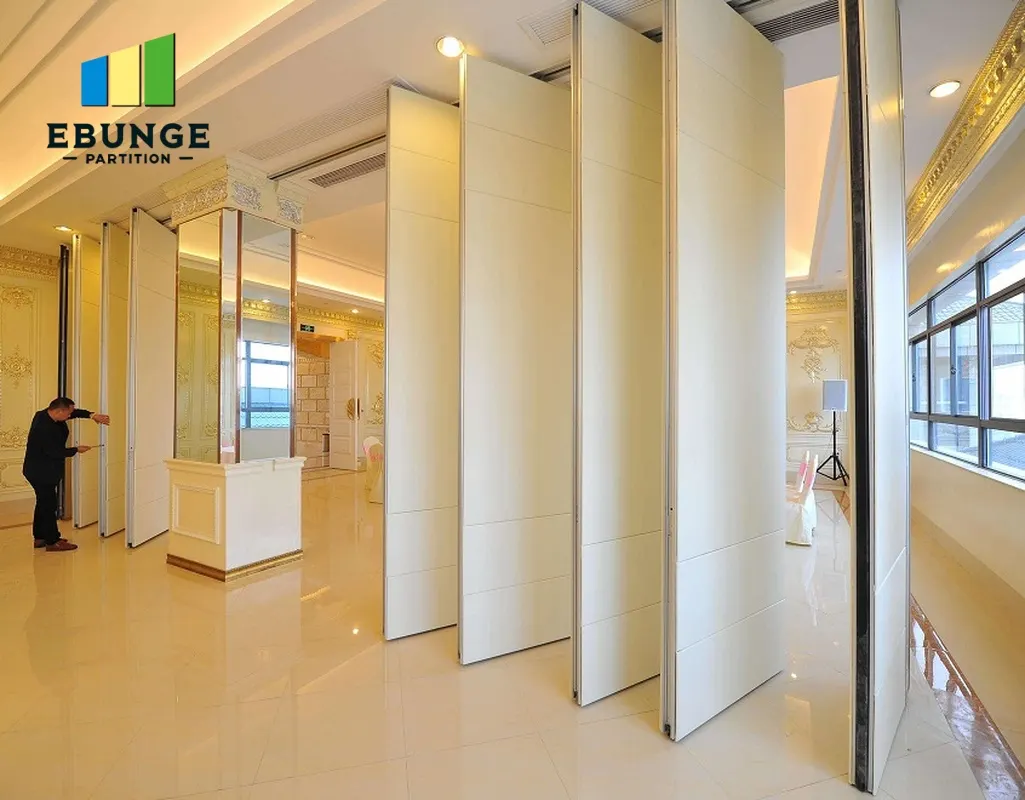
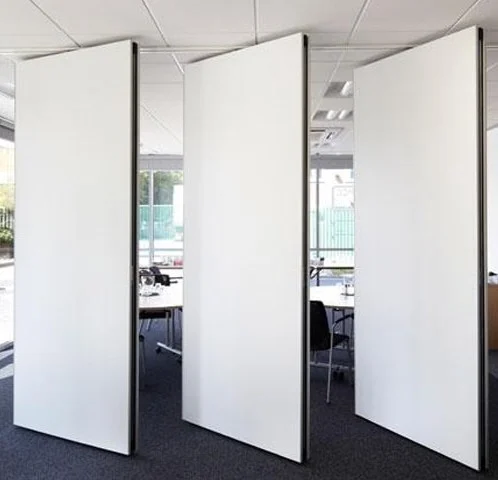
EBUNGE movable wall panels are individually movable, suspended from a top track, cross the opening without a floor track, and park at a planned stacking position. Straight, turning and stacking routes are reviewed from the layout. Those maintained facts are the starting point. Everything else depends on the application reference drawings, the local code framework and the responsible design team.
Why the stacking pocket and refuge call point interact
Project review term: stacking pocket refuge call point.
A stacking pocket is not just a storage location. It is the end point of a movement route. Panels travel from the closed position to the parking position, and that travel path has to be considered alongside the clear space around a refuge call point. If the pocket sits immediately beside the call point, the review should ask whether the parked panels, the approach to the call point and the route past both can be understood without conflict.
The interaction is spatial, not acoustic. A refuge call point is a fixed element in the layout. A stacking pocket is a planned destination for movable panels. The review should treat both as constraints on the same floor area and check them against the project’s accessibility and circulation requirements.
What the review can and cannot decide
The review can identify drawing conflicts, missing dimensions and unclear responsibilities. Those outcomes require project-specific evidence from the responsible professionals. Treat the review as a coordination tool that surfaces questions early.
Start with the maintained product facts
Coordination scope: stacking pocket refuge call point.
Before reviewing the pocket location, confirm the system description against maintained product information. EBUNGE panels are top-hung and move without a continuous floor running track or floor hardware along the partition line. Parking style is customized to the customer layout and project requirements and may support compact stacking when the coordinated design permits it.
These facts shape the circulation review. Because there is no continuous floor track along the partition line, the floor area under the opening is not occupied by a running track. That does not mean the floor is free of all constraints. The exact route, junction arrangement, continuous overhead path and parking position must be confirmed from the coordinated project drawings.
Do not infer hidden performance from a drawing
A drawing can show a pocket beside a call point. Do not derive hidden performance from a visible shape or a finish. If a claim matters to the project, ask for the matching evidence.
Drawing checks for the pocket and call point zone
Checklist focus: stacking pocket refuge call point.
Use the coordinated layout to check the relationship between the stacking pocket, the refuge call point and the surrounding circulation. The aim is to make the route readable and to record where confirmation is still needed.
- Mark the closed position, the open position and the planned parking position on the same plan.
- Show the straight, turning and stacking routes that panels follow between those positions.
- Confirm the overhead route is continuous and supported along the full movement path.
- Check the clear approach to the refuge call point against the project’s accessibility requirements.
- Record any dimension that is missing, assumed or dependent on another trade.
- Note where the pocket, call point or adjacent services create a coordination question.
This checklist is a review aid, not a compliance certificate. Each item still needs project-specific confirmation.
Coordination questions for the project team
Review focus: stacking pocket refuge call point.
The answers usually sit with the architect, the contractor, the accessibility consultant or the authority having jurisdiction, depending on the project stage.
Questions to resolve before sign-off
- Does the parking position keep the refuge call point approach clear in the coordinated layout?
- Is the overhead route continuous and supported from the closed position to the parking position?
- Are the straight, turning and stacking routes dimensioned on the drawing?
- Has the project’s accessibility and circulation requirement been applied to the pocket zone?
- Are pass-door requirements and project documentation discussed with the supplier?
- Which performance claims still need separate project-specific evidence?
These questions do not assume a particular answer. They simply make the coordination boundary visible.
Evidence boundaries and documentation
An evidence-bounded review separates what is known from what must be confirmed. The maintained facts describe the movement principle: top-hung panels, no continuous floor track along the partition line, and a planned stacking position. The project drawings describe the specific geometry. The project’s professional team confirms compliance and performance.
| Item | What the review can show | What still needs project confirmation |
|---|---|---|
| Stacking pocket location | Position on the coordinated plan | Support, dimensions and clearance |
| Refuge call point | Relationship to the pocket zone | Accessibility and code compliance |
| Movement route | Straight, turning and stacking paths | Continuous overhead support |
| Acoustic concept | That STC or Rw is a rating concept | Project-specific acoustic performance |
If acoustic separation matters, confirm it with project-specific evidence.
Finish, pass-door and layout considerations
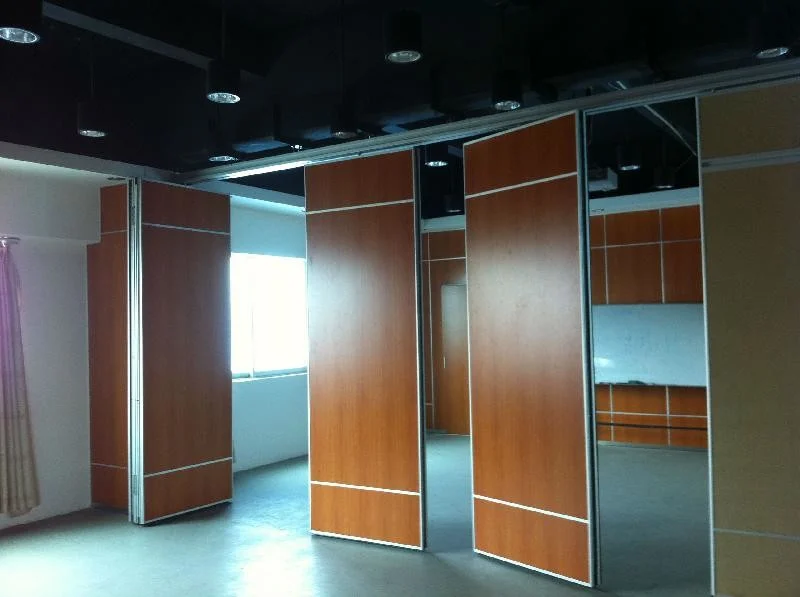
Confirmed finish options include laminate, melamine, fabric, leather, glass and other approved surfaces. Those remain project-specific questions.
Pass-door requirements and project documentation can be discussed with the supplier. If a pass door is proposed near the stacking pocket or the refuge call point, the review should show how it interacts with the movement route and the clear approach. The layout, not a generic assumption, decides whether the arrangement works.
Keep the review tied to the layout
Named venues and room types are examples only. Movable partitions can be considered wherever flexible spatial division, combination or reconfiguration is required.
FAQ
What is a stacking pocket refuge call point circulation review?
It is a drawing-based review of how a movable wall’s parking position relates to a refuge call point and the surrounding circulation. It checks routes, clearances and coordination questions, and it records what still needs project-specific confirmation.
Can the review confirm accessibility compliance?
No. The review can identify drawing conflicts and missing information, but compliance must be confirmed by the responsible project professionals and the authority having jurisdiction.
Do EBUNGE panels need a floor track along the partition line?
No. EBUNGE movable wall panels are top-hung and move without a continuous floor running track or floor hardware along the partition line.
Does the review confirm acoustic performance?
No.
What information should be ready for the supplier?
Prepare the coordinated layout, the proposed parking position, the refuge call point location, the movement routes and any pass-door requirements. Project documentation can then be discussed against those drawings.
Can the pocket be placed beside a refuge call point?
That depends on the project layout, the accessibility requirements and the coordinated design. The review should test the arrangement on the drawings rather than assume it works or fails.
Conclusion and next steps
A stacking pocket refuge call point circulation review is most useful when it stays close to maintained facts and visible evidence. Confirm the movement principle, check the drawing, list the open questions and record the boundaries. Do not let a generic assumption stand in for project-specific confirmation.
To discuss your layout, pass-door requirements and project documentation, contact EBUNGE. You can also review the movable walls product page and the resources section before the next coordination meeting.