
Quick project answer
Review focus: handover dossier track zone interface.
Handover dossier track zone interface evidence is often the weakest part of an otherwise complete movable wall submission. The dossier may include finish schedules, elevation drawings and a maintenance file, yet still leave the most important coordination question unanswered: what exactly has been proven about the overhead route where panels travel, turn and park? For contractors, architects, interior designers, owners and renovation teams, the answer should be visible, traceable and bounded by project-specific confirmation.
This guide explains what a handover dossier can reasonably demonstrate about track zone interfaces. The suitability of each route and parking arrangement depends on the approved layout, circulation, ceiling interfaces and operating sequence. Every project still needs its own coordinated drawings, support review and performance confirmation.
Why the Track Zone Interface Is a Handover Risk
Project review term: handover dossier track zone interface.
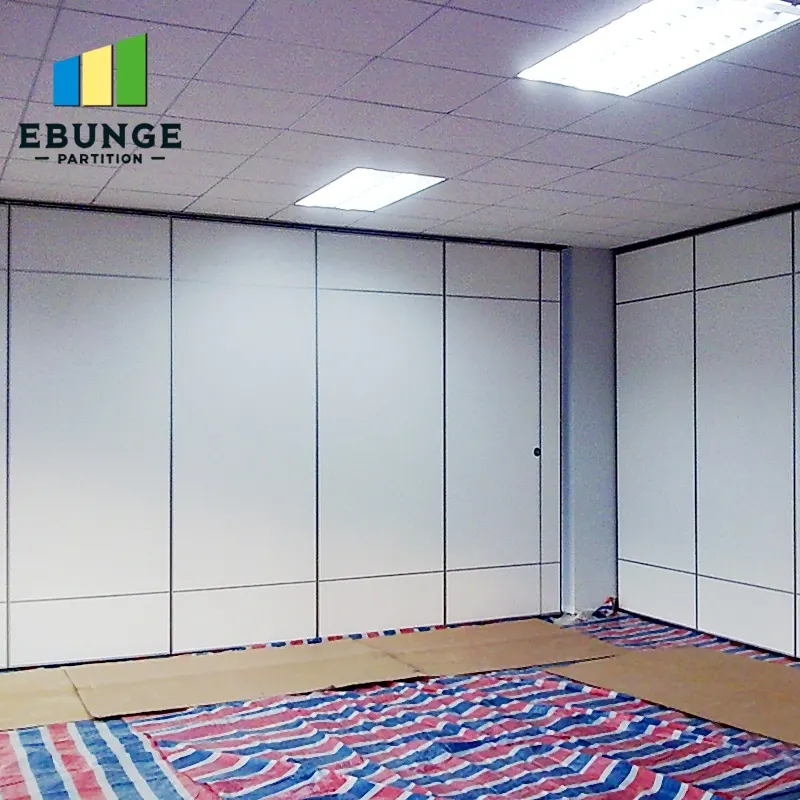
EBUNGE movable wall panels are individually movable, suspended from a top track, cross the opening without a floor track, and park at a planned stacking position. That operating concept places the critical interface above the opening, not at floor level.
A handover dossier that treats the track as a single line item can miss these interfaces. The result is a documentation gap: the reader cannot tell whether the overhead route was coordinated as a continuous connected path, whether the parking zone was planned, or whether the support condition was reviewed for the actual layout.
What the dossier should make visible
At minimum, the dossier should show the relationship between the opening, the track route, the turning or stacking route, and the surrounding construction. It should identify where project-specific support review is required rather than implying that a generic detail applies everywhere.
Evidence Categories a Reviewer Can Actually Check
Coordination scope: handover dossier track zone interface.
Track zone interface evidence is not one document. It is a set of linked records. A reviewer should be able to move from a drawing to a coordination note to a confirmation boundary without guessing.
| Evidence category | What it can show | What it cannot prove on its own |
|---|---|---|
| Layout drawing | Opening position, straight, turning and stacking routes | Structural capacity or acoustic result |
| Interface detail | How the track zone meets adjacent construction | Site-specific support adequacy |
| Coordination record | Who reviewed the route and when | That all trades have completed their scope |
| Confirmation note | Which items remain project-specific | Performance values not tested for the project |
This table is a review aid, not a compliance checklist. The exact documents required depend on the project, the contract and the local approval process.
Drawing Checks for Straight, Turning and Stacking Routes
Checklist focus: handover dossier track zone interface.
The layout is the foundation of track zone evidence. EBUNGE reviews straight, turning and stacking routes from the layout, so the dossier should reflect that same logic. A route that looks simple on a room plan may involve a turn, a transition or a parking position that changes the interface requirements.
- Confirm the opening width and the intended panel travel path.
- Trace the overhead route from the first panel position to the parking position.
- Identify every turn, junction or transition along that route.
- Mark the parking zone and its relationship to adjacent walls, columns or services.
- Note where the route crosses or approaches other construction elements.
- Record which items require project-specific support and dimensional confirmation.
Do not infer hidden performance from a clean drawing.
Support and Interface Coordination Questions
Review focus: handover dossier track zone interface.
Track zone interfaces sit between trades. The handover dossier should make the coordination boundary explicit.
Questions to resolve before handover
- Has the overhead route been reviewed as a continuous connected path?
- Is the support condition confirmed for the application reference layout?
- Are adjacent finishes coordinated with the track zone detail?
- Is the parking position clear of services, structure or conflicting elements?
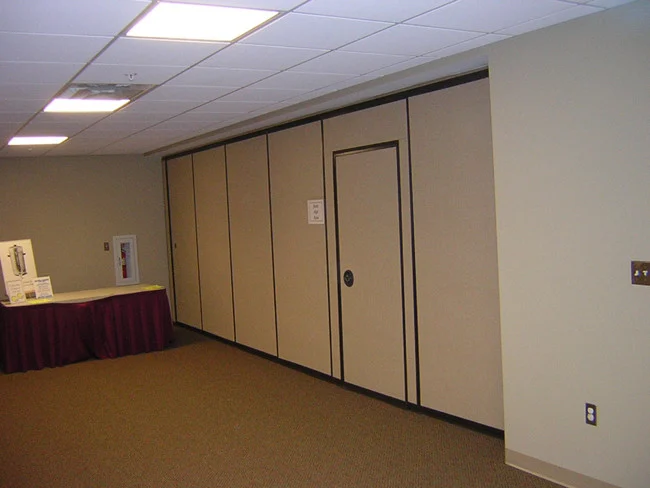
- Are pass-door requirements documented where they affect the route?
- Are remaining project-specific confirmations listed rather than assumed?
These questions do not produce a pass or fail result by themselves. They define what the dossier must prove, and what it must openly leave for project-specific confirmation.
Acoustic and Sealing Concepts in Handover Language
Project review term: handover dossier track zone interface.
A higher rating does not automatically mean a room will be silent, because real performance depends on the complete assembly, the interface details, the seals and the site conditions.
A handover dossier should avoid reducing acoustic claims to a single number without context. Generic descriptions of seals and acoustic concepts can support understanding, but they do not replace tested or project-confirmed evidence.
Evidence note
If a track zone interface claim is not supported by a project-specific drawing, coordination record or confirmation note, treat it as an open item rather than a proven condition.
Finish, Pass-Door and Documentation Boundaries
Confirmed finish options include laminate, melamine, fabric, leather, glass and other approved surfaces. Those require separate project-specific confirmation.
Pass-door requirements and project documentation can be discussed as part of the layout review. Where a pass door affects the track route or parking position, it should appear in the same coordinated drawing set. The dossier should not imply that a finish sample or a generic detail resolves a route or support question.
FAQ: Handover Dossier Track Zone Interface Evidence
What is track zone interface evidence in a handover dossier?
It is the set of drawings, coordination records and confirmation notes that show how the overhead route, support condition and parking position were reviewed for the project. It should make the interface visible and identify what remains project-specific.
Does a layout drawing prove structural capacity?
No.
Can the dossier confirm acoustic performance from a finish selection?
No. Acoustic claims require matching project-specific evidence.
Why do straight, turning and stacking routes matter?
Panels are individually movable and park at a planned stacking position. Turns and stacking areas change the interface conditions, so they should be reviewed from the layout rather than assumed.
What should a reviewer do when evidence is missing?
Record the item as open, request the missing coordination or confirmation, and avoid treating the interface as proven until the relevant project-specific evidence is available.
Where can project teams discuss documentation requirements?
Project teams can review the movable wall product context, consult the resources library, and contact EBUNGE to discuss pass-door requirements and project documentation.
Conclusion: Prove the Interface, Not Just the Product
A handover dossier is stronger when it separates what has been coordinated from what still requires project-specific confirmation. For track zone interfaces, that means showing the overhead route, the support review boundary, the parking position and the remaining open items in one traceable set of records.
EBUNGE movable partitions are top-hung and move without a continuous floor track, but every project still needs its own support, acoustic and dimensional confirmation. Use the dossier to make those confirmations visible, and keep unsupported performance claims out of the handover file.
To discuss your layout, pass-door requirements or documentation expectations, contact the EBUNGE team and confirm the project-specific details before handover.