
Quick project answer
Review focus: track fixing preliminaries.
To test bidder track fixing preliminaries interface risk coverage, procurement teams should treat the track fixing package as a coordination document, not a price line. Movable wall panels are individually movable, suspended from a top track, cross the opening without a floor track, and park at a planned stacking position. The exact route, junction arrangement, continuous overhead path and parking position must be confirmed from the coordinated project drawings. This article offers an evidence-bounded review framework for contractors, architects, interior designers, owners and renovation teams comparing submissions.
Why Track Fixing Preliminaries Deserve Their Own Review
Project review term: track fixing preliminaries.
Track fixing preliminaries describe how a bidder intends to prepare, coordinate and verify the overhead conditions before installation. They are not the same as a product datasheet. A bidder may present a compliant panel system while leaving the interface between the track and the base structure unresolved.
The suitability of each route and parking arrangement depends on the approved layout, circulation, ceiling interfaces and operating sequence. If the preliminaries do not name these interfaces, the gap usually surfaces later as a variation, a delay or an unresolved design query.
A Six-Point Test for Bidder Submissions
Coordination scope: track fixing preliminaries.
Use the following sequence to compare bidders on the same basis. It keeps the review focused on visible evidence and project-specific confirmation rather than assumed performance.
- Route continuity: Ask the bidder to mark the full overhead route on the architectural drawing, including straight runs, turning points and the stacking position. Confirm that every proposed movement path has a continuous connected overhead route.
- Support interface: Ask which party confirms the supporting structure and how that confirmation is documented.
- Drawing register: Check that the bidder lists the drawings, revisions and coordination models used for the preliminaries. Undated or unnumbered references weaken the submission.
- Scope boundaries: Identify what the bidder excludes, such as enabling works, ceiling access or finish reinstatement. Exclusions are legitimate when they are explicit.
- Parking coordination: Confirm how the planned stacking position interacts with doors, services, furniture and adjacent rooms.
- Pass-door and access: Where a pass-door is required, confirm that the requirement is stated and coordinated with the panel layout.
Evidence Notes: What a Bidder Can and Cannot Show
Checklist focus: track fixing preliminaries.
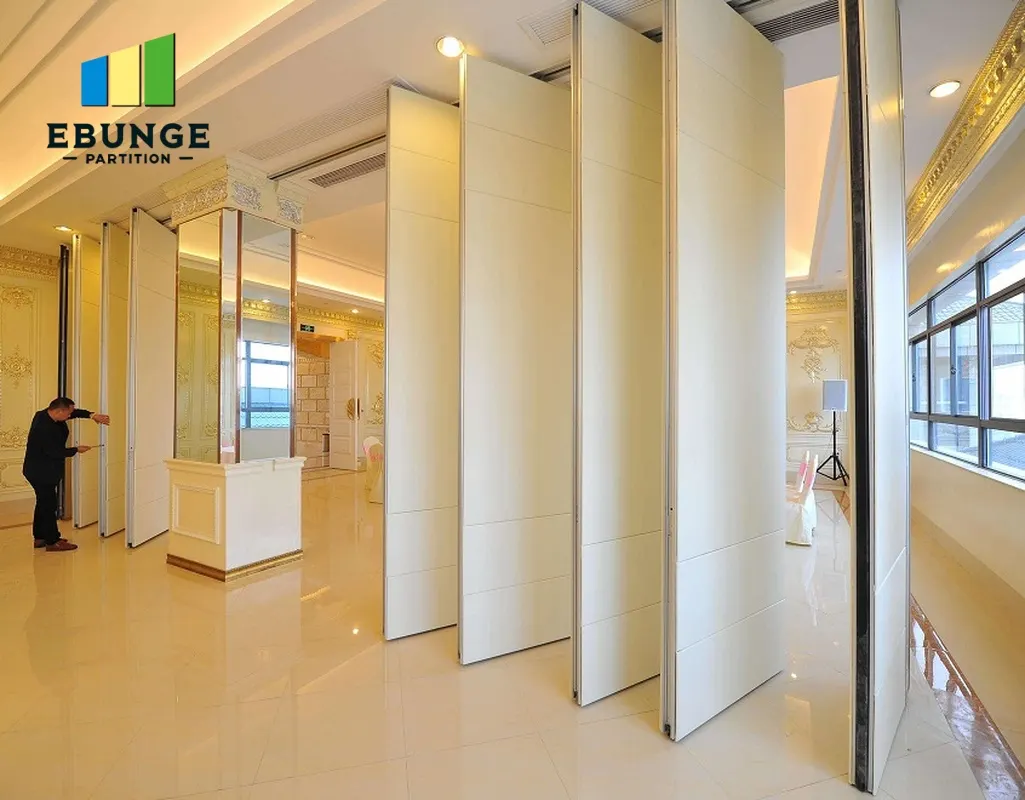
Procurement teams often ask for proof of performance before the design is fixed. That expectation needs to be managed carefully. A bidder can show drawings, schedules, finish samples and method statements.
Evidence note: treat every performance figure, fixing detail and dimensional statement as project-specific until it is confirmed against the actual opening, support condition and layout. Visible finishes or photographs do not prove acoustic, structural or durability performance.
Comparing Bidders Without Inventing Performance
A compact comparison helps a tender panel separate coordination quality from commercial positioning. The table below uses only the categories a bidder can reasonably document at tender stage.
| Review area | Weak submission signal | Stronger submission signal |
|---|---|---|
| Overhead route | Route shown only as a straight line | Straight, turning and stacking routes marked on the layout |
| Support interface | Structure assumed adequate | Named party and documented confirmation process |
| Drawing control | Undated references | Numbered revisions and coordination notes |
| Scope boundaries | Exclusions omitted | Exclusions and assumptions listed |
| Finish and pass-door | Generic finish description | Approved finish options and pass-door requirement stated |
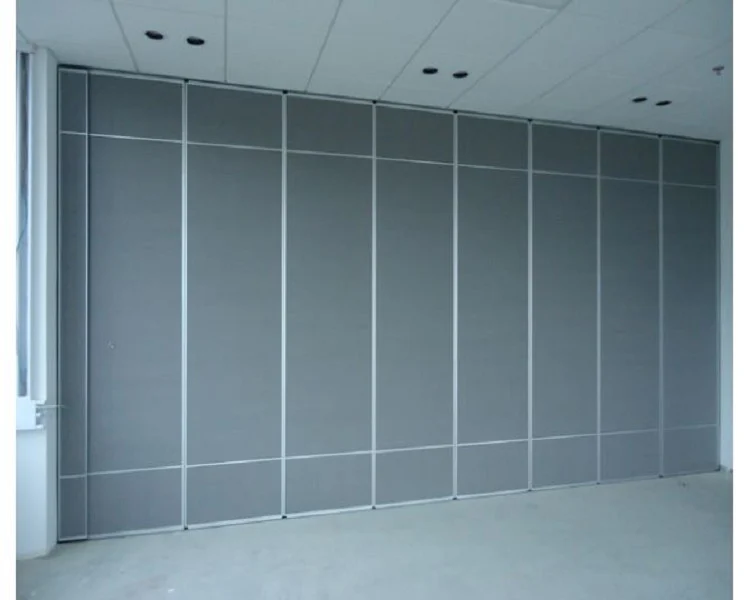
This comparison does not rank bidders on price or capability. It tests whether the preliminaries cover the interfaces that the installation will depend on.
Questions to Put to Each Bidder in Writing
Written questions create a comparable record. They also reduce the chance that a verbal clarification disappears before contract award.
- Which drawing revision defines the overhead route, and who owns the next update?
- What information does the bidder need before confirming the support interface?
- How will the stacking position be coordinated with adjacent trades?
- Which finish options are proposed, and are they approved for the intended room use?
- What pass-door requirements apply, and how are they shown on the panel layout?
- Which items remain open for project-specific confirmation?
Review the answers against the movable wall product context and the project drawings. Where a response relies on an assumption, ask for the assumption to be stated in the tender return.
Red Flags That Suggest Interface Risk Is Not Covered
Some signals are worth escalating before award. A bidder who cannot identify the supporting structure as a coordination item has not covered the interface.
Other warning signs include preliminaries that copy a previous project without adjusting the route, stacking position or finish schedule. Similarly, a submission that offers performance conclusions without project-specific confirmation is not providing evidence; it is providing reassurance.
Use the EBUNGE resources to structure your own review checklist, and keep the tender query log with the drawing register.
How to Record the Outcome of the Test
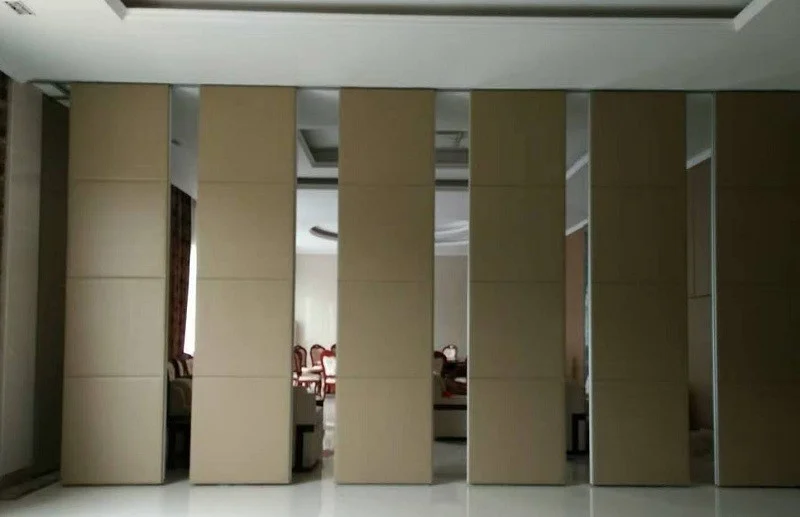
Record each bidder against the six-point test and the comparison table. Note which items are confirmed, which are assumptions and which require project-specific support, acoustic and dimensional confirmation. This record protects the evaluation team and gives the selected bidder a clear starting point.
If the preliminaries remain incomplete, the correct next step is a clarification round, not an assumption. The goal is not to eliminate every open item at tender stage; it is to make the open items visible and owned.
Frequently Asked Questions
What does interface risk mean in a track fixing submission?
It means the risk that sits between the partition scope and the surrounding structure, services or finishes. It includes the overhead route, support conditions, stacking position and coordination with other trades.
Can a bidder confirm acoustic performance at tender stage?
Only within the limits of the information available. Visible references can support layout discussion but do not verify hidden construction or performance. Project-specific confirmation is required before any performance statement is treated as final.
Why does the stacking position matter to preliminaries?
The panels park at a planned stacking position, so that area must be coordinated with doors, services, furniture and adjacent rooms. If it is not shown, the layout may not work as intended.
Should a bidder include a floor track in the preliminaries?
EBUNGE movable partition panels are top-hung and cross the opening without a floor track. The preliminaries should focus on the overhead route and its support interface rather than a continuous floor running track.
How should finish options be reviewed?
Confirmed finish options include laminate, melamine, fabric, leather, glass and other approved surfaces. The bidder should state which options are proposed and confirm suitability for the intended room use.
What if the bidder leaves items open?
Open items are acceptable when they are clearly listed and assigned. They become a problem when they are hidden inside a fixed price or presented as already resolved.
Conclusion and Next Step
Testing bidder track fixing preliminaries for interface risk coverage is a drawing-and-evidence exercise. Ask for route continuity, support coordination, drawing control, scope boundaries and parking logic. Compare answers consistently, and keep every performance or dimensional statement tied to project-specific confirmation.
To discuss pass-door requirements, project documentation or a movable wall configuration for your layout, contact the EBUNGE team with your drawings and tender questions.