
Quick answer: ceiling interface responsibility split before partition tender
Review focus: ceiling interface responsibility split before partition tender.
A ceiling interface responsibility split before partition tender is the point where the project team decides who owns the zone above the movable partition opening. That zone is rarely a single line on a drawing. The suitability of each route and parking arrangement depends on the approved layout, circulation, ceiling interfaces and operating sequence. If the split is left open, bidders price different assumptions, and the gap returns as a variation. This article offers an evidence-bounded framework for defining that split before tender, without inventing performance or engineering outcomes.
Why the Ceiling Interface Zone Is a Tender Risk
Project review term: ceiling interface responsibility split before partition tender.
Movable wall panels are individually movable, suspended from a top track, cross the opening without a floor track, and park at a planned stacking position. The top track needs a continuous connected overhead route. That route passes through the ceiling interface zone. When the ceiling is treated as a separate package, the interface can fall between trades.
The risk is not only cost. It is scope ambiguity. One bidder may assume the ceiling grid is complete before the track is set out. Another may assume the track is fixed before the ceiling is closed. Both assumptions can be reasonable, but they produce different sequences and different responsibilities.
What the Pre-Tender Split Should Define
Coordination scope: ceiling interface responsibility split before partition tender.
A useful split defines scope, sequence and evidence. It does not need to solve every detail, but it should name the parties and the documents that control the interface.
Scope boundaries
Where a turning or stacking route is proposed, the same boundaries apply along the full route, not only at the opening.
Sequence and access
Define the order of ceiling works, track installation and finishing. Access to the ceiling void may need to remain available until the route is reviewed. If the ceiling closes early, later coordination may require removal and reinstatement, which should be priced or excluded clearly.
Evidence and approvals
List the drawings, schedules and approvals that each party must provide. This is where an evidence note helps. The split should say which documents are for information and which are for construction.
A Pre-Tender Responsibility Checklist
Checklist focus: ceiling interface responsibility split before partition tender.
Use this checklist to structure the split before pricing. It is a coordination tool, not a substitute for project-specific engineering review.
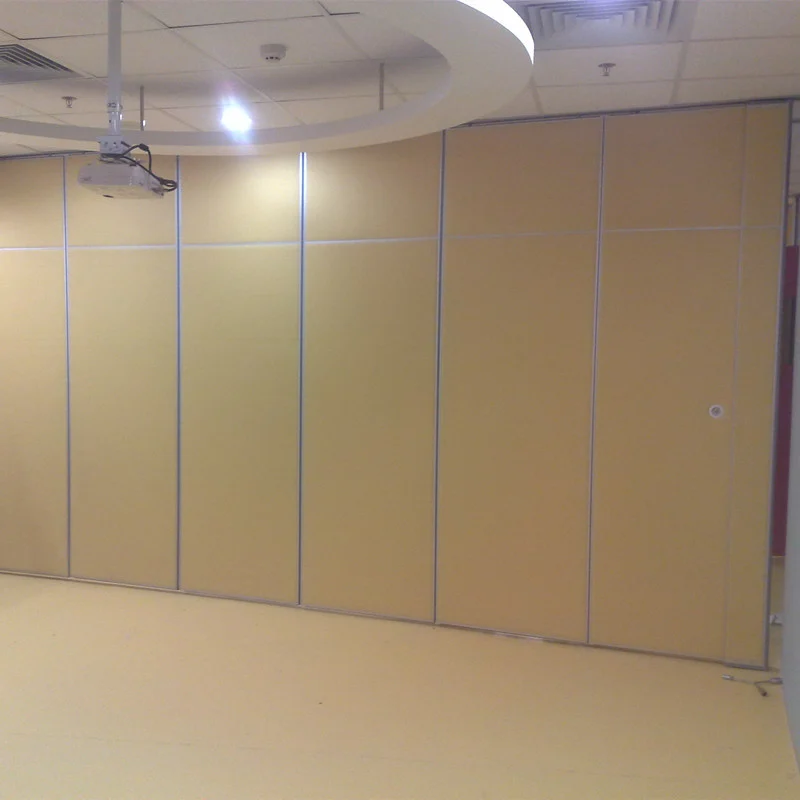
- Mark the full partition route, including straight, turning and stacking positions.
- Confirm whether the overhead route is continuous and connected for every proposed movement path.
- Name the party responsible for support coordination and the party responsible for ceiling closure.
- Record the sequence for track setting out, ceiling opening and finishing.
- List the drawings and approvals required before fabrication or installation.
- State the boundary for acoustic, fire and dimensional requirements as project-specific items to be confirmed.
- Agree how changes to the ceiling layout will be communicated and priced.
Drawing Review Before Tender
Drawings are the main evidence available at tender stage, but they have limits. A ceiling plan can show a grid and a partition line. The exact route, junction arrangement, continuous overhead path and parking position must be confirmed from the coordinated project drawings. The review should identify what is visible and what still requires confirmation.
Visible evidence
Visible evidence includes the partition location, the ceiling extent, the proposed stacking position and any marked openings. These items can be compared across disciplines.
Items requiring project-specific confirmation
Do not infer them from a finish, a photograph or a generic detail. If the tender documents do not contain that confirmation, the split should say who will obtain it and when.
How to Word the Split in Tender Documents
Clear wording reduces the chance of overlapping or missing scope. A short responsibility matrix can be more useful than a long narrative.
| Interface item | Typical responsibility | Evidence required |
|---|---|---|
| Structural support above track | To be named by project team | Project-specific structural review |
| Ceiling opening and closure | To be named by project team | Coordinated ceiling drawing |
| Track route and stacking position | To be named by project team | Layout drawing with route review |
| Finish selection | To be named by project team | Approved finish schedule |
| Acoustic and fire requirements | To be named by project team | Project-specific specification |

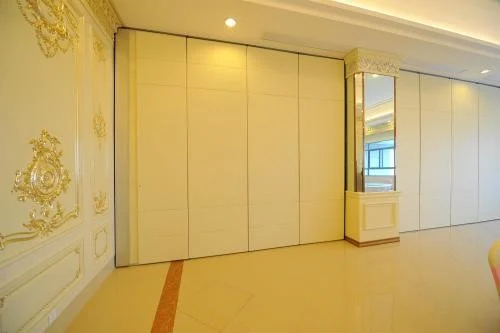
Finish options include laminate, melamine, fabric, leather, glass and other approved surfaces. The split should confirm who approves the finish and how it interfaces with the ceiling detail. Pass-door requirements and project documentation can be discussed with the supplier, but they should be listed as coordination items rather than assumed.
Acoustic Concepts and Their Limits
The ceiling interface can affect how a partition system performs, because the top track and ceiling junction are part of the installed assembly.
For that reason, acoustic requirements should be stated as project-specific criteria to be confirmed against the actual assembly, not as a generic promise. The pre-tender split should identify who provides the acoustic specification and who confirms that the interface detail is consistent with it.
Common Coordination Gaps to Avoid
Several gaps appear repeatedly in tender reviews. Naming them early helps the team avoid rework.
- Assuming the ceiling contractor will coordinate the track route without a drawing.
- Leaving the stacking position undefined, so the route cannot be reviewed.
- Treating the ceiling interface as a single point rather than a continuous zone.
- Omitting the sequence for ceiling closure after track installation.
- Failing to state who confirms project-specific support and dimensional requirements.
FAQ
What is a ceiling interface responsibility split before partition tender?
It is a pre-tender agreement that names who owns the ceiling zone above the movable partition, including support coordination, ceiling opening, track route and closure. It should be recorded in the tender documents so bidders price the same scope.
Why does the ceiling interface matter for a movable partition?
Movable panels are top-hung and need a continuous connected overhead route.
Can the split be based only on architectural drawings?
The split should state who provides that confirmation.
How should acoustic requirements be handled before tender?
State them as project-specific criteria to be confirmed against the actual assembly.
What finish information should be included?
List the approved finish options, such as laminate, melamine, fabric, leather, glass or other approved surfaces, and confirm who approves the finish schedule.
When should the project team contact the partition supplier?
Early contact helps the team review straight, turning and stacking routes from the layout and discuss pass-door requirements and project documentation. Use the contact page to raise project-specific questions before tender.
Conclusion
A ceiling interface responsibility split before partition tender is a coordination document, not a performance claim. It should define scope, sequence, evidence and approvals for the zone above the opening. It should also mark what remains subject to project-specific support, acoustic and dimensional confirmation.
Review the layout, confirm the overhead route, and record the split in the tender package. For maintained product context, see the movable walls product page and the resources section. When the ceiling interface zone needs a clear pre-tender split, contact EBUNGE to discuss your project documentation and coordination requirements.