
Quick answer: stacked partition turning circle corridor bend review
Review focus: stacked partition turning circle corridor bend review.
A stacked partition turning circle corridor bend review asks one practical question: after the panels park, does the corridor still allow people, carts and equipment to turn safely? Because EBUNGE movable wall panels are individually movable, suspended from a top track, cross the opening without a floor track and park at a planned stacking position, the answer depends on the coordinated layout rather than on the panel alone. This article sets out an evidence-bounded review framework for contractors, architects, interior designers, owners and renovation teams. It does not replace project-specific support, acoustic and dimensional confirmation.
Why a Corridor Bend Changes the Review
Project review term: stacked partition turning circle corridor bend review.
A straight corridor gives a predictable path. A bend introduces a tighter geometry where the turning envelope, sightlines and door swings compete for the same floor area. When a partition parks near that bend, the parked panels become part of the corridor furniture, even though they are not fixed floor hardware.
The review therefore treats the parked condition as a design state, not an afterthought. Teams should ask whether the stacking position sits inside or outside the desired turning circle, and whether the route from the opening to that position stays clear.
What the Maintained Product Facts Allow Us to Say
Coordination scope: stacked partition turning circle corridor bend review.
EBUNGE movable partition panels are top-hung and move without a continuous floor running track or floor hardware along the partition line. Parking style is customized to the customer layout and project requirements and may support compact stacking when the coordinated design permits it.
Those facts describe movement and parking logic. The suitability of each route and parking arrangement depends on the approved layout, circulation, ceiling interfaces and operating sequence. Any statement about a specific corridor bend must come from the project drawings and the relevant project-specific confirmation.
Evidence note: a visible drawing or finish sample does not prove acoustic, fire, durability, load or commercial performance. Confirm those items separately for the project.
Drawing Information Needed Before a Turning Circle Review
Checklist focus: stacked partition turning circle corridor bend review.
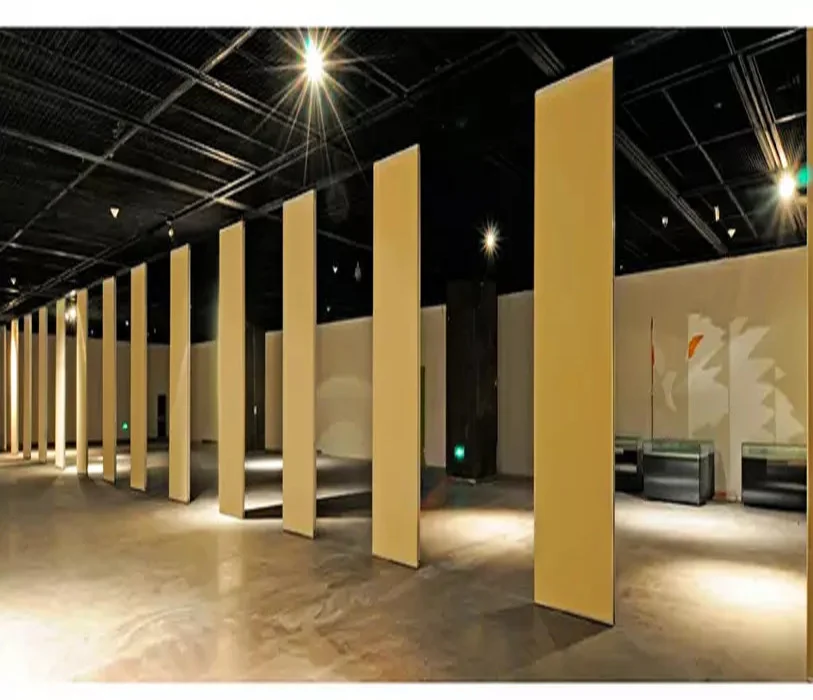
A useful review starts with measured drawings, not assumptions. The team should be able to trace the overhead route from the closed position to the parking position and see how that route relates to the corridor bend.
Core inputs
- Corridor width at the bend and along the approach.
- Location of doors, glazing, columns, services and fixed furniture.
- Proposed parking position and its relationship to the turning circle.
- Intended direction of travel and frequency of use.
- Any accessibility or circulation standard the project must satisfy.
Where an input is missing, mark it as an open item rather than filling the gap with an assumed value. The review is only as reliable as the drawing set behind it.
A Step-by-Step Coordination Process
Review focus: stacked partition turning circle corridor bend review.
- Plot the closed partition line and the opening it serves.
- Plot the proposed parking position and the route the panels follow to reach it.
- Overlay the required turning circle at the corridor bend.
- Check whether the parked panels, door swings or fixed elements intrude on that circle.
- Review the overhead route for continuity and support coordination.
- Record unresolved items for project-specific confirmation.
- Reissue the drawing once the parking position or bend geometry changes.
This sequence keeps the conversation on geometry and coordination. It avoids turning a layout question into an unsupported performance claim.
Parking Position Versus Turning Circle
Compact stacking can help where the coordinated design permits it, but compactness is not the same as clearance. A parking pocket that looks small on plan may still sit inside the turning envelope if the bend is tight or the approach is angled.
| Review item | What to check | Evidence source |
|---|---|---|
| Parking position | Does it sit outside the turning circle? | Coordinated layout drawing |
| Overhead route | Is the route continuous and supported? | Project-specific support review |
| Corridor bend | Does geometry allow a clear turn? | Measured plan and circulation standard |
| Finish selection | Does it suit the visible application? | Approved finish options and project approval |
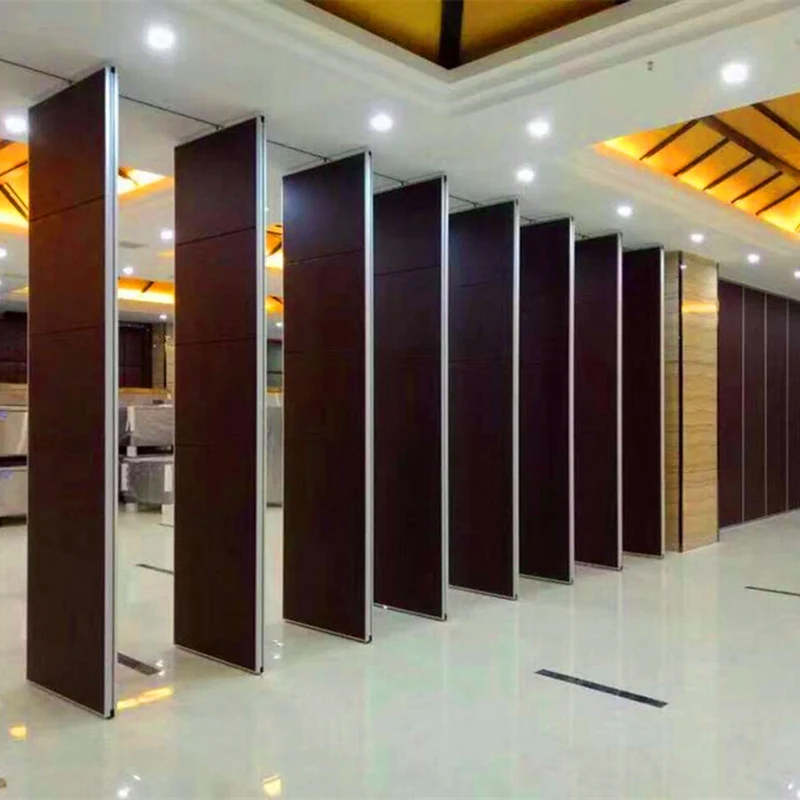
Confirmed finish options include laminate, melamine, fabric, leather, glass and other approved surfaces. Finish choice affects appearance and maintenance planning, but it does not by itself resolve a turning circle conflict.
Acoustic and Accessibility Concepts in Plain Terms
Seals and acoustic concepts can be discussed generically, but the actual performance of an opening depends on the complete assembly and the project conditions.
Accessibility review is similarly project-specific. A turning circle is a planning device; whether it is satisfied depends on the applicable standard, the measured geometry and the way the parked partition interacts with the route.
Common Coordination Gaps
Teams often discover turning circle conflicts late because the parking position was chosen before the corridor bend was measured. Another frequent gap is treating the overhead route as a detail rather than a design constraint.
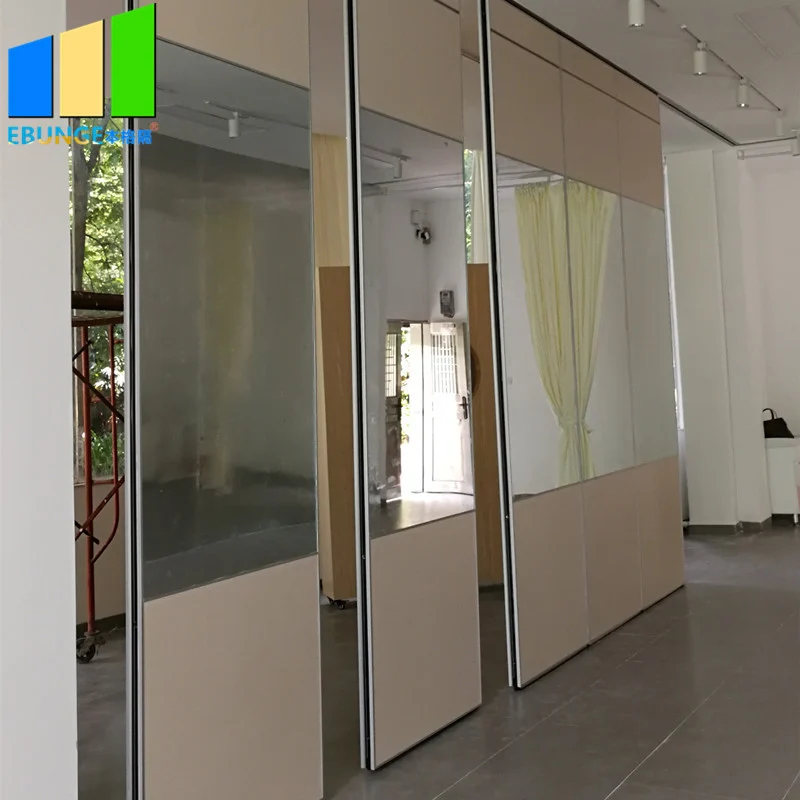
Pass-door requirements and project documentation can be discussed with the supplier, but they should be raised early enough to influence the layout. Late changes to parking position can ripple into support coordination and finish approval.
FAQ
Can a stacked partition leave a clear turning circle at a corridor bend?
It can be planned that way when the coordinated layout keeps the parked panels outside the required turning envelope. The outcome depends on measured geometry, parking position and project-specific confirmation.
Do EBUNGE panels need a floor track along the partition line?
No. The maintained product facts describe top-hung panels that cross the opening without a continuous floor running track or floor hardware along the partition line.
Does the finish affect the turning circle review?
Finish selection affects appearance and maintenance planning. It does not change the geometric relationship between the parked panels and the corridor bend.
Can the parking position be customized?
Parking style is customized to the customer layout and project requirements and may support compact stacking when the coordinated design permits it.
What should be confirmed before sign-off?
Confirm project-specific support, acoustic and dimensional requirements, the overhead route, the parking position and the applicable circulation standard.
Where can I find more planning resources?
Review the EBUNGE resources and the movable walls product page for maintained public context, then raise project-specific questions through contact.
Conclusion and Next Step
A stacked partition turning circle corridor bend review is a geometry and coordination exercise. Keep the parked condition visible on the plan, trace the overhead route, and mark every unresolved item for project-specific confirmation.
For project-specific support, acoustic and dimensional requirements, contact the EBUNGE team with your layout drawings and circulation standard so the review can be coordinated properly.