
Quick answer: handover evidence register
Review focus: handover evidence register.
Movable partition handover evidence register assembly is a documentation exercise, not a performance claim. A register helps a project team record what was confirmed, what remains open and which items depend on project-specific drawings. For top-hung movable walls, the maintained product facts are limited but useful: panels are individually movable, suspended from a top track, cross the opening without a floor track and park at a planned stacking position. Straight, turning and stacking routes are reviewed from the layout. Finish options include laminate, melamine, fabric, leather, glass and other approved surfaces. Pass-door requirements and project documentation can be discussed. Everything else must be confirmed for the project.
What the Register Is and What It Is Not
Project review term: handover evidence register.
The register is a controlled index of evidence. It points to approved drawings, correspondence, finish schedules, route reviews and open queries. It is not a certificate, a test report or a substitute for project-specific engineering. Visible references can support layout discussion but do not verify hidden construction or performance.
The suitability of each route and parking arrangement depends on the approved layout, circulation, ceiling interfaces and operating sequence.
Start With the Maintained Product Facts
Coordination scope: handover evidence register.
Begin the register with the facts that are already maintained and approved. This prevents the team from treating planning assumptions as evidence.
- Panels are individually movable and top-hung from a top track.
- The system crosses the opening without a continuous floor running track or floor hardware along the partition line.
- Panels park at a planned stacking position; parking style is customized to the layout and project requirements.
- Straight, turning and stacking routes are reviewed from the layout.
- Finish options include laminate, melamine, fabric, leather, glass and other approved surfaces.
- Pass-door requirements and project documentation can be discussed.
Each fact should have a source reference in the register. If a statement is not in the maintained facts or the project evidence, mark it as open rather than assumed.
Build the Evidence Register in Numbered Steps
Checklist focus: handover evidence register.
- Create a register header. Record the project name, revision date, document owner and the drawing set being reviewed.
- List confirmed product facts. Copy only the maintained facts above, with a reference to the approved source.
- Add project-specific requirements. Record the opening size, layout route, parking position, finish selection and pass-door needs as items to confirm.
- Attach drawing references. Link each route review to the relevant plan or elevation. Do not infer support points, loads or dimensions from a sketch.
- Log open queries. Give every unresolved item an owner, a due date and a status.
- Review before handover. Confirm that no performance, engineering or commercial conclusion has been added without matching evidence.

This sequence keeps the register useful without turning it into a promise. It also makes the boundary between product facts and project-specific confirmation visible to every reviewer.
Coordinate Documentation Across Project Teams
Review focus: handover evidence register.
Handover documentation coordination fails when different teams work from different assumptions. Contractors, architects, interior designers, owners and distributors should agree on one register structure and one revision process.
Assign a single register owner
One person should control the master register. Others contribute evidence, but the owner maintains the index, tracks revisions and prevents duplicate or conflicting entries.
Separate confirmed facts from open items
Use two clearly labeled sections. Confirmed facts come from maintained product information or approved project documents. Open items are questions that still need a project-specific answer.
Keep drawing review traceable
Every route review should reference a drawing number and revision. If a drawing changes, the register should show which entries are affected and who must re-confirm them.
Use a Compact Evidence Boundary Table
| Register item | Evidence status | Action |
|---|---|---|
| Top-hung movement without floor track | Maintained product fact | Reference approved source |
| Straight, turning and stacking routes | Reviewed from layout | Attach drawing revision |
| Finish selection | Approved surface option | Confirm project sample and schedule |
| Acoustic performance | Project-specific requirement | Confirm rating, standard and documentation |
| Support and dimensional requirements | Project-specific engineering | Confirm with responsible engineer |
| Pass-door requirements | Discussed per project | Record decision and drawing reference |
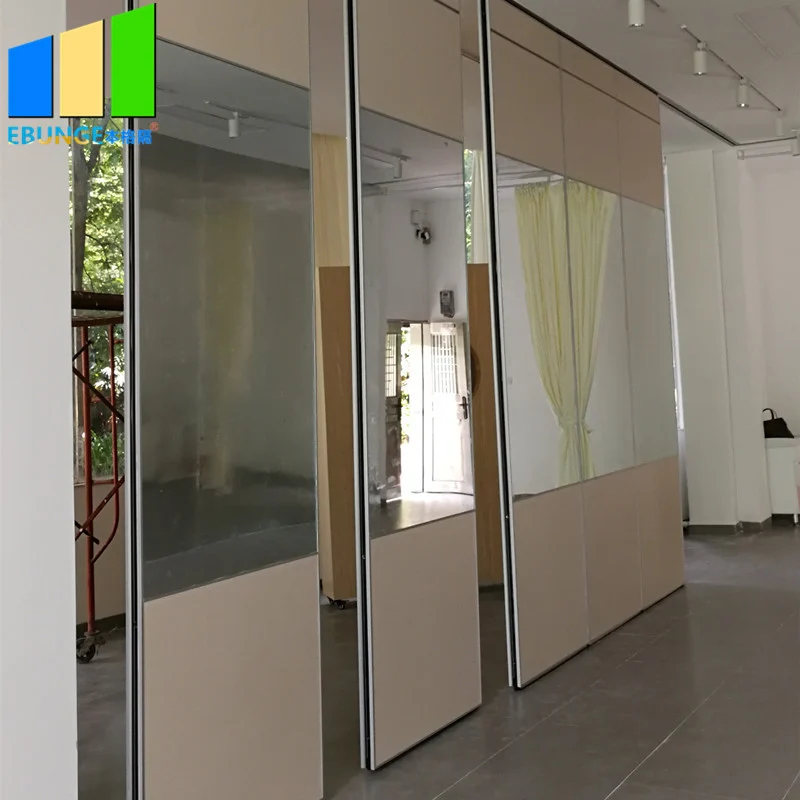
The table is a working tool, not a certification. It helps reviewers see where evidence exists and where confirmation is still required.
Review the Register Before Handover
A final review should test the register against the project’s own evidence rules. Ask whether every performance statement has a matching source, whether every drawing reference is current and whether every open item has an owner.
Evidence note: a register entry is only as strong as its source. If the source is a planning assumption, label it as an assumption and keep it out of the confirmed section.
Common Gaps That Weaken a Handover Register
Most weak registers share predictable gaps. They mix confirmed facts with assumptions, omit drawing revisions, or treat a finish image as evidence of performance. They may also ignore the parking position or the route review.
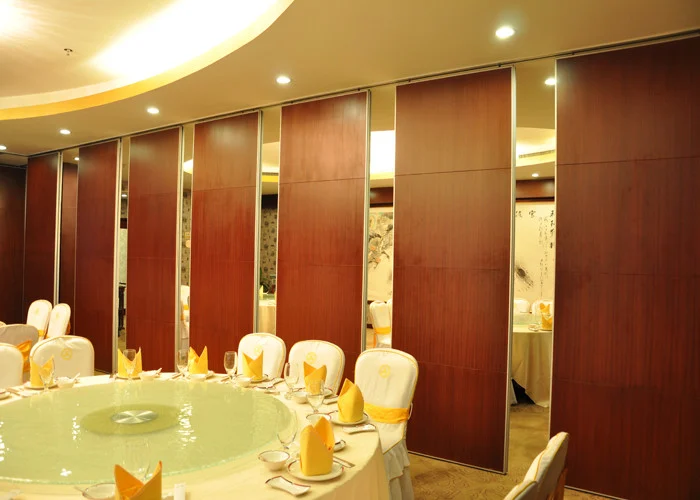
Another gap is unclear ownership. When no one owns the register, open items remain open and handover becomes a discussion rather than a documented process. Assign ownership early and review status at each project milestone.
Finally, avoid copying generic language from unrelated projects. A register should reflect the actual layout, the actual finish schedule and the actual questions raised by the project team.
Frequently Asked Questions
What is a movable partition handover evidence register?
It is a controlled index of confirmed product facts, project-specific requirements, drawing references and open queries. It supports handover without making unsupported performance claims.
Can the register confirm acoustic performance?
No.
Do movable partitions need a floor track?
The maintained product facts describe top-hung panels that cross the opening without a continuous floor running track or floor hardware along the partition line. The exact overhead route and support arrangement must be confirmed by the responsible project team from coordinated drawings.
Which finish options can be recorded?
Confirmed finish options include laminate, melamine, fabric, leather, glass and other approved surfaces. The project team should confirm the selected finish and its documentation.
How are parking and route reviews documented?
Parking style is customized to the layout and project requirements. Straight, turning and stacking routes are reviewed from the layout, so the register should reference the relevant drawing revision.
What should be excluded from the register?
Exclude unsupported performance claims, service-life promises, financial returns and any conclusion inferred from a visible shape, finish or photograph.
Conclusion and Next Step
A well-built register separates what is known from what must be confirmed. It uses maintained product facts, references project drawings and keeps open items visible. This approach supports clearer coordination without inventing engineering, acoustic or commercial outcomes.
To discuss pass-door requirements, project documentation or the layout review process for your movable partition, contact EBUNGE. You can also review the movable wall product range and the project resources before assembling your register.