
Quick answer: acoustic partition tender
Review focus: acoustic partition tender.
An acoustic partition tender bid clarification log is a controlled register that captures every question, assumption, and response exchanged during the tender period. For overseas contractors, architects, and procurement teams, it prevents verbal answers from disappearing and keeps the evaluation of movable wall bids transparent. This guide explains how to structure the log, what to track, and where to stop short of unsupported conclusions.
Why a Clarification Log Matters in Acoustic Partition Procurement
Project review term: acoustic partition tender.
The suitability of each route and parking arrangement depends on the approved layout, circulation, ceiling interfaces and operating sequence. Without a single log, clarifications scatter across emails, meeting notes, and drawing markups. A structured log gives every bidder the same information and creates an auditable trail.
The log also protects the project from scope gaps. When a bidder assumes a condition that the design team has not confirmed, the log surfaces that assumption early. It does not replace project-specific engineering review, but it makes the review traceable.
Core Fields Every Clarification Log Should Contain
Start with a simple table that any team member can update. The fields below are generic and should be adapted to your tender format.
| Field | Purpose |
|---|---|
| Clarification ID | Unique reference for tracking and cross-referencing |
| Date raised | Records when the question entered the process |
| Raised by | Identifies the party seeking clarification |
| Topic area | Groups items by support, acoustics, finishes, parking, or documentation |
| Question | Exact wording of the query |
| Response | Formal answer issued to all bidders |
| Evidence reference | Links to drawings, specifications, or approved documents |
| Status | Open, answered, or closed |
Keep the log version-controlled. When a response changes a previous answer, mark the earlier entry as superseded rather than deleting it.
How to Categorise Clarifications for Movable Wall Tenders
Grouping questions by category helps reviewers spot patterns. The categories below reflect common coordination areas, but they are not exhaustive.
Support and Track Coordination
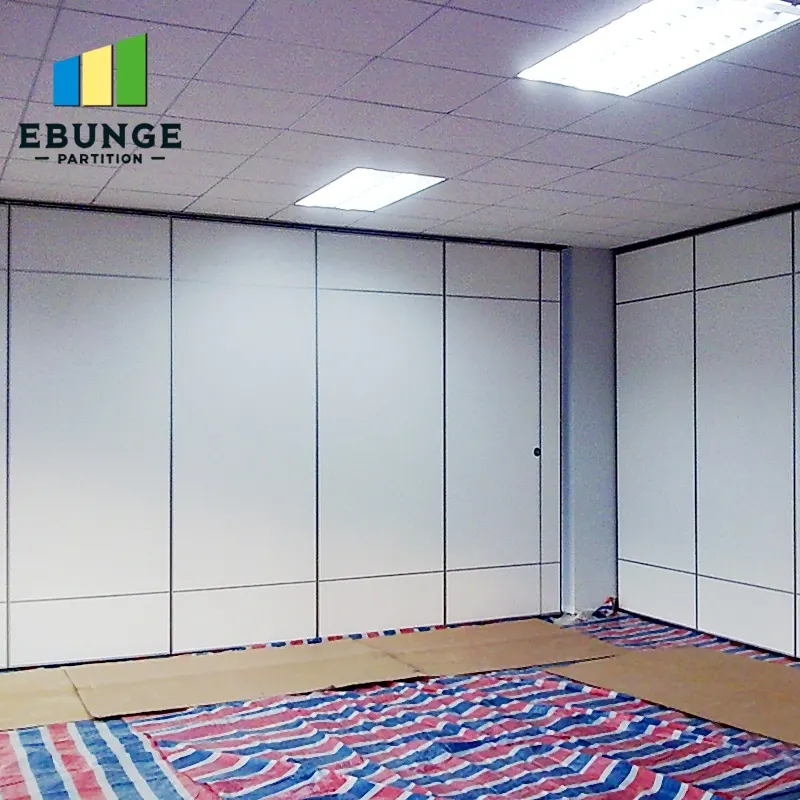
EBUNGE movable wall panels are individually movable, suspended from a top track, and cross the opening without a floor track. They park at a planned stacking position. Clarifications should confirm that the overhead route is continuous and connected for every proposed movement path, including straight, turning, and stacking routes.
Acoustic Expectations
The log should capture how the project defines its acoustic requirement, what evidence is expected, and which party confirms the final performance. Visible references can support layout discussion but do not verify hidden construction or performance.
Finish and Surface Selection
Confirmed finish options include laminate, melamine, fabric, leather, glass, and other approved surfaces. Clarifications should ask whether a proposed finish is suitable for the project’s cleaning and durability expectations. The log should record the approved surface and any project-specific confirmation required.
Pass Doors and Access
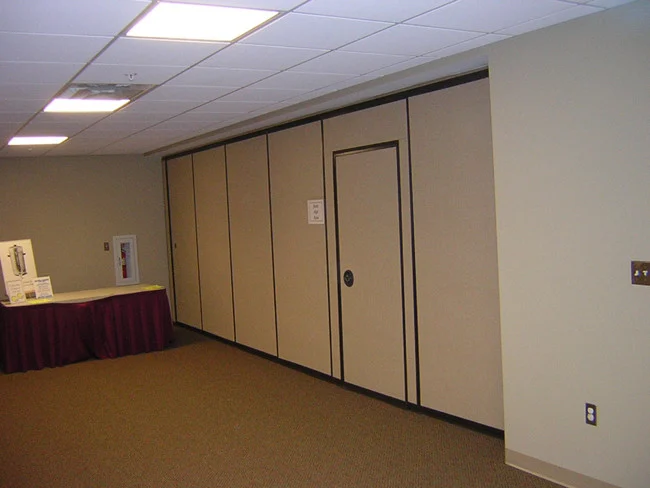
Pass-door requirements can be discussed as part of the tender. The log should capture the location, operation, and coordination needs for any pass door without assuming a standard configuration.
Step-by-Step Process for Building the Log
- Assign an owner. One person should maintain the log and issue consolidated responses.
- Open the log before tender release. Pre-populate known coordination items so bidders see the expected level of detail.
- Set a cut-off date. Clarifications received after the cut-off may not receive a response before bid submission.
- Issue responses to all bidders. Avoid private answers that create unequal information.
- Link each response to evidence. Reference drawings, specifications, or approved documents rather than relying on memory.
- Review open items before evaluation. Confirm that no critical assumption remains unresolved.
- Archive the final log. Include it in the contract documentation for future reference.
Evidence Boundaries: What the Log Should Not Claim
A clarification log is a coordination tool, not a performance certificate.
When a bidder asks for a performance guarantee, the log should record the question and direct it to the appropriate technical review. The response should state what can be confirmed and what requires further project-specific documentation.
Coordinating with Bidders and Internal Reviewers
Bidders can see which questions are already answered, reducing duplicate queries. Internal reviewers can track which disciplines need to sign off.
For acoustic partition tender bid clarification log project planning, schedule regular review points. A weekly review prevents the log from becoming a backlog. If a question affects multiple packages, note the cross-reference so other tender teams are aware.
Common Pitfalls and How to Avoid Them
One common pitfall is answering questions verbally and forgetting to log them. Another is allowing bidders to rely on assumptions about support or parking.
To avoid these, require written questions, issue written responses, and link every response to a document. If a question cannot be answered without further design work, record it as open and assign a reviewer.
Frequently Asked Questions
What is an acoustic partition tender bid clarification log?
It is a register that records questions, responses, and evidence references during the tender period for movable partition projects. It helps ensure all bidders receive the same information.
Who should maintain the clarification log?
Provide the current layout, opening dimensions, ceiling information, intended room use, and relevant project drawings for review. The exact overhead route and support arrangement must be confirmed by the responsible project team from coordinated drawings.
Should the log include acoustic ratings?
Only if the project has confirmed evidence for those ratings.
How does the log handle support and track questions?
It records the question and the reviewer responsible for confirming that the overhead route is continuous and connected for every proposed movement path.
Can the log include finish options?
Yes. Confirmed finish options include laminate, melamine, fabric, leather, glass, and other approved surfaces. The log should record the approved surface and any project-specific confirmation.
What should happen after the tender closes?
The final log should be archived and included in the contract documentation. Open items should be resolved before evaluation is complete.
Conclusion and Next Steps
A well-maintained acoustic partition tender bid clarification log keeps movable wall procurement transparent and traceable. It does not replace project-specific engineering, acoustic, or dimensional review, but it ensures those reviews are documented. Start with a simple table, assign an owner, and issue consolidated responses to all bidders.
The exact overhead route and support arrangement must be confirmed by the responsible project team from coordinated drawings. Visit the movable walls product page to review maintained product facts, explore the resources section for planning guidance, or contact us to discuss your tender documentation.