
Quick project answer
Review focus: track zone handover file.
When a movable partition is top-hung, the track zone becomes the interface between the finished room and the structure above. A track zone handover file concealed anchor evidence package is the record that helps the project team confirm what was installed, what was reviewed, and what remains a project-specific design responsibility. The suitability of each route and parking arrangement depends on the approved layout, circulation, ceiling interfaces and operating sequence.
This guide explains what such a file can reasonably document, where visible evidence stops, and how contractors, architects, designers and owners can coordinate without inferring hidden performance from a drawing or photograph.
Why the Track Zone Deserves Its Own Handover Record
Project review term: track zone handover file.
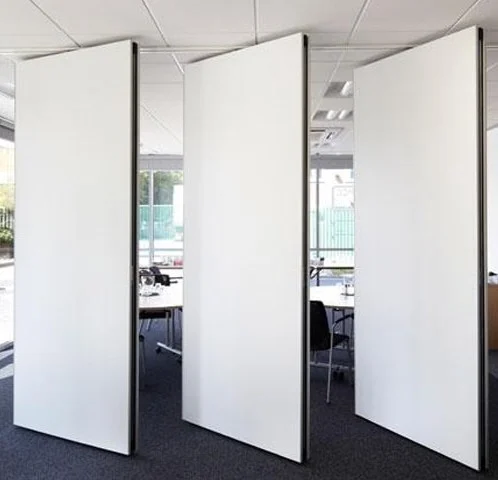
EBUNGE movable wall panels are individually movable, suspended from a top track, cross the opening without a floor track, and park at a planned stacking position. Because the panels hang from above, the track zone carries the interface between the partition system and the building structure. The handover file should therefore describe the track zone as a coordinated assembly, not as an isolated accessory.
Straight, turning and stacking routes are reviewed from the layout. That review is a planning activity.
What Concealed Anchor Evidence Can and Cannot Show
Coordination scope: track zone handover file.
Concealed anchors are, by definition, not visible after completion. A handover file can record that a defined installation stage was inspected, that photographs were taken before concealment, and that the reviewed location matches the approved layout.
For that reason, the file should be explicit about the limits of its evidence. A photograph may show a fixing position relative to a track line. It does not show the capacity of the supporting structure, the condition of the substrate, or the suitability of the anchor for the actual load path.
Evidence note: visible versus inferred information

Visible evidence can confirm that a reviewed item was present at a recorded stage. It cannot confirm hidden capacity, acoustic performance, fire performance, durability or code compliance unless a separate, project-specific document does so.
Documents a Track Zone Handover File Should Reference
Checklist focus: track zone handover file.
A useful file is a map of references, not a bundle of assumptions. It should point to the approved layout drawings, the coordinated track route, the stacking position, and the inspection records created before concealment. Where pass-door requirements exist, those should be discussed and documented as part of the same coordination process.
Project documentation can be discussed with EBUNGE, but the final content of the handover file remains a project responsibility. The file should identify who reviewed each item and under what scope, so that later readers do not mistake a coordination note for an engineering approval.
Numbered process for assembling the record
- Confirm the approved layout, including straight, turning and stacking routes.
- Confirm the planned parking position and how it relates to the track zone.
- Record the inspection stage before anchors are concealed.
- Reference the drawings and specifications that govern the support condition.
- Identify the responsible reviewer for each open item.
How to Read Anchor Evidence Without Overclaiming
Teams often ask whether a handover file can prove that a track zone will perform as intended. The honest answer is that the file can prove what was documented and reviewed.
This is why the content angle for this topic is evidence-bounded. Every recommendation should be tied to maintained product facts, visible evidence limits and project-specific drawing review. Where a statement would require a load value, a test result or a certification, that statement should be removed or replaced with a clear confirmation boundary.
Decision checklist for reviewers
- Does the file identify the approved track route and stacking position?
- Does it state which items were inspected before concealment?
- Does it separate observed conditions from design assumptions?
- Does it name the party responsible for structural confirmation?
- Does it avoid implying acoustic or load performance from a photograph?
- Does it record open items rather than closing them prematurely?
Coordinating Across Contractors, Designers and Owners
Contractors need a record of installation stages. Architects and interior designers need confirmation that the coordinated layout was respected. Owners need a clear list of open items and responsibilities. Distributors and construction teams need a shared vocabulary for the track zone.
Because EBUNGE panels are top-hung and move without a continuous floor running track or floor hardware along the partition line, the overhead route is the critical coordination line. Every proposed movement path requires a continuous connected overhead route and project-specific support review. The exact route, junction arrangement, continuous overhead path and parking position must be confirmed from the coordinated project drawings.
Finish, Acoustic and Dimensional Boundaries
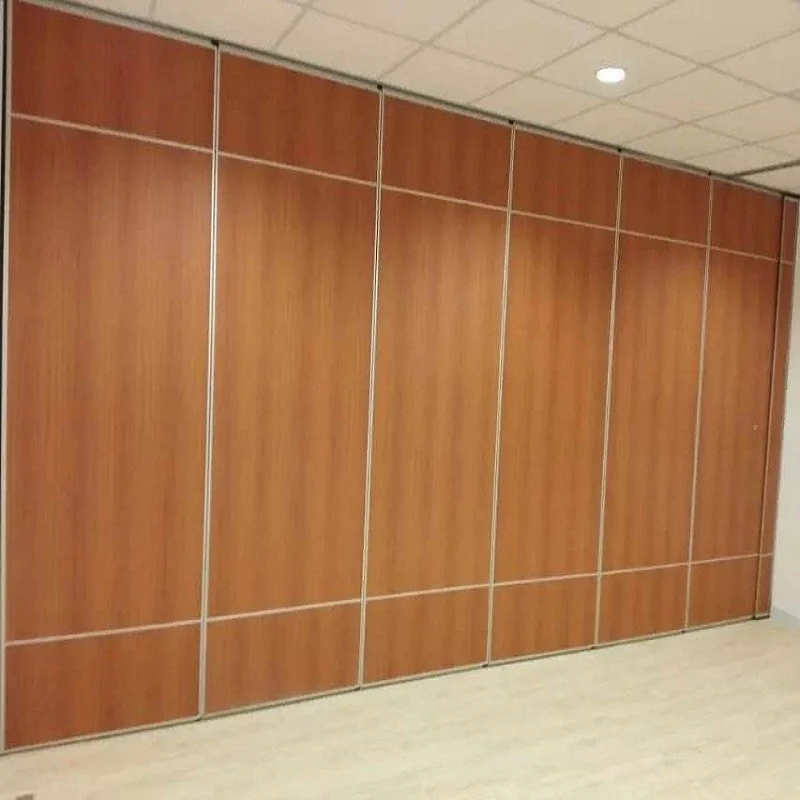
Confirmed finish options include laminate, melamine, fabric, leather, glass and other approved surfaces. A finish selection is a visual and specification choice. Those attributes require their own project-specific confirmation.
Visible references can support layout discussion but do not verify hidden construction or performance. Where acoustic requirements matter, they should be confirmed for the specific project, assembly and supporting structure.
Frequently Asked Questions
What is a track zone handover file?
It is a project record that documents the track zone, the reviewed layout, inspection stages and open items.
Can concealed anchor evidence prove structural capacity?
No. Concealed anchor evidence can record what was inspected before concealment.
Does a top-hung partition need a floor track?
EBUNGE movable wall panels are suspended from a top track and cross the opening without a floor track. The overhead route still requires a continuous connected path and project-specific support review.
Which finishes can be documented in the file?
Confirmed finish options include laminate, melamine, fabric, leather, glass and other approved surfaces.
How should pass-door requirements be handled?
Pass-door requirements and project documentation can be discussed as part of coordination. They should be recorded alongside the track route and stacking position rather than added informally later.
What should reviewers do when evidence is missing?
Record the gap as an open item, identify the responsible party, and confirm the project-specific support, acoustic and dimensional requirements before treating the file as complete.
Conclusion and Next Step
A track zone handover file concealed anchor evidence package is most useful when it is honest about its limits. Used that way, it becomes a coordination tool rather than a source of unsupported assumptions.
To discuss project documentation, pass-door requirements or layout coordination for a top-hung movable partition, contact EBUNGE. You can also review the movable wall product range and the project resources before your next drawing review.