
Quick answer: corridor crossroads circulation review
Review focus: corridor crossroads circulation review.
A stacking pocket corridor crossroads circulation review is a focused drawing and coordination exercise. It asks whether a top-hung movable partition can cross an opening, turn if required, and park at a planned stacking position without creating a circulation conflict at a busy junction. Because EBUNGE movable wall panels are individually movable, suspended from a top track, and cross the opening without a floor track, the review centers on overhead routes, parking geometry and the way people move around the pocket. This article provides an evidence-bounded framework for that review. It does not replace project-specific support, acoustic or dimensional confirmation.
Why a Corridor Crossroads Changes the Review
Project review term: corridor crossroads circulation review.
A corridor crossroads is a decision point for both people and drawings. Several routes meet, sightlines overlap, and a stacking pocket may sit close to a turning path. The review must separate what is known from what still needs confirmation.
Confirmed product facts are limited but useful: panels are top-hung, individually movable, and travel without a continuous floor running track along the partition line. Parking style is customized to the layout and project requirements. Straight, turning and stacking routes are reviewed from the layout. Everything else, including support, dimensions and acoustic behavior, requires project-specific evidence.
Start With the Movement Route, Not the Pocket
Coordination scope: corridor crossroads circulation review.
Teams often begin with the pocket because it is visible on the plan. The suitability of each route and parking arrangement depends on the approved layout, circulation, ceiling interfaces and operating sequence. If the route is unclear, the pocket cannot be validated.
Route questions to answer early
- Where does the partition line begin and end relative to the crossroads?
- Does the route run straight, turn, or both before reaching the parking position?
- Is there a continuous connected overhead route for every proposed movement path?
- Are there locations where the route passes close to a corridor junction?
The exact route, junction arrangement, continuous overhead path and parking position must be confirmed from the coordinated project drawings. Every proposed movement path requires a continuous connected overhead route and project-specific support review. This is a boundary, not a performance claim.
Parking Pocket Geometry and Corridor Conflict
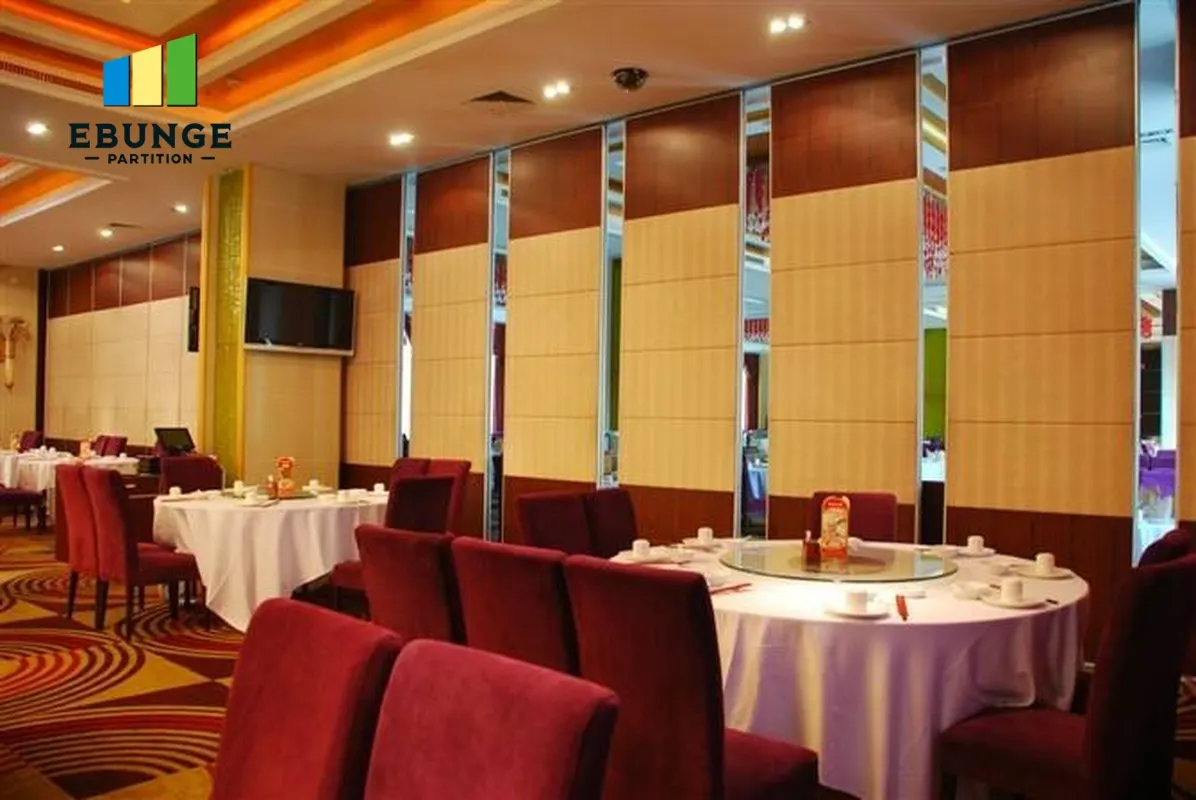
A stacking pocket is a planned parking position. Its location relative to a crossroads affects how panels gather and how people pass. The review should test the pocket against normal corridor use, not only against the open partition line.
What to check at the pocket
- Confirm the pocket depth and width shown on the layout against the coordinated design.
- Check whether the pocket opening faces a main corridor flow or a secondary route.
- Review whether parked panels would narrow a turning path or obscure a sightline.
- Confirm that the parking style matches the project layout and requirements.
- Record any unresolved dimensional question for the project team.
Compact stacking may be possible when the coordinated design permits it, but it should not be assumed from a generic example. The layout and project requirements control the parking arrangement.
Accessibility and Circulation Review Coordination
Accessibility and circulation review coordination brings together the partition route, the corridor crossroads and the surrounding room functions. The goal is to identify conflicts before they become site issues.
Coordination inputs
- Architectural layout showing corridors, openings and the proposed pocket.
- Reflected ceiling or overhead coordination information for the track route.
- Door and pass-door requirements, if any, discussed with the project team.
- Finish selections from confirmed options such as laminate, melamine, fabric, leather, glass and other approved surfaces.
- Any project-specific support, acoustic or dimensional requirements.
Those are separate project-specific confirmations.
Evidence Boundaries for the Review
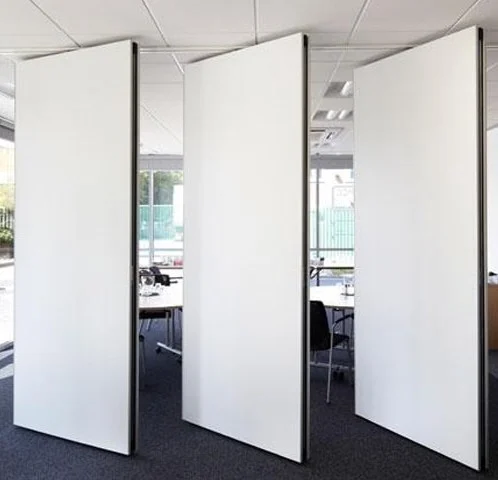
An evidence-bounded review avoids turning a drawing into a performance claim. The table below separates visible layout questions from items that need matching evidence.
| Review item | What the layout can show | What still needs confirmation |
|---|---|---|
| Route shape | Straight, turning or stacking path | Continuous connected overhead route and support |
| Pocket position | Location relative to crossroads | Dimensional fit and project-specific requirements |
| Finish | Selected surface option | Acoustic, fire, durability or cleaning claims |
| Acoustic concept | That STC or Rw describe laboratory ratings | Project-specific acoustic performance |
Any acoustic expectation belongs to a project-specific review with matching evidence.
Documentation and Specification Notes
A stacking pocket corridor crossroads circulation review specification should record assumptions, open questions and confirmed facts. This helps contractors, architects, interior designers, owners, renovation companies, distributors and construction teams work from the same information.
Documentation checklist
- Mark the partition line, route and parking position on the layout.
- Note where the route crosses or turns near the crossroads.
- List pass-door requirements and project documentation topics for discussion.
- Record finish options under consideration from the confirmed list.
- Flag every item that requires project-specific support, acoustic or dimensional confirmation.
Project documentation can be discussed with the EBUNGE team. The purpose is to align drawings and questions, not to infer hidden performance from a visible shape or finish.
Frequently Asked Questions
What is a stacking pocket corridor crossroads circulation review?
It is a drawing-based review of how a top-hung movable partition travels, turns and parks when its stacking pocket is near a corridor crossroads. It focuses on route continuity, parking geometry and circulation coordination.
Do movable partitions need a floor track at the crossroads?
EBUNGE movable wall panels are top-hung and move without a continuous floor running track or floor hardware along the partition line.
Can the panels turn a corner before parking?
A proposed turn requires a continuous connected overhead route and project-specific support review.
Does the finish affect acoustic performance?
Finish options include laminate, melamine, fabric, leather, glass and other approved surfaces.
What should be confirmed before finalizing the pocket location?
Confirm the route shape, parking style, dimensional fit, support conditions and any pass-door requirements with the project team. The layout and project requirements control the coordinated design.
Can compact stacking be used at a crossroads?
Parking style is customized to the customer layout and project requirements and may support compact stacking when the coordinated design permits it. It should not be assumed without layout review.
Conclusion and Next Step
A stacking pocket corridor crossroads circulation review is most useful when it stays within confirmed facts and clearly marks what still needs project-specific confirmation. Start with the movement route, test the pocket against corridor use, coordinate accessibility and circulation inputs, and document every open question.
The exact overhead route and support arrangement must be confirmed by the responsible project team from coordinated drawings. Review the movable walls product page, explore resources, and contact us to discuss your layout, pass-door requirements and project documentation.