
Quick project answer
Review focus: track interface risk.
Most partition tender comparisons focus on panel finish, opening size and headline acoustic intent. The overhead interface receives far less attention, yet it determines whether the movable wall can actually travel, turn and park as drawn. For overseas project teams, partition tender track interface risk weighting should be treated as a scored evaluation category, not a post-award coordination detail. This article offers an evidence-bounded framework for procurement and tender review. The suitability of each route and parking arrangement depends on the approved layout, circulation, ceiling interfaces and operating sequence.
Why Track Interface Risk Deserves Its Own Tender Weight
Project review term: track interface risk.
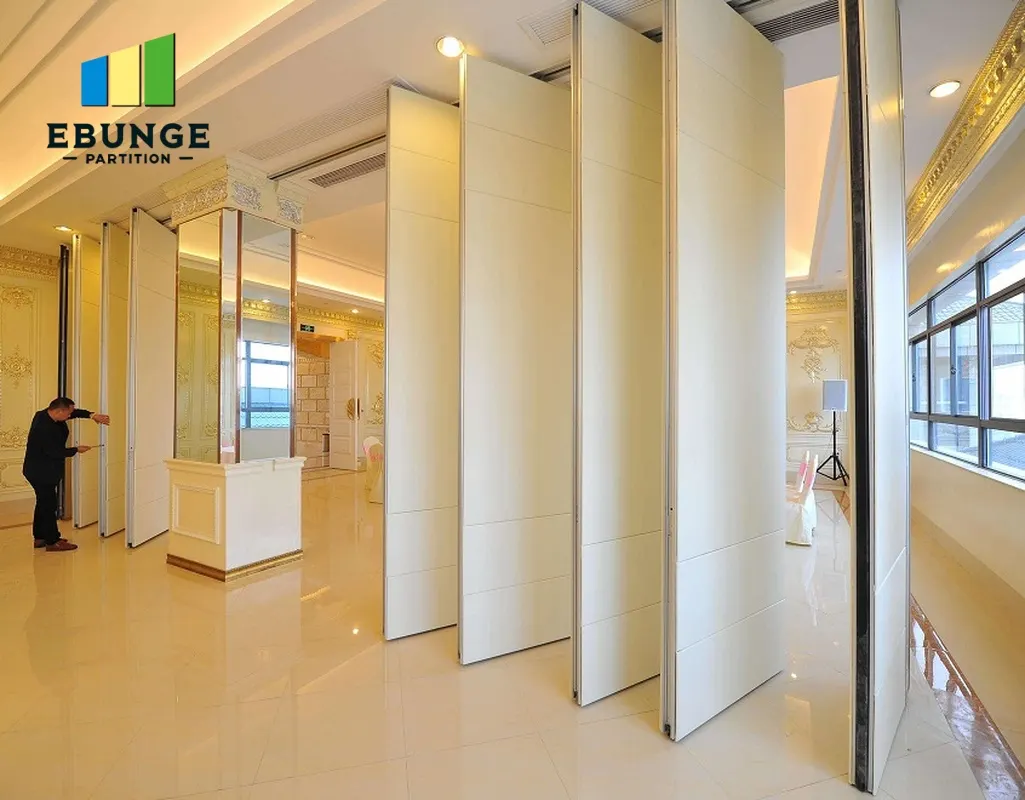
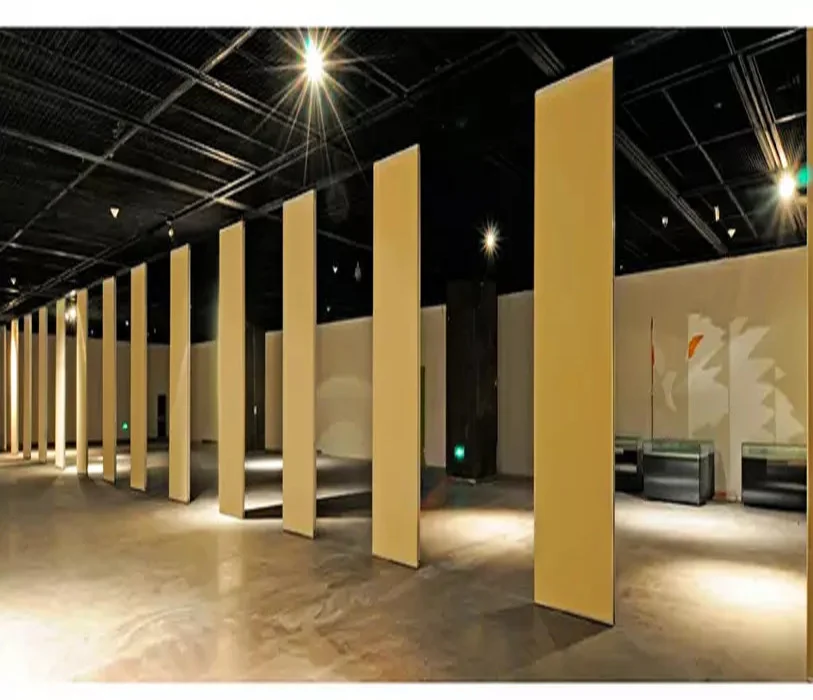
A movable partition is top-hung. Panels are individually movable, suspended from a top track, cross the opening without a floor track, and park at a planned stacking position. That single sentence carries most of the interface risk. The track must follow a continuous connected overhead route. Straight, turning and stacking routes are reviewed from the layout. If the route is incomplete, the panels cannot reach the parking position, regardless of how well the panels themselves are specified.
In tender evaluation, this means the overhead route is not a minor accessory line. When that boundary is unclear, bidders may price different assumptions, and the comparison becomes unreliable.
What the Tender Documents Should Show
Coordination scope: track interface risk.
The exact overhead route and support arrangement must be confirmed by the responsible project team from coordinated drawings. The following checklist is a practical starting point for drawing review.
- Plan view showing the full movement path, including straight runs, turning points and the planned stacking position.
- Elevation or section indicating the overhead route and where support is expected above.
- Opening dimensions, adjacent wall conditions and any fixed obstructions along the route.
- Parking strategy: where panels will rest when the opening is clear, and whether the layout supports compact stacking.
- Pass-door requirements, if any, and how they relate to the panel layout.
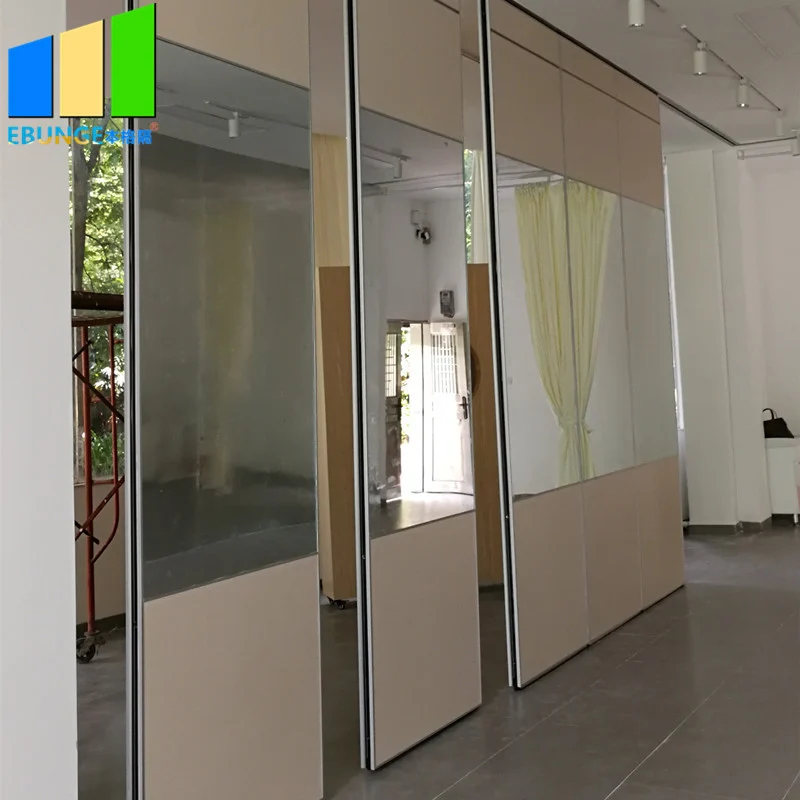
- Finish schedule listing approved surfaces such as laminate, melamine, fabric, leather, glass or other approved surfaces.
- Documentation expectations for the partition package, including who confirms support and dimensional requirements.
If any item is missing, the tender is not yet ready for a like-for-like risk weighting. Add the information or state the confirmation boundary explicitly.
A Weighted Scoring Model for Interface Risk
Checklist focus: track interface risk.
The model below is a framework, not a mandated formula.
| Risk category | What to examine | Suggested weight band |
|---|---|---|
| Route continuity | Continuous connected overhead route across straight, turning and stacking paths | High |
| Support coordination | Clarity of who reviews and confirms support above the track | High |
| Parking strategy | Planned stacking position and whether the layout supports compact stacking | Medium to high |
| Drawing completeness | Plan, section and finish information sufficient for consistent pricing | Medium |
| Documentation scope | Pass-door requirements, finish approvals and project documentation | Medium |
| Acoustic intent | Conceptual STC or Rw target and how it will be verified | Project-specific |
Visible references can support layout discussion but do not verify hidden construction or performance. Confirm project-specific acoustic requirements with the responsible acoustic consultant.
Evidence Boundaries That Protect the Evaluation
Weighting risk is only useful if the evidence behind each score is visible. A bidder statement that a route is workable is not the same as a reviewed drawing.
Score what the tender documents demonstrate, not what a similar-looking project implies. Where evidence is absent, record the gap and assign the risk to the party responsible for confirmation.
This boundary keeps the evaluation honest. It also prevents hidden assumptions from migrating into the contract as unresolved scope.
Coordination Questions to Ask Before Award
Procurement and tender review coordination improves when the same questions are asked of every bidder. Use the numbered process below to structure clarification.
- Which drawings define the full movement path, and are turning and stacking routes included?
- Who confirms the support condition above the track, and what information is required from the structural team?
- How is the parking position coordinated with adjacent doors, services and fixed elements?
- Are pass-door requirements defined, and do they affect panel layout or route planning?
- Which finishes are approved, and what documentation will confirm them?
- What project-specific acoustic, dimensional and support requirements still need confirmation?
Record the answers in the tender comparison.
Common Weighting Mistakes in Partition Tenders
Treating the track as a commodity line item
The track is part of a system that must follow a continuous connected overhead route. Pricing it as a generic line item without route review hides interface risk.
Leaving parking strategy to the installation phase
Parking style is customized to the customer layout and project requirements and may support compact stacking when the coordinated design permits it. This should be reviewed during tender, not after award.
How to Document the Final Risk Position
After scoring, summarize the accepted risk position in the tender report. Note which items are confirmed by drawings, which require project-specific support review, and which remain open for post-award coordination. This summary becomes a useful reference for the contractor, architect and owner team.
For maintained product context, review the movable wall product information and the project resources. These pages describe general system characteristics; they do not replace project-specific confirmation.
Frequently Asked Questions
What is track interface risk in a partition tender?
It is the risk that the overhead route, support condition, turning path or parking position is not clearly defined, priced or coordinated. Because panels are top-hung and cross the opening without a floor track, the overhead interface is central to whether the system works as intended.
Should track interface risk be weighted separately from panel specification?
Yes, in most evaluations. Panel finish and acoustic intent matter, but they do not resolve route continuity or support coordination. A separate weighted category makes those assumptions visible and comparable across bidders.
Can a partition travel across an untracked gap?
No. The exact route, junction arrangement, continuous overhead path and parking position must be confirmed from the coordinated project drawings.
How should STC or Rw be handled in the tender?
Confirm the project-specific acoustic requirement and verification approach with the responsible consultant.
What finish information belongs in the tender package?
List the approved surfaces, which may include laminate, melamine, fabric, leather, glass or other approved surfaces.
When should pass-door requirements be discussed?
Pass-door requirements and project documentation can be discussed during tender clarification. Raising them early helps bidders price the same scope and avoids layout changes after award.
Conclusion and Next Step
Confirm the full movement path, the support review responsibility, the parking strategy and the documentation scope. Keep acoustic and dimensional requirements project-specific, and record every evidence gap rather than filling it with assumption.
To discuss pass-door requirements, finish options or project documentation for your evaluation, contact the EBUNGE team. Bring your layout drawings and tender questions so the interface can be reviewed against your project requirements.