
Quick answer: corridor width change circulation review
Review focus: corridor width change circulation review.
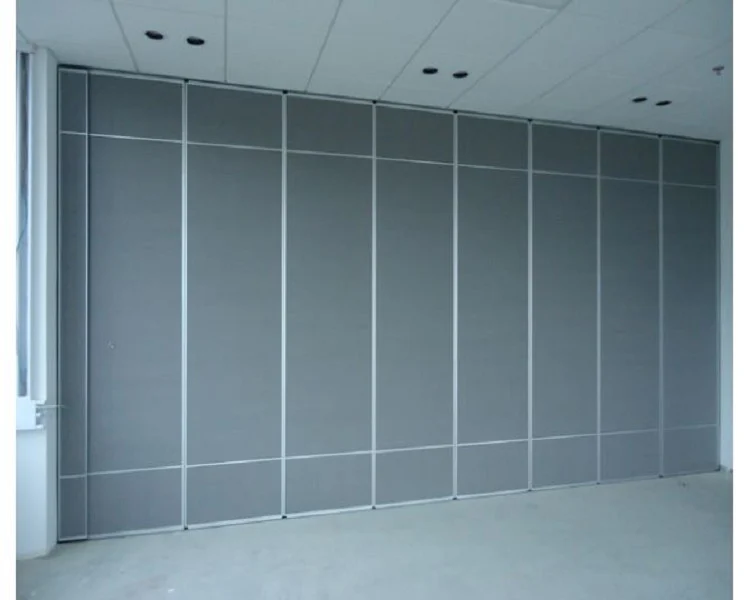
A stacking pocket corridor width change circulation review belongs early in project planning, not after the ceiling and corridor drawings are fixed. Where a movable wall parks, the corridor may narrow, widen or turn, and that transition affects how people, carts and equipment move past the parked panels. EBUNGE movable wall panels are individually movable, suspended from a top track, cross the opening without a floor track and park at a planned stacking position. Those maintained facts are the starting point; every route, support condition and dimension still needs project-specific confirmation.
Why the Pocket Location Drives the Review
Project review term: corridor width change circulation review.
The stacking pocket is not a storage afterthought. It is the place where panels leave the opening and wait. If the pocket sits exactly where the corridor changes width, the parked panels and the corridor edge compete for the same zone. A circulation review asks whether the remaining path still works for the people who use that corridor daily.
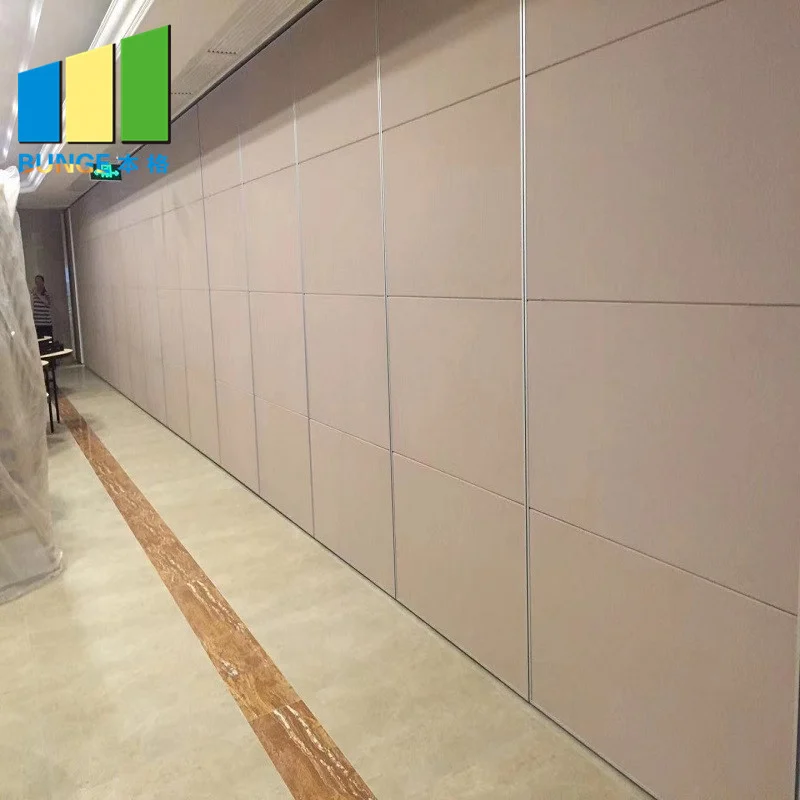
Because panels are top-hung and cross the opening without a floor track, the floor beside the pocket can stay clear of running hardware along the partition line. That does not remove the need to check the parked panel footprint, the overhead route and the support above. Confirm these items against the coordinated layout rather than assuming them from a generic example.
What the Drawing Set Should Show
Coordination scope: corridor width change circulation review.
A useful review starts with drawings that show the opening, the corridor width change and the intended parking position on the same plan. If those three elements sit on separate sheets, the conflict is easy to miss until late coordination.
Plan-level information
- Corridor edges before and after the width change, with the transition drawn accurately.
- The planned stacking position and the space the parked panels occupy.
- The straight, turning and stacking routes the panels follow from the opening.
- Adjacent doors, lifts, stairs, service risers and fixed furniture near the transition.
Section and ceiling information
Sections should show the top track and the continuous overhead route the panels need. The exact route, junction arrangement, continuous overhead path and parking position must be confirmed from the coordinated project drawings. The ceiling zone above the pocket also needs coordination with other services.
A Step-by-Step Circulation Review Process
Checklist focus: corridor width change circulation review.
- Mark the corridor width change and the stacking pocket on one plan.
- Trace the full panel route from the closed position to the parked position.
- Check the route for turns, obstructions and any point where the overhead path is interrupted.
- Compare the parked panel zone with the corridor transition and adjacent openings.
- The suitability of each route and parking arrangement depends on the approved layout, circulation, ceiling interfaces and operating sequence.
- Issue the marked plan to the project team for coordinated review before drawings are frozen.
This sequence keeps the discussion factual. It does not decide the design; it exposes the questions that only the project team can answer with its own drawings and site information.
Coordination Across Disciplines
The corridor width change may already be constrained by structure or by a service zone above the ceiling. The stacking pocket adds another demand in the same area.
Finish selection can also affect the review. Confirmed finish options include laminate, melamine, fabric, leather, glass and other approved surfaces. Finish choice does not by itself confirm acoustic, fire, durability or cleaning performance, so any such requirement should be raised as a separate project-specific question with matching evidence.
Evidence Boundaries to State Clearly
Visible geometry, a finish sample or a photograph does not prove acoustic performance, structural capacity, load limits or a application reference. Those items require project-specific documentation.
Visible references can support layout discussion but do not verify hidden construction or performance. If acoustic separation matters at the corridor transition, ask for the relevant project documentation and confirm how it applies to the specific opening, pocket and adjacent construction.
Pass-door requirements and project documentation can be discussed with the supplier. Where a pass door is proposed near a width change, its position, swing and route should appear in the same circulation review rather than being resolved later.
Common Planning Gaps at a Width Change
| Planning gap | Why it matters | What to confirm |
|---|---|---|
| Pocket shown on a separate sheet | The conflict with the corridor transition is hidden | Combine opening, transition and parking on one plan |
| Route drawn only as a straight line | Turns and stacking movements may be overlooked | Review straight, turning and stacking routes from the layout |
| Overhead path assumed continuous | Panels need a connected supported route | Confirm the overhead route and support with the project team |
| Acoustic expectation left unstated | Rating systems are often misunderstood | Request project-specific acoustic documentation |
Each gap is a coordination question, not a product verdict. The aim is to give the design team the information it needs before commitments are made.
Documentation to Prepare Before Asking for Review
Suppliers can respond more usefully when the request includes a coordinated plan, the intended parking position, the corridor transition and any known constraints above the ceiling. Note where the project team still needs to confirm support, acoustic and dimensional requirements.
For broader planning context, the movable wall product overview and the planning resources can support early discussions. They do not replace project-specific engineering or performance evidence.
Frequently Asked Questions
What is a stacking pocket corridor width change circulation review?
It is a planning exercise that checks how a movable wall’s parking position interacts with a corridor that narrows, widens or turns nearby. It traces the panel route, the parked footprint and the remaining circulation path using the project’s own drawings.
Do movable partitions need a floor track along the corridor?
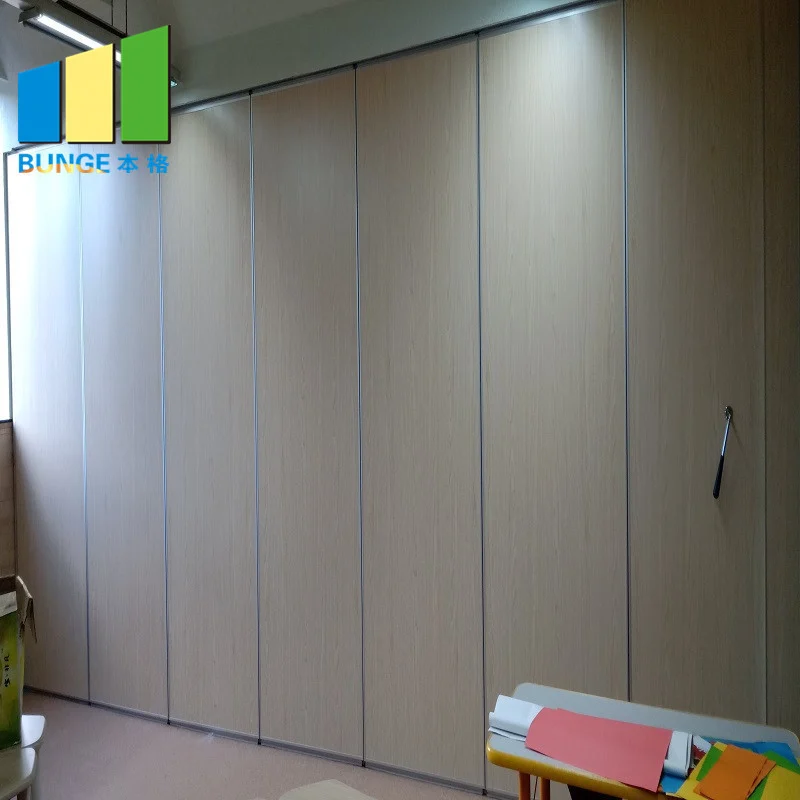
EBUNGE movable wall panels are top-hung and cross the opening without a continuous floor running track or floor hardware along the partition line.
Can the panels travel across a gap in the overhead route?
No. Every proposed movement path requires a continuous connected overhead route and project-specific support review. A gap in that route is a coordination issue to resolve before the layout is fixed.
Does the finish choice prove acoustic performance?
No. Confirmed finishes include laminate, melamine, fabric, leather, glass and other approved surfaces, but a finish does not by itself confirm acoustic, fire or durability performance. Request matching project documentation for any such requirement.
How should STC or Rw be used in this review?
Any rating that matters at the corridor transition should be confirmed against project-specific documentation for the actual opening and construction.
When should the review happen?
Before corridor and ceiling drawings are frozen. Early review gives the project team time to adjust the pocket position, the route or the transition while changes are still practical to coordinate.
Conclusion and Next Step
A stacking pocket corridor width change circulation review is a discipline of asking the right questions early. Keep the review tied to maintained product facts, visible drawing evidence and clearly stated confirmation boundaries. Where support, acoustic or dimensional requirements remain open, record them as project-specific items rather than filling the gap with assumptions.
If your team is coordinating a pocket at a corridor transition, contact EBUNGE to discuss pass-door requirements, project documentation and the layout information needed for a focused review.