
Quick answer: track fixing sequence ceiling grid phased closure
Review focus: track fixing sequence ceiling grid phased closure.
When a ceiling grid closes in phases, the track fixing sequence ceiling grid phased closure decision becomes a coordination problem, not a single installation step. Movable wall panels are individually movable, suspended from a top track, cross the opening without a floor track, and park at a planned stacking position. If the grid closes before the overhead route is agreed, later trades inherit a constrained ceiling zone. This article sets out a review sequence for contractors, architects and owners, and it flags where project-specific confirmation is required.
Why Phased Grid Closure Changes Track Planning
Project review term: track fixing sequence ceiling grid phased closure.
A phased ceiling grid is closed in sections, often to allow other trades to finish. Each closed section reduces the visible opening above the partition line. The track, however, must follow a continuous connected overhead route. Straight, turning and stacking routes are reviewed from the layout, so the route must be understood before the grid limits access.
The practical risk is not the track itself. It is the order of decisions. If the grid is closed first, the project team may lose the chance to review support locations, route continuity and stacking geometry against the approved layout. That review is a drawing and site coordination exercise, not a performance claim.
What the product facts allow us to say
Confirmed facts are limited but useful. Panels are top-hung and move without a continuous floor running track or floor hardware along the partition line. Parking style is customized to the customer layout and project requirements, and may support compact stacking when the coordinated design permits it. Finish options include laminate, melamine, fabric, leather, glass and other approved surfaces. Pass-door requirements and project documentation can be discussed.
What must be confirmed per project
Support arrangement, acoustic requirements and dimensional requirements are project-specific. Do not infer them from a drawing, a finish sample or a photograph. The suitability of each route and parking arrangement depends on the approved layout, circulation, ceiling interfaces and operating sequence. Confirm the project-specific acoustic target and supporting documentation with the responsible parties.
A Phased Track Fixing Sequence for Project Teams
Coordination scope: track fixing sequence ceiling grid phased closure.
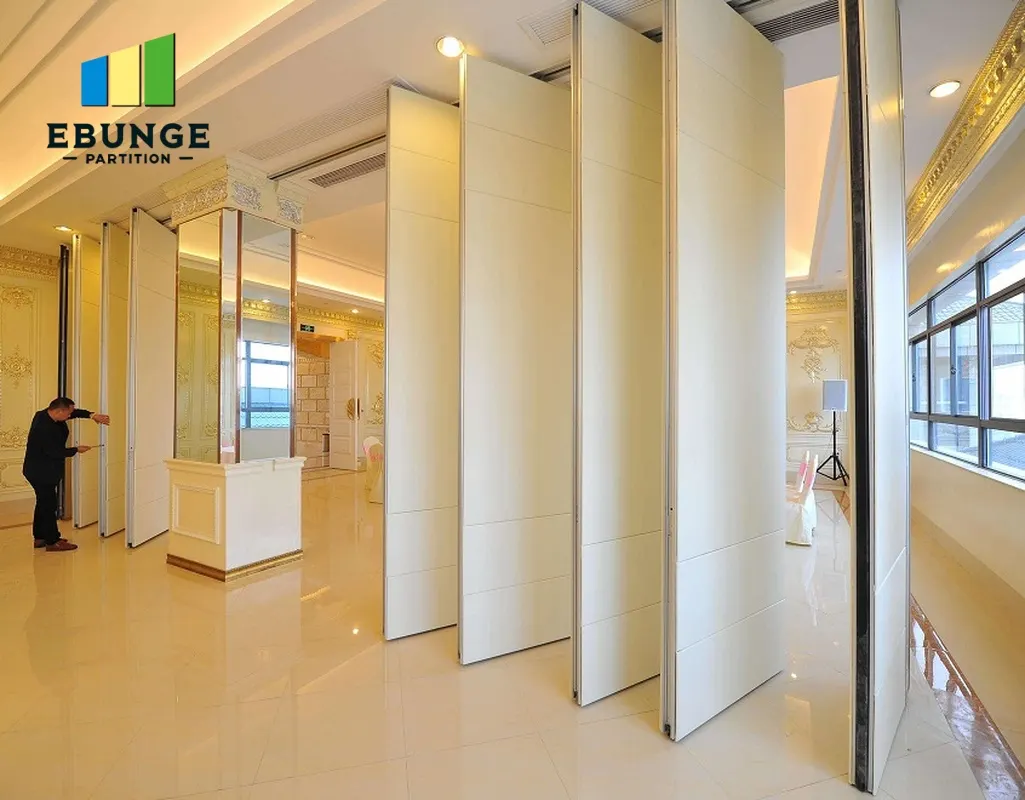
The sequence below is a coordination framework.
- Freeze the layout first. Confirm the opening, turning and stacking routes from the approved layout before any grid section is closed.
- Mark the overhead route. Identify where the track must run continuously and where it must turn or enter the stacking zone.
- Review support zones.
- Sequence grid closure around access. Keep the track route accessible until the support and fixing review is complete for that section.
- Coordinate finishes and interfaces. Confirm how the ceiling edge, track zone and adjacent finishes meet, using approved project details.
- Record hold points. Agree inspection points before a grid section is closed permanently.
- Confirm pass doors and documentation. Raise pass-door requirements and project documentation early so they are not treated as late variations.
Decision Checklist Before a Grid Section Closes
Checklist focus: track fixing sequence ceiling grid phased closure.
Use this checklist at each phase gate. It is deliberately about evidence and coordination, not about assumed performance.
- Is the approved layout the current revision, and does it show the full movement route?
- Has the overhead route been confirmed as continuous and connected for the proposed path?
- Are support locations and fixing details confirmed by the responsible party for this section?
- Is the stacking position agreed, including how panels will park when not in use?
- Are finish selections and interface details approved for the visible track zone?
- Are pass-door requirements and project documentation recorded?
- Is there a hold point before the grid section is closed?
Coordination Between Trades and Drawing Review
Review focus: track fixing sequence ceiling grid phased closure.
A phased grid often means the ceiling contractor, the partition installer and the main contractor are working to different programme dates. The drawing review should show the route, the support zones and the stacking area on the same coordinated set.
The exact route, junction arrangement, continuous overhead path and parking position must be confirmed from the coordinated project drawings. Every proposed movement path requires a continuous connected overhead route and project-specific support review.
Evidence note: visible evidence has limits
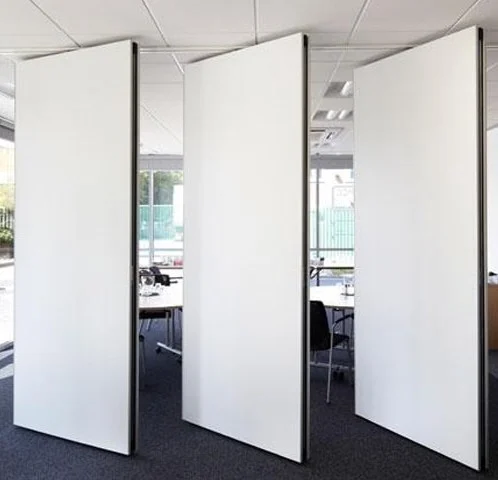
Do not derive hidden acoustic, fire, durability, load, maintenance, certification or commercial performance from a visible shape, finish, photograph or drawing. Comparative, absolute and causal statements require corresponding evidence; otherwise remove them or state the exact project-specific confirmation boundary.
Documentation to request
Request the current layout, reflected ceiling plan, interface details and any project-specific support or acoustic documentation that the responsible parties are using. The exact overhead route and support arrangement must be confirmed by the responsible project team from coordinated drawings.
Common Sequencing Mistakes to Avoid
Project review term: track fixing sequence ceiling grid phased closure.
One common mistake is treating the track as a ceiling accessory rather than a coordinated overhead route. Another is closing grid sections before the stacking position is agreed.
Also avoid using generic venue examples as proof of a application reference. Named venues are examples only; movable partitions can be considered wherever flexible spatial division, combination or reconfiguration is required. The application does not limit other suitable flexible-space uses.
How to Brief the Supplier and Installer
Give the project team a single coordinated package: current layout, route description, stacking intent, grid closure phases, finish direction and pass-door requirements. Ask for confirmation of what must be reviewed before each phase gate. Review the movable walls product page for maintained product context, then confirm project-specific support, acoustic and dimensional requirements in writing.
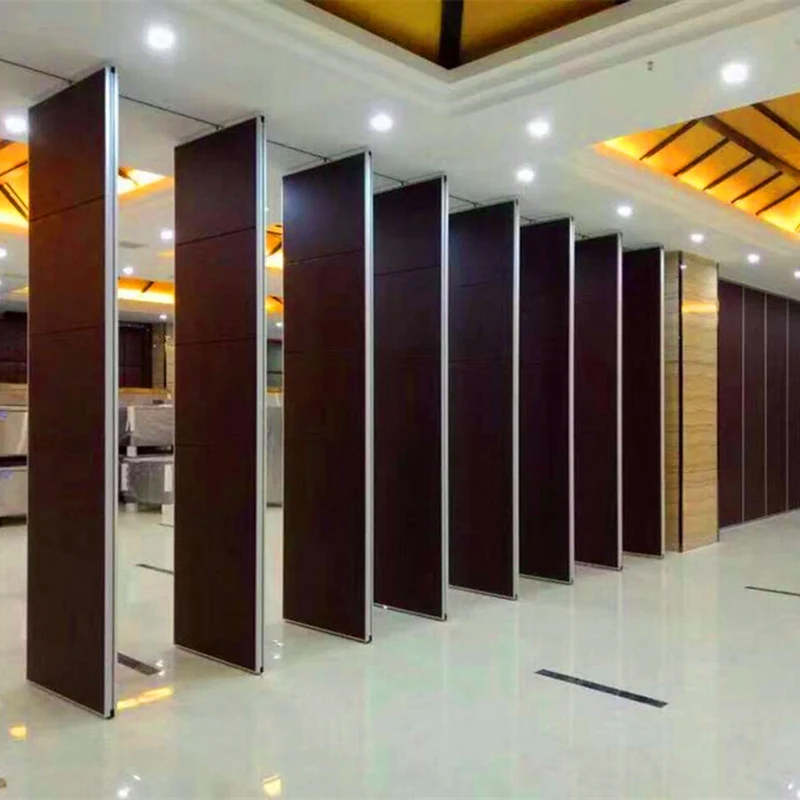
Where information is missing, record it as an open item rather than filling the gap with an assumption.
FAQ: Track Fixing and Phased Ceiling Grids
What is the main risk when the ceiling grid closes in phases?
The main risk is losing access to the overhead route before support, route continuity and stacking have been reviewed against the approved layout.
Can the track be fixed after the grid is fully closed?
That depends on the project. Do not assume that later fixing is possible without a project-specific review.
Do movable partitions need a floor track?
No. EBUNGE movable partition panels are top-hung and move without a continuous floor running track or floor hardware along the partition line.
How should turning and stacking routes be handled?
Straight, turning and stacking routes are reviewed from the layout. Each proposed path requires a continuous connected overhead route and project-specific support review.
Can acoustic performance be confirmed from the track sequence?
No. Acoustic requirements are project-specific.
When should pass doors be raised?
Raise pass-door requirements and project documentation early in coordination so they can be reviewed alongside the route and grid closure phases.
Conclusion and Next Step
Sequence track fixing around the layout, not around the grid programme. Confirm the overhead route, support zones, stacking position and interface details before each grid section closes. Keep every performance, dimensional and support statement tied to project-specific evidence.
To discuss your project, contact the EBUNGE team with your current layout, ceiling grid phases and pass-door requirements.