
Quick answer: room reconfiguration calendar
Review focus: room reconfiguration calendar.
Room reconfiguration calendar booking pattern planning turns booking data into a realistic sequence of space changes. It is not a software feature or a promise about how fast a room can change. It is a coordination method: read the booking pattern, group similar setups, and check each proposed change against the approved layout, the overhead route and the project-specific support review. This article sets out a repeatable way to build that calendar without inventing performance, cost or engineering conclusions.
Why Booking Patterns Belong in the Reconfiguration Plan
Project review term: room reconfiguration calendar.
Booking patterns show how a space is actually used: which rooms are combined, when a large room is split, and which setups repeat. That pattern is the raw material for a reconfiguration calendar. The calendar then becomes a shared reference for facility operations planning coordination, so that operations, design and construction teams work from the same assumptions.
Keep the calendar descriptive. It should record what change is planned, when it is planned, and which drawing or approval it depends on. The suitability of each route and parking arrangement depends on the approved layout, circulation, ceiling interfaces and operating sequence.
Start With a Booking Pattern Inventory
Coordination scope: room reconfiguration calendar.
Before building any calendar, collect a defined period of booking records. The period should be long enough to show recurring patterns rather than one-off events. Work with the booking owner to confirm what the records mean, because room names and setup labels are often inconsistent.
What to Record
- Room or space identifier and the setup requested.
- Start and end times, including setup and reset windows if the booking system records them.
- Whether the booking combines or divides spaces.
- Any known constraint, such as a fixed installation or a shared access route.
- The source of the record, so later checks can trace back to it.
Do not treat a booking label as proof of a physical configuration. A label such as “combined hall” may describe a commercial package rather than a confirmed panel arrangement. Confirm the physical intent with the layout drawings.
Group Changes Into Reconfiguration Events
Checklist focus: room reconfiguration calendar.
Individual bookings rarely justify a separate reconfiguration. Group them into events where the same physical change serves several bookings.
A Simple Grouping Process
- Sort bookings by requested configuration.
- Identify runs of consecutive bookings that share a configuration.
- Mark the transition points between different configurations.
- Check each transition against the approved movement route.
- Assign a review owner for any transition that is not yet confirmed.
This process produces candidate events, not final commitments. Each candidate still needs a drawing review and a project-specific confirmation of support, acoustic and dimensional requirements.
Check Each Event Against the Approved Layout
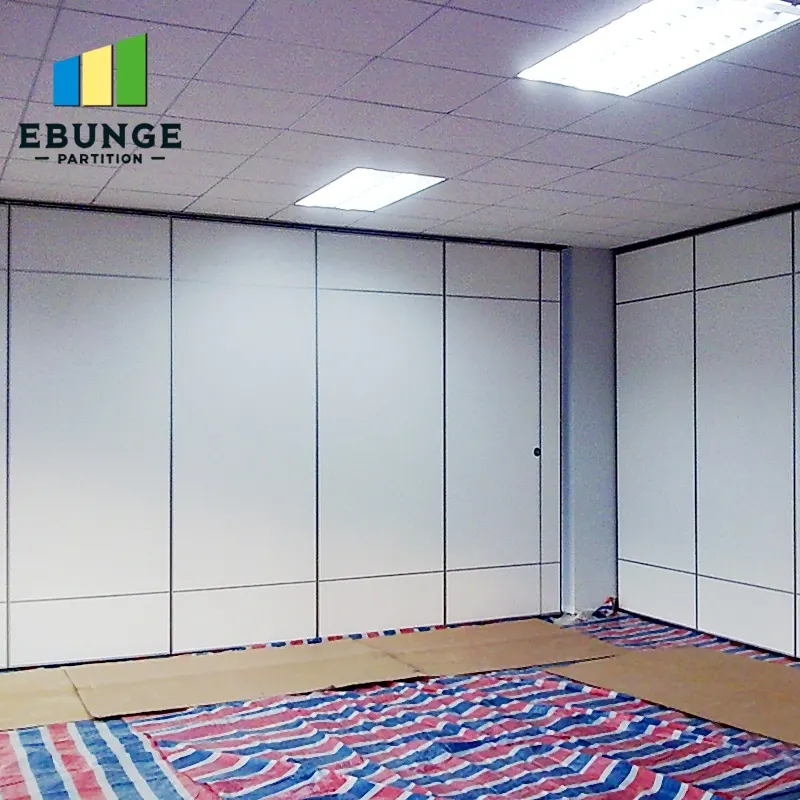
EBUNGE movable wall panels are individually movable, suspended from a top track, cross the opening without a floor track, and park at a planned stacking position. Straight, turning and stacking routes are reviewed from the layout. That means every calendar event must be checked against the same layout information.
Route Review Points
- Does the proposed movement follow a continuous connected overhead route?
- Is the parking position shown on the approved layout?
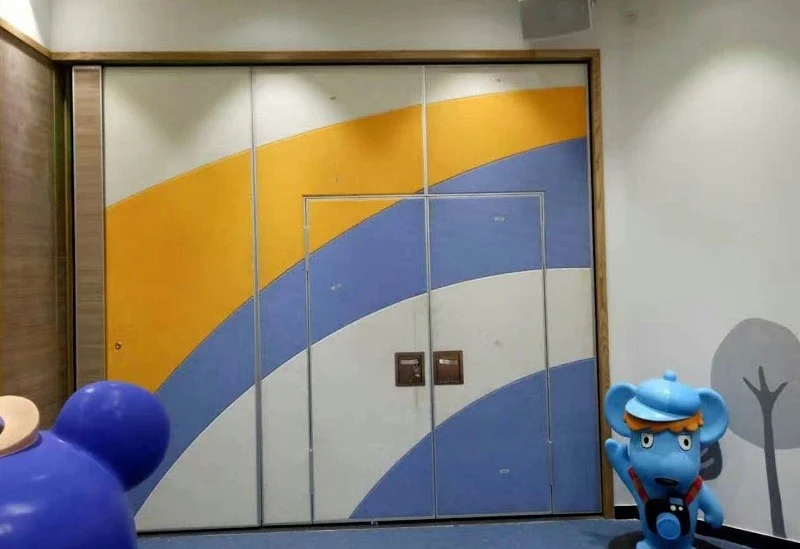
- Does the event require a pass-door arrangement, and has that requirement been discussed?
- Are dimensional and support requirements confirmed for this specific opening?
Do not infer hidden performance from a drawing, a finish sample or a photograph.
Build the Calendar in Layers
A useful calendar has more than one layer. The booking layer shows demand. The configuration layer shows the physical change. The approval layer shows what still needs confirmation. Keeping them separate prevents an unconfirmed assumption from looking like a settled plan.
| Layer | What it holds | Status meaning |
|---|---|---|
| Booking | Requested setups and times | Demand signal only |
| Configuration | Planned panel arrangement and parking position | Subject to layout review |
| Approval | Drawing, support and acoustic confirmations | Open until confirmed |
The required rating, the test context and the confirming evidence must be established for the specific project.
Coordinate With the Project Team
The calendar only works if the people who control the space and the people who control the drawings agree on it. Facility operations planning coordination should include the booking owner, the design team and the construction or installation team.
Coordination Questions to Settle Early
- Who approves a configuration change before it enters the calendar?
- Which drawings are the current approved version?
- How are pass-door requirements recorded?
- What documentation is needed for handover and future reviews?
Confirmed finish options include laminate, melamine, fabric, leather, glass and other approved surfaces.
Review and Maintain the Calendar
Booking patterns change. Review the calendar at a defined interval and after any significant change in use. Remove events that no longer match the approved layout, and flag events whose approval status has lapsed.
Evidence Note
Every calendar entry should point to a source: a booking record, an approved drawing, or a written confirmation. If a claim about support, acoustics or dimensions has no matching evidence, mark it as unconfirmed rather than filling the gap with an assumption.
This discipline keeps the calendar honest.

Frequently Asked Questions
What is room reconfiguration calendar booking pattern planning?
It is a method for turning booking records into a planned sequence of space changes, checked against the approved layout and project-specific requirements. It is a coordination tool, not a performance guarantee.
Can any booking pattern be converted into a calendar event?
Not automatically. Each candidate event needs a route review, a parking position and confirmation of support, acoustic and dimensional requirements for that specific opening.
Do movable partitions need a floor track for these changes?
EBUNGE movable wall panels are top-hung and cross the opening without a floor track. The movement path still requires a continuous connected overhead route, reviewed from the layout.
How should acoustic requirements be recorded in the calendar?
Record the project specification requirement and the confirming evidence.
Which finishes can be considered?
Confirmed finish options include laminate, melamine, fabric, leather, glass and other approved surfaces.
What documentation should support the calendar?
Booking records, approved layout drawings and written confirmations of project-specific requirements. Pass-door requirements and project documentation can be discussed with the EBUNGE team.
Conclusion and Next Steps
A room reconfiguration calendar built from booking patterns helps teams plan space changes with clear assumptions and visible evidence limits. Start with a defined booking period, group changes into events, check each event against the approved layout, and keep unconfirmed items clearly marked. Confirm project-specific support, acoustic and dimensional requirements before treating any entry as final.
To review your layout, movement routes and documentation needs, contact EBUNGE. You can also explore movable walls and the resources section for further planning context.