
Quick answer: movable partition tender
Review focus: movable partition tender.
A movable partition tender bid clarification log is the single record that keeps every question, answer, and drawing revision traceable from tender issue to award. Without it, contractors, architects, and owners can end up comparing bids that assume different scopes. This guide explains how to structure that log for top-hung movable wall packages, what evidence to request, and how to close out clarifications before contract signature.
Why a Clarification Log Matters in Partition Procurement
Project review term: movable partition tender.
The suitability of each route and parking arrangement depends on the approved layout, circulation, ceiling interfaces and operating sequence. Each bidder may interpret these differently unless the tender documents are explicit. A clarification log converts informal emails and meeting notes into a controlled register that all parties can reference.
The log also protects the evaluation team. When a bidder proposes a variation, the log shows whether the change was requested, accepted, or still open. This is especially important for top-hung systems, where the absence of a continuous floor track changes how the opening is detailed and how the surrounding finishes are coordinated.
Setting Up the Log Before Tender Issue
Start the log before the tender goes out, not after questions arrive. Every entry should have a unique reference, a date, the originator, the topic, the status, and the linked drawing or specification clause.
Core fields to include
- Clarification reference and date raised
- Originator and responsible responder
- Related tender clause, drawing number, or room reference
- Question summary and full text
- Response, assumptions, and any attached evidence
- Status: open, answered, superseded, or closed
- Impact on scope, programme, or evaluation
Keep the log in a shared location with version control. If the tender is issued in phases, the log should show which clarifications apply to which phase.
What to Ask About Top-Hung Movement and Parking
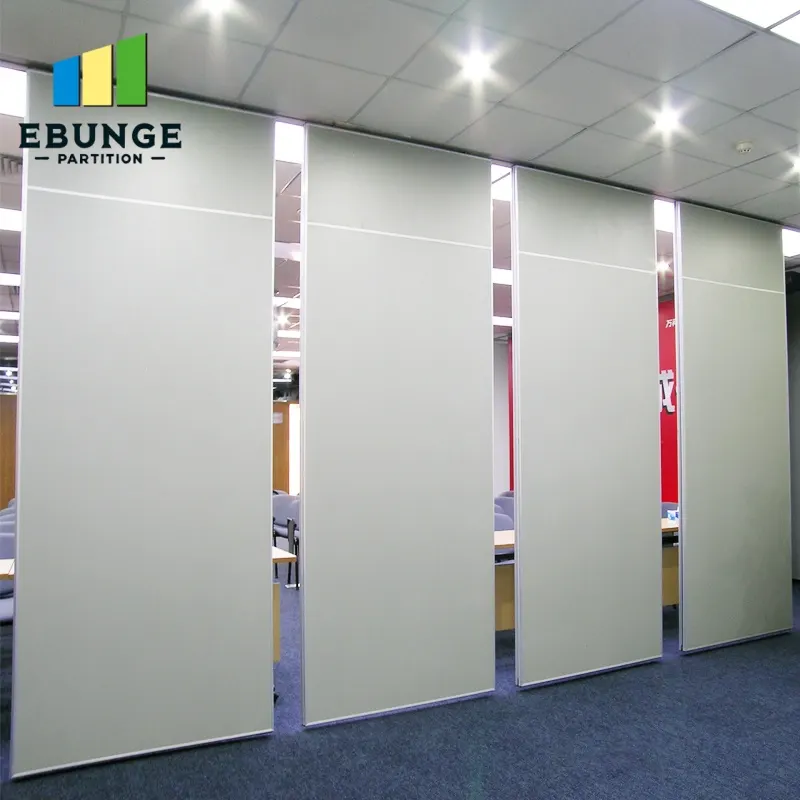
EBUNGE movable partition panels are individually movable, suspended from a top track, cross the opening without a floor track, and park at a planned stacking position. The tender should therefore ask bidders to confirm how the straight, turning, and stacking routes have been reviewed against the layout. The exact route, junction arrangement, continuous overhead path and parking position must be confirmed from the coordinated project drawings.
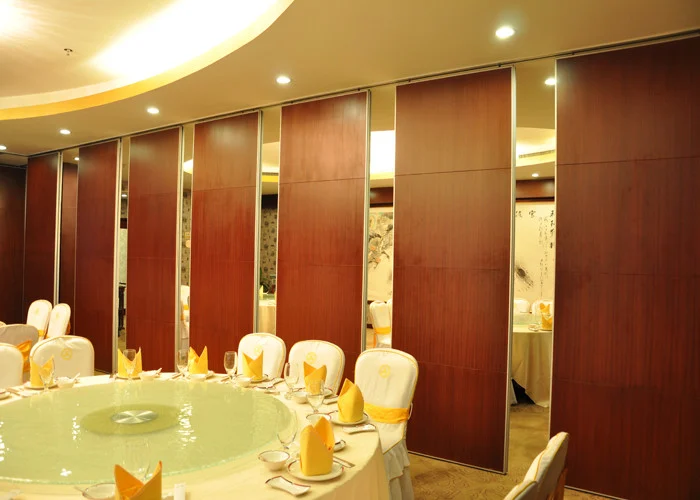
Ask bidders to identify where the panels will park, how the parking area relates to adjacent doors or services, and whether the proposed stacking arrangement matches the intended room use. Parking style is customized to the customer layout and project requirements, and compact stacking may be possible when the coordinated design permits it.
Finish, Pass-Door, and Documentation Clarifications
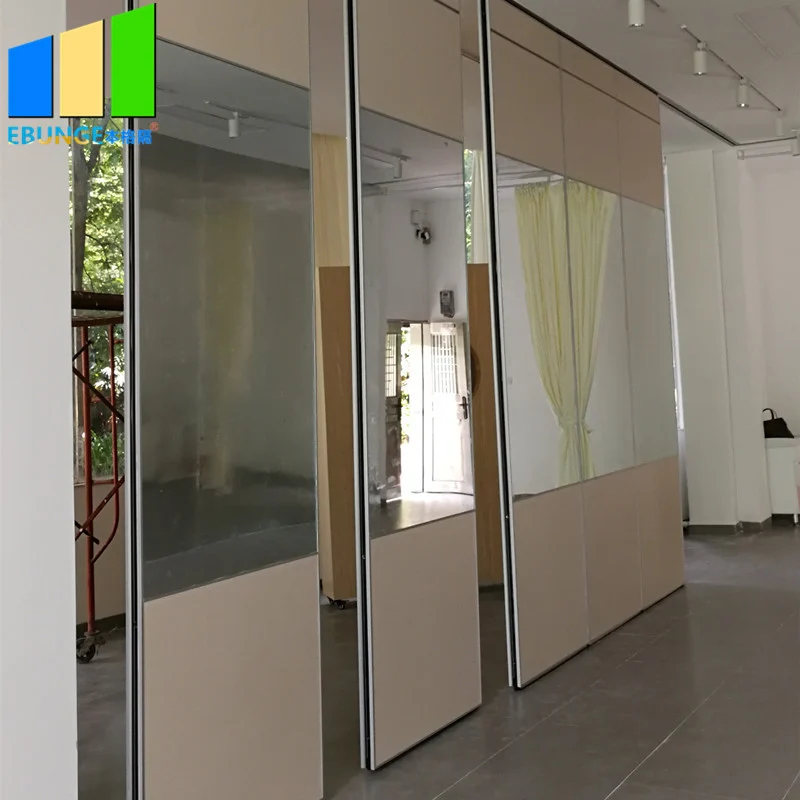
Finish selection often generates questions because different bidders may price different surfaces. Confirmed finish options include laminate, melamine, fabric, leather, glass, and other approved surfaces. The log should capture which finish is proposed for each elevation, whether samples are required, and how the finish interfaces with adjacent walls and frames.
Pass-door requirements should also be clarified early. Ask whether a pass door is required, where it is located, and how it coordinates with the panel module. Project documentation can be discussed with the supplier, so the log should record what drawings, schedules, or submittals are expected at each stage.
Evidence Boundaries: What the Log Should Not Claim
A clarification log is a record of questions and answers, not a performance certificate.
Record the question, the answer, and the evidence reference. Do not convert an assumption into a confirmed performance claim without project-specific documentation.
Where a bidder offers a statement about acoustic separation, ask for the basis of that statement and note whether it applies to the exact configuration proposed.
A Step-by-Step Process for Running the Log
- Nominate an owner and publish the log template before tender issue.
- Log every incoming question with a unique reference and date.
- Route each question to the responsible designer or supplier for a written response.
- Attach supporting drawings, schedules, or evidence to the response.
- Issue the response to all bidders simultaneously to keep the process fair.
- Update the log status and flag any impact on scope or evaluation.
- Close the log at award and carry open items into the contract documents.
This sequence keeps the movable partition tender bid clarification log usable as an audit trail rather than a passive inbox.
Common Coordination Gaps to Watch
Several gaps appear repeatedly in partition tenders. The parking area may conflict with a door swing or a service riser. The finish schedule may list a surface that is not available for the proposed panel edge detail. The pass-door location may not align with the panel module.
Use the log to raise these as formal clarifications rather than side conversations. If a bidder proposes an alternative, record it as a variation and confirm whether it changes the evaluated scope. Where the answer depends on site conditions, state that a project-specific review is required before the item can be closed.
FAQ: Bid Clarification Logs for Movable Partitions
What is a movable partition tender bid clarification log?
It is a controlled register of questions, answers, and supporting evidence exchanged during the tender period for a movable partition package. It provides a traceable record for evaluation and award.
Who should own the clarification log?
One owner should be responsible for version control and distribution.
Should the log include acoustic questions?
Yes, but answers should reference project-specific evidence rather than general claims.
How do we handle parking and stacking questions?
Ask bidders to confirm how the straight, turning, and stacking routes have been reviewed against the layout. Parking style is customized to the customer layout and project requirements, and the overhead route must be continuous and connected.
When should the log be closed?
Close it at award, but carry any open items into the contract documents. Items that depend on site conditions should remain open until a project-specific review is completed.
Can the log include finish and pass-door clarifications?
Yes. Confirmed finish options include laminate, melamine, fabric, leather, glass, and other approved surfaces. Pass-door requirements and project documentation can be discussed and recorded as formal clarifications.
Conclusion: Keep Clarifications Traceable
A well-run movable partition tender bid clarification log reduces ambiguity, supports fair evaluation, and gives the project team a defensible record. Keep every entry tied to a drawing, a specification clause, or a written response, and avoid treating assumptions as confirmed performance. For project-specific support, acoustic, and dimensional requirements, confirm the details with the supplier and the design team before award.
To discuss your movable partition tender or request project documentation, contact EBUNGE. You can also review movable wall systems and browse additional project resources for procurement and tender review.