
Quick answer: track zone handover file
Review focus: track zone handover file.
Final retention release often depends on a handover file that proves the track zone was coordinated, installed and documented as designed. For overseas project teams, the phrase track zone handover file retention release evidence describes the records that connect the overhead route, the suspended panels and the agreed parking position. This article sets out an evidence-bounded framework. The suitability of each route and parking arrangement depends on the approved layout, circulation, ceiling interfaces and operating sequence.
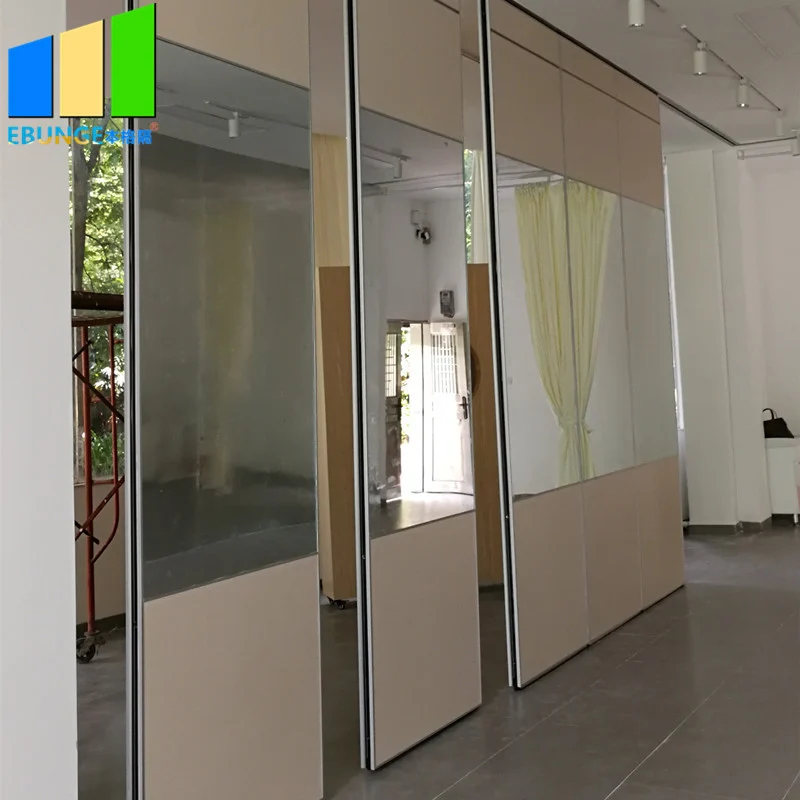
Movable wall panels are individually movable, suspended from a top track, cross the opening without a floor track, and park at a planned stacking position. Those maintained facts shape what the handover file should show.
Why the Track Zone Is the Critical Handover Zone
Project review term: track zone handover file.
The track zone is where several trades meet: structure, ceiling, finishes and the movable partition itself. A handover file that only lists panel finishes is incomplete. It should show how the straight, turning and stacking routes were reviewed from the layout, and how the overhead route remains continuous and supported along every proposed movement path.
Retention release is a commercial milestone, but the evidence behind it is technical. The file should let a reviewer trace each installed condition back to a coordinated drawing or approved submittal. Where information is missing, the correct action is to request clarification, not to infer hidden performance from a photograph or a finish sample.
What the Handover File Should Contain
Coordination scope: track zone handover file.
A useful file is organized around the installed system, not around a supplier’s marketing material. It should include as-built or record drawings for the track zone, the reviewed movement routes, the parking arrangement and the interface conditions at each end of the opening.
Core document set
- Coordinated layout drawings showing straight, turning and stacking routes.
- Record information for the top track and its supporting interface, as confirmed for the project.
- Panel schedule with confirmed finish options such as laminate, melamine, fabric, leather, glass or other approved surfaces.
- Pass-door requirements, if any, and the associated project documentation discussed with the supplier.
- Inspection or sign-off records that reference the reviewed drawings.

This list is a starting framework. The exact document set depends on the contract, the project’s quality plan and the authority having jurisdiction. Confirm project-specific support, acoustic and dimensional requirements before treating any item as complete.
Evidence Boundaries Reviewers Should Apply
Handover review fails when a document is asked to prove more than it can. A layout sketch does not prove that the installed route matches the approved route.
Evidence note: every claim in the handover file should be traceable to a maintained product fact, a project-specific drawing or a signed inspection record. If a claim has none of these, mark it as an open item rather than accepting it.
Where acoustic separation matters, the project team should confirm the required rating and the supporting test evidence for the specific assembly.
A Practical Review Sequence Before Retention Release
Reviewing the file in a fixed order helps teams avoid reopening closed items. The sequence below keeps the focus on the track zone and the movement routes that depend on it.
- Confirm the approved layout and the reviewed straight, turning and stacking routes.
- Compare record drawings with the installed overhead route and parking position.
- Check that the supporting interface has been reviewed for the project.
- Verify panel schedule, finishes and any pass-door documentation.
- Close open items with written clarification, not verbal assumption.
- Confirm that inspection records reference the same drawing revision.
Each step produces a visible record. That record is what allows a reviewer to release retention with confidence, or to hold it with a clear reason.
Common Gaps That Delay Final Retention
Most delays come from mismatched revisions, missing interface details or unclear responsibility between trades. A track zone handover file should state who reviewed the overhead route, which drawing revision was installed, and how the parking position was coordinated with adjacent finishes.
Questions to resolve early
- Does the record drawing show the same route as the approved layout?
- Is the parking position clear of other building services?
- Are finish selections recorded against the correct panel locations?
- Are pass-door requirements documented where they apply?
- Is every open item assigned to a named responsible party?
Resolving these questions before the final inspection reduces the risk of a conditional handover. It also keeps the retention discussion focused on evidence rather than opinion.
How to Coordinate the File Across Project Teams
Contractors, architects, interior designers, owners and distributors each hold part of the picture. The handover file works when those parts are combined into one controlled document set with a clear revision history.
For product context, teams can review the movable walls product page and the project resources before finalizing submittals. Where a project has specific support, acoustic or dimensional questions, the right step is to contact the team with the relevant drawings so the requirements can be discussed against the actual layout.
FAQ: Track Zone Handover and Retention Release

What is a track zone handover file?
It is the set of records that documents the overhead route, supporting interface, panel schedule and movement routes for a top-hung movable partition, so a reviewer can confirm the installed condition against the approved design.
Does the handover file need to prove acoustic performance?
Only if the project specifies an acoustic requirement. They should not be inferred from a finish or a drawing.
Why are straight, turning and stacking routes reviewed from the layout?
Because panels are suspended from a top track and must follow a continuous connected overhead route. Reviewing the layout confirms that every proposed movement path and parking position has been coordinated.
Can the file rely on photographs instead of drawings?
Photographs can support a record, but they do not replace coordinated drawings or inspection sign-offs. Reviewers should be able to trace each installed condition to a controlled document.
What should happen if an item is incomplete?
It should be recorded as an open item with a responsible party and a required clarification. Retention release should follow closure of those items, not an assumption that they will be resolved later.
Who confirms project-specific support and dimensional requirements?
The project’s design and engineering team, using the actual layout and building conditions. Supplier documentation can support that review but does not replace it.
Conclusion and Next Step
A track zone handover file earns retention release when it proves the installed overhead route, parking position and panel schedule match the reviewed design. Keep every claim traceable, mark unsupported statements as open items, and confirm project-specific support, acoustic and dimensional requirements before sign-off.
If your team is preparing a handover file and needs to discuss drawings, pass-door requirements or project documentation, contact EBUNGE with the relevant layout so the next step can be reviewed against your project conditions.