
Quick answer: changeover labor forecast
Review focus: changeover labor forecast.
A changeover labor forecast facility booking data process turns reservation records into a practical planning view of how often a room must be reset, which spaces are paired, and where movable partitions fit into the sequence. Panel handling and the operating sequence must be confirmed for the selected layout and project conditions. The suitability of each route and parking arrangement depends on the approved layout, circulation, ceiling interfaces and operating sequence.
This guide is written for overseas contractors, architects, interior designers, owners, renovation companies, distributors and construction teams. Every recommendation below is tied to maintained product facts, visible evidence limits and project-specific drawing review. Named venues are examples only; movable partitions can be considered wherever flexible spatial division, combination or reconfiguration is required.
Start With the Booking Pattern, Not the Labor Number
Project review term: changeover labor forecast.
Booking data usually contains arrival and departure times, room names, event types and sometimes setup notes. The first task is to group bookings into changeover families: sessions that use the same room in the same configuration, sessions that require a different layout, and sessions that combine two or more rooms.
Do not convert booking counts directly into labor hours. A booking record rarely states how a partition system is arranged, where panels park, or whether a route crosses another active zone. Those details come from layout review, not from the reservation system.
What to extract from each booking record
- Room or space identifier and any paired room reference.
- Start and end time, including setup and reset windows if recorded.
- Configuration label used by the booking team, such as full room, divided room or combined room.
- Repeat pattern, such as weekly, monthly or seasonal.
- Notes that mention furniture, staging or access restrictions.
Map Booking Changes to Physical Partition Movements
Coordination scope: changeover labor forecast.
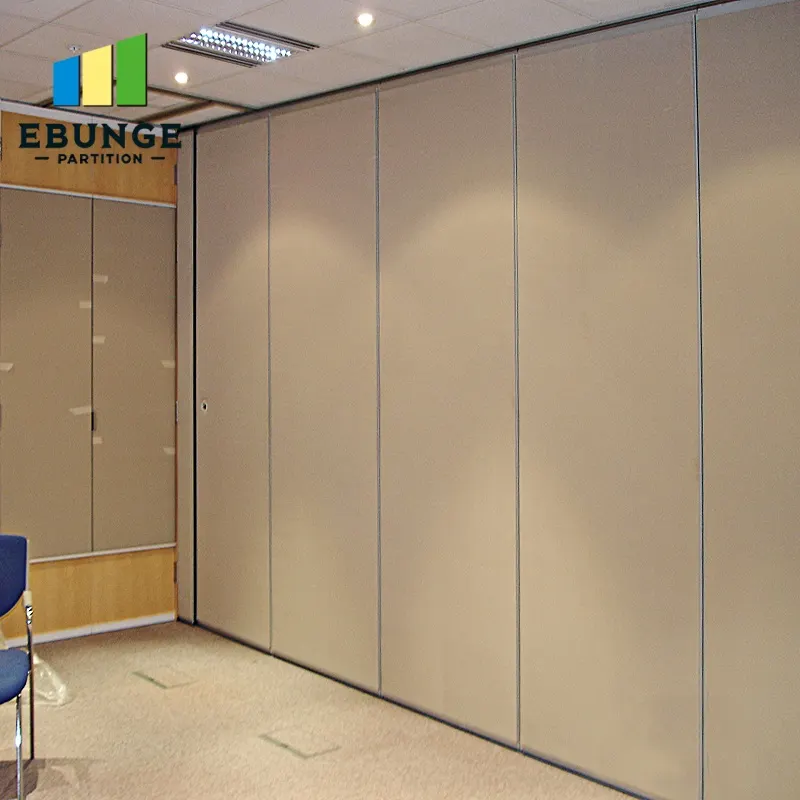
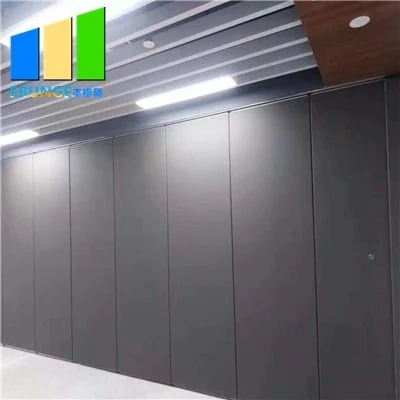
Once bookings are grouped, the next step is to describe the physical movement each change implies. EBUNGE movable wall panels are individually movable, suspended from a top track, cross the opening without a floor track, and park at a planned stacking position. Straight, turning and stacking routes are reviewed from the layout.
This matters because a booking change is not automatically a partition change. Some layout changes may be handled by furniture alone. Others may require panels to move along a route that must be continuous and connected overhead. The exact route, junction arrangement, continuous overhead path and parking position must be confirmed from the coordinated project drawings.
Build a movement matrix
| Booking change | Physical implication | Evidence needed |
|---|---|---|
| Same room, same layout | No partition movement expected | Booking note confirming layout |
| Divided to full room | Panels move to parking position | Layout drawing showing route and stacking area |
| Full room to divided | Panels move from parking into opening | Layout drawing and project-specific support review |
| Combined room use | Multiple panel groups may be involved | Coordinated layout showing all affected routes |
Separate Forecast Inputs From Assumptions
Checklist focus: changeover labor forecast.
A forecast becomes unreliable when assumptions are hidden inside it. Keep two columns: inputs taken from booking data, and assumptions that still require confirmation. Booking data can show frequency and sequence.
Acoustic requirements, seals and adjacent construction details must be confirmed for the specific project.
Evidence note
Treat every labor estimate as a planning scenario until the layout, support conditions, route geometry and project-specific acoustic requirements have been reviewed. Do not infer hidden performance, structural capacity or commercial outcomes from a booking pattern or a finish sample.
Use a Repeatable Forecast Structure
A repeatable structure helps different teams compare assumptions without pretending the result is precise. The goal is to expose where information is missing, not to create a single authoritative number.
- Extract booking records for a representative period.
- Group records into changeover families.
- Map each family to a physical partition movement.
- Flag movements that depend on unconfirmed layout or support information.
- Review flagged items with the design and operations team.
- Document confirmed inputs and open questions separately.
- Revisit the forecast when booking patterns or layouts change.
Coordinate Across Disciplines Before Finalizing
Changeover planning touches operations, design and construction. A booking team may describe a room as divisible, while the architectural drawing shows a different opening width or parking location. Those differences should be resolved before the forecast is treated as a basis for planning.
Confirmed finish options include laminate, melamine, fabric, leather, glass and other approved surfaces. Pass-door requirements and project documentation can be discussed with the project team.
Coordination checklist
- Confirm the room pairing logic used by the booking system.
- Confirm the parking position and whether it conflicts with other uses.
- Confirm that every proposed route is continuous and connected overhead.
- Confirm project-specific support, acoustic and dimensional requirements.
- Confirm who maintains the forecast when bookings change.
Common Forecasting Mistakes to Avoid
One common mistake is treating every booking change as a partition change. Another is assuming that a compact stacking arrangement is always available; parking style is customized to the customer layout and project requirements and may support compact stacking when the coordinated design permits it.
A third mistake is using a finish or application example as evidence of performance. Visible references can support layout discussion but do not verify hidden construction or performance. Keep those claims behind project-specific evidence.
Frequently Asked Questions

What is a changeover labor forecast from facility booking data?
It is a planning method that groups booking records into changeover families and maps each family to a possible physical partition movement. It helps teams identify where layout, route and support information is still needed.
Can booking data alone determine how many people are needed for a changeover?
No. Booking data shows frequency and sequence, but it does not confirm route geometry, parking position, support conditions or project-specific requirements. Those items require layout and drawing review.
How do movable partitions affect changeover planning?
EBUNGE movable wall panels are individually movable, suspended from a top track, cross the opening without a floor track, and park at a planned stacking position. Straight, turning and stacking routes are reviewed from the layout.
Should STC or Rw ratings be converted into a labor forecast?
No. Acoustic requirements should be confirmed for the specific project and should not be reduced to a simple number in a labor forecast.
What information should be confirmed before finalizing the forecast?
Confirm project-specific support, acoustic and dimensional requirements, route continuity, parking position and any pass-door needs. Project documentation can be discussed with the EBUNGE team.
Where can project teams find more planning resources?
Review the movable walls product page and the resources section for general planning context. For project-specific questions, contact the team.
Conclusion
A changeover labor forecast facility booking data process is most useful when it separates confirmed booking inputs from assumptions that still need review. Use booking patterns to identify changeover families, map those families to physical partition movements, and flag every route, support and acoustic question for project-specific confirmation.
Instead, build a forecast that shows what is known, what is assumed and what must be confirmed. For project-specific support, acoustic and dimensional requirements, contact EBUNGE to discuss your layout and documentation.