
Quick answer: tender query audit trail before
Review focus: tender query audit trail before.
A partition tender query audit trail before bid clarification closes is the record that shows what was asked, when it was answered, which drawing revision applied and what remains open. The suitability of each route and parking arrangement depends on the approved layout, circulation, ceiling interfaces and operating sequence. The audit trail is not a performance claim. It is a coordination tool that keeps every question tied to visible evidence and project-specific review.
Why the Query Window Needs Its Own Audit Trail
Project review term: tender query audit trail before.
When queries are handled only by email threads, the same question can be answered twice with different assumptions. The exact route, junction arrangement, continuous overhead path and parking position must be confirmed from the coordinated project drawings.
The trail also helps distributors and construction teams compare bids on the same basis. If one bidder assumes a different stacking position or a different route, the comparison is no longer like for like. The audit trail makes those differences visible before the clarification deadline, not after award.
What Counts as a Tender Query in a Partition Package
Coordination scope: tender query audit trail before.
A tender query is any question whose answer changes scope, layout, finish, documentation or coordination responsibility. It does not need to be technical in the engineering sense. A question about who confirms the parking position is just as important as a question about the opening width.
Layout and movement questions
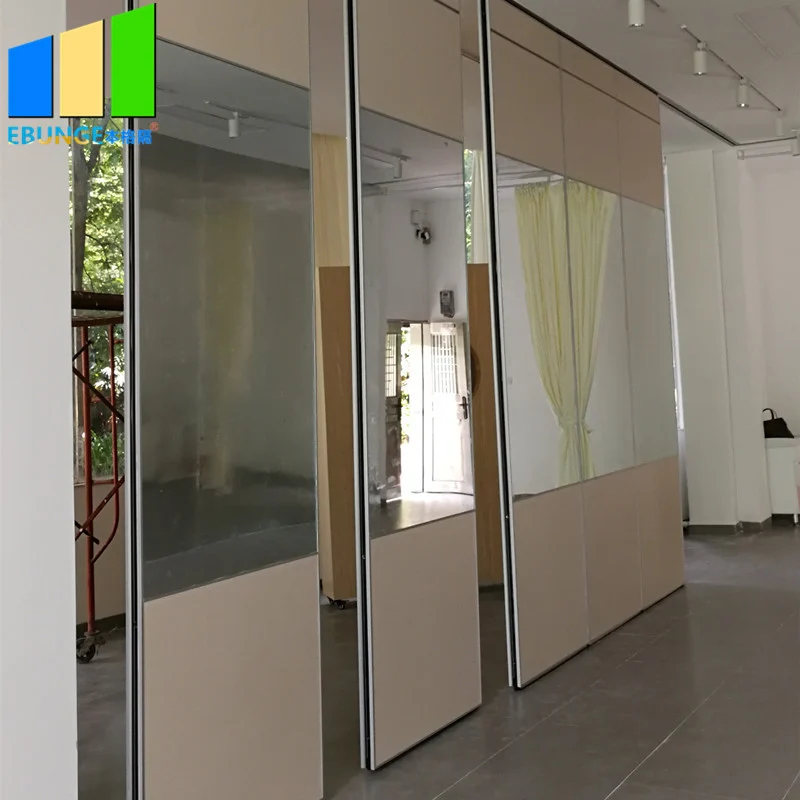
Movable wall panels are individually movable, suspended from a top track, cross the opening without a floor track and park at a planned stacking position. Straight, turning and stacking routes are reviewed from the layout. Queries should therefore record the proposed route, the parking zone and any drawing that shows how the panels reach that zone.
Finish and interface questions
Confirmed finish options include laminate, melamine, fabric, leather, glass and other approved surfaces. A query should state which finish is being priced and whether the sample or reference is approved. Interface questions about adjacent walls, ceilings and existing conditions should also be logged, because they affect coordination even when they do not change the panel itself.
A Numbered Process for Building the Audit Trail
Checklist focus: tender query audit trail before.

- Open a single query register. Give every question a unique reference, date, originator and the drawing revision it refers to.
- Classify each query. Panel handling and the operating sequence must be confirmed for the selected layout and project conditions.
- Attach the evidence. Link the relevant drawing, schedule or specification section. If evidence is missing, say so rather than filling the gap with an assumption.
- Record the response and its boundary. Note what was confirmed and what still requires project-specific support, acoustic and dimensional confirmation.
- Track revision changes. When a drawing is reissued, reopen any query whose answer depended on the previous revision.
- Close with a status. Use clear states such as open, answered, superseded or closed, and keep the register available to all bidders.
Evidence Boundaries to State in the Register
Review focus: tender query audit trail before.
An audit trail is only useful if it distinguishes maintained product facts from project-specific conclusions. Those items require separate confirmation.
Evidence note: a query answer may confirm that a route is shown on a drawing, but it does not confirm support, acoustic or dimensional performance unless that confirmation is separately documented for the project.
A tender query should ask how the project specification defines the requirement and what documentation is expected, rather than reducing the discussion to a single number.
Drawing Review Checks Before Clarification Closes
Before the clarification deadline, run a focused drawing review against the query register. The goal is to catch mismatches between what was asked and what the current drawings show.
| Check | What to verify | Action if unclear |
|---|---|---|
| Route continuity | The overhead route shown connects the opening to the parking position | Raise a query and attach the layout |
| Parking position | The stacking zone is shown and coordinated with other trades | Request confirmation from the design team |
| Finish schedule | The specified finish matches an approved option | Log the finish query with the sample reference |
| Pass-door need | Any pass-door requirement is stated in the tender documents | Discuss pass-door requirements and project documentation |
| Revision status | All answers refer to the latest drawing revision | Reopen superseded queries |
Coordinating Answers Across the Bid Team
Architects can confirm design intent, contractors can confirm site interfaces, and owners can confirm operational priorities. Each contribution should be dated and tied to a document.
If a query cannot be answered before the deadline, record it as open rather than closing it with an assumption. An open item is honest and manageable. A closed item based on an unconfirmed assumption can mislead every bidder who relies on it.
For product context, the movable walls product page describes the maintained system facts. The resources section supports buyer and project planning. Both are starting points, not substitutes for project-specific confirmation.
Common Audit Trail Mistakes to Avoid

One common mistake is mixing questions with instructions. A query asks for confirmation; an instruction changes the scope. Keeping them separate prevents confusion about who is responsible for the change.
Another mistake is losing the link between a query and its drawing revision. When drawings are reissued, an answer that was correct for the previous revision may no longer apply. The register should flag those dependencies automatically or through a manual review step.
Those conclusions require matching evidence and should remain outside the query register until confirmed.
FAQ
What is a partition tender query audit trail?
It is a structured record of questions, answers, drawing revisions and open items raised during the partition tender clarification period. It shows what was confirmed and what still needs project-specific review.
When should the audit trail be started?
Start it as soon as the first tender query is raised. Waiting until the clarification deadline makes it harder to track revision changes and to give every bidder the same information.
Does the audit trail confirm acoustic performance?
No. It can record that an acoustic question was asked and answered, but the performance conclusion requires project-specific documentation.
How should stacking and parking queries be handled?
Record the proposed route and parking position on the layout. Confirm that the overhead route is continuous and that the parking zone is coordinated. If the drawing is unclear, keep the query open.
Can pass-door requirements be included in the query register?
Yes. Pass-door requirements and project documentation can be discussed with the supplier and recorded as a query item so that all bidders price the same scope.
Who should own the register?
A single owner, usually in procurement or design coordination, should maintain the register. Others contribute through it so that answers remain traceable and dated.
Conclusion and Next Step
A well-run partition tender query audit trail before bid clarification closes keeps the bid comparison honest. Use the register as a living document, not a one-time checklist.
To discuss pass-door requirements, project documentation or layout review for your tender, contact EBUNGE with your drawings and query list.