
Quick project answer
Review focus: track fixing sequence.
A partition tender bidder track fixing sequence review is not a line-by-line price check. The exact route, junction arrangement, continuous overhead path and parking position must be confirmed from the coordinated project drawings. Because EBUNGE movable wall panels are individually movable and suspended from a top track, the fixing sequence shapes the whole installation logic. This guide gives project teams a repeatable way to compare submissions without inventing performance, cost or engineering conclusions that the documents do not support.
Why the Track Fixing Sequence Deserves Its Own Review
Project review term: track fixing sequence.
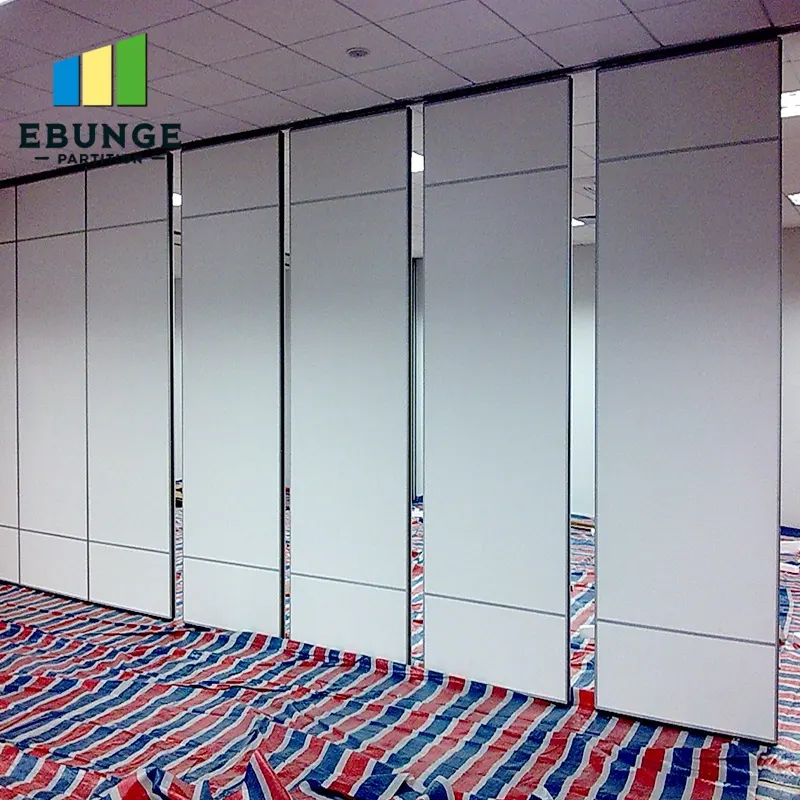
In a top-hung system, panels cross the opening without a floor track and park at a planned stacking position. That means the overhead route carries the movement logic. The suitability of each route and parking arrangement depends on the approved layout, circulation, ceiling interfaces and operating sequence.
Reviewers should ask whether the submission shows how the track is set out, how it is fixed, and how the route is verified before panels are hung. The sequence is a coordination document as much as an installation method.
What a Complete Sequence Should Show
A useful submission reads like a short story with a clear order. It should identify the overhead route, the fixing approach, the verification steps and the handover point. It should also show how straight, turning and stacking routes were reviewed from the layout.
Route and layout logic
Look for a plan that traces the full path from the closed position to the parking position. Any turning or stacking route should be visible, not implied.
Fixing and support coordination
The bidder should state which project drawings govern the support condition and who confirms it. Do not accept a generic note that the structure is suitable. The correct statement is that support requirements are confirmed against project-specific drawings and approvals.
A Decision Checklist for Tender Reviewers
- Does the bidder show the overhead route on a layout drawing, including turning and parking positions?
- Is the fixing sequence described in order, from setting out to final verification?
- Are support conditions referenced to project drawings rather than assumed?
- Is the parking style matched to the customer layout and project requirements?
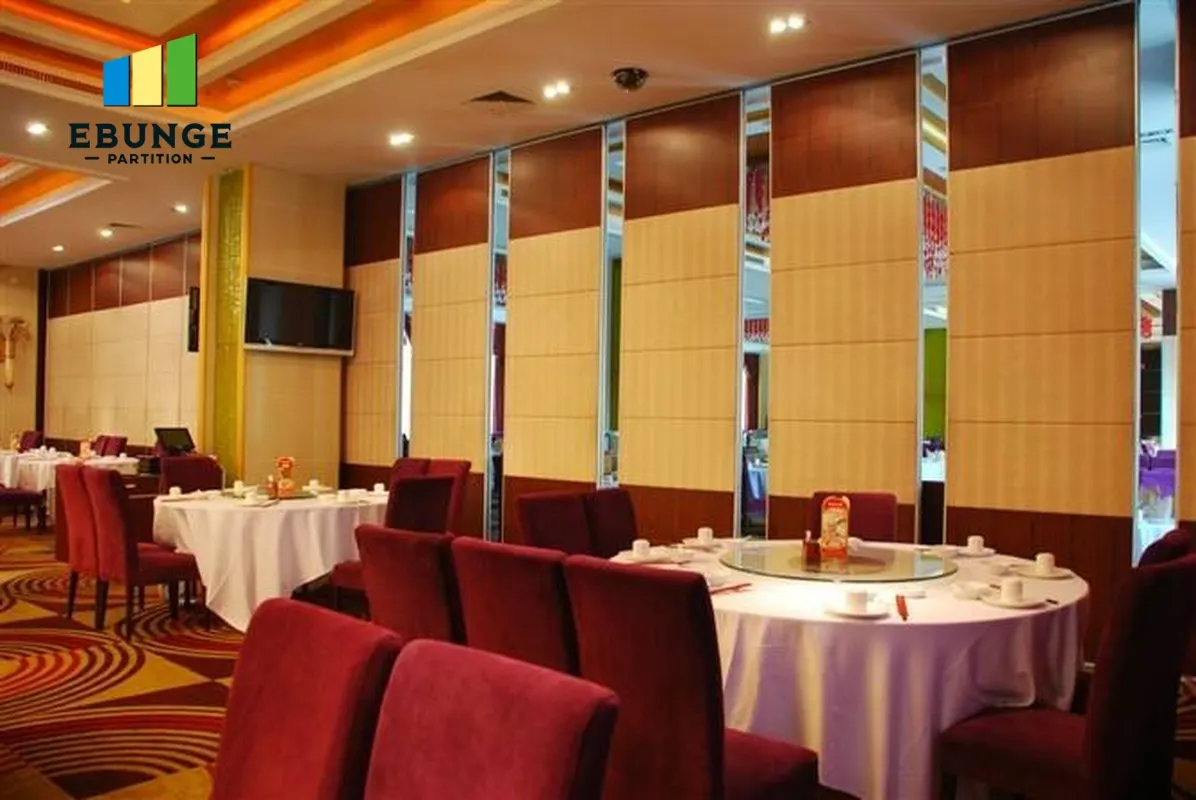
- Are finish options listed only from approved surfaces such as laminate, melamine, fabric, leather or glass?
- Are pass-door requirements and project documentation discussed where relevant?
- Does the submission avoid unsupported acoustic, structural or commercial promises?
Reading Acoustic and Seal Language Carefully
If a bidder mentions acoustic intent, check whether the claim is tied to a tested assembly and a project-specific configuration.
Seals and acoustic concepts can be explained generically, but the review should stay within what the documents actually state. Where performance matters, ask for the matching evidence and confirm the requirement with the project team.
Comparing Bidders Without Overreaching
A compact comparison helps a committee see differences in completeness rather than in unverified performance. The table below is a reading aid, not a scoring formula.
| Review area | Strong submission signal | Follow-up needed |
|---|---|---|
| Route drawing | Straight, turning and stacking routes shown | Confirm dimensions and clearances |
| Fixing sequence | Ordered steps from setting out to verification | Confirm support responsibility |
| Parking | Style matched to layout and project requirements | Confirm stacking position |
| Finishes | Selected from approved surfaces | Confirm sample and approval route |
| Documentation | Pass-door and project documents discussed | Confirm scope and approvals |
Evidence Notes Reviewers Should Keep
Record what the bidder has shown, what remains open, and which project drawing or approval will close each item. Do not convert a visible drawing detail into a hidden performance claim.
An evidence note protects the review from drifting into assumptions. It also gives the project team a clean basis for clarification questions.
Coordination Questions to Send Back to Bidders
- Which drawing defines the overhead route, and does it include turning and parking positions?
- How is the fixing sequence verified before panels are hung?
- Which party confirms the support condition, and against which project document?
- How does the proposed parking style match the agreed layout?
- Which finish surfaces are included, and how will samples be approved?
- Are pass-door requirements and project documentation included in the scope?
These questions keep the movable wall system discussion anchored to the tender package. They also help reviewers compare bidders on the same basis.
Common Review Mistakes to Avoid
One common mistake is treating a product brochure as a fixing method. Another is accepting a route that is drawn only in the closed position. A third is allowing acoustic language to stand in for project-specific confirmation.
A finish is a finish until the matching evidence is provided.
How to Structure the Review Meeting
Start with the route drawing, then move to the fixing sequence, then to support coordination, then to parking and finishes. Keep a running list of open items and assign each one to a document or approval.
If the committee needs a neutral reference point, the EBUNGE resources page can support general planning discussions. It does not replace project-specific engineering review.
FAQ: Track Fixing Sequence Review
What is a track fixing sequence in a partition tender?
It is the bidder’s described order for setting out, fixing and verifying the overhead route that supports top-hung movable panels.
Does every movable partition need a floor track?
No. EBUNGE movable wall panels are top-hung and move without a continuous floor running track or floor hardware along the partition line.
Can I compare bidders using acoustic ratings alone?
No.
What finish options can appear in the submission?
Confirmed finish options include laminate, melamine, fabric, leather, glass and other approved surfaces, subject to project approval.
How should parking be reviewed?
Parking style is customized to the customer layout and project requirements, so reviewers should confirm the planned stacking position against the layout.
When should we ask for project-specific confirmation?
Whenever support, acoustic or dimensional requirements affect the design. These should be confirmed for the project rather than inferred from a generic document.
Conclusion and Next Step
A disciplined partition tender bidder track fixing sequence review helps committees separate complete submissions from vague ones. Focus on the overhead route, the fixing order, support coordination, parking logic and the evidence behind every statement. The exact overhead route and support arrangement must be confirmed by the responsible project team from coordinated drawings.
To discuss pass-door requirements, project documentation or a movable wall configuration for your layout, contact the EBUNGE team.