
Quick answer: daily anchor quota
Review focus: daily anchor quota.
Track fixing crew daily anchor quota planning is a drawing-led exercise, not a productivity guess. The exact route, junction arrangement, continuous overhead path and parking position must be confirmed from the coordinated project drawings. Before a supervisor sets any daily target, the team should confirm the route, the support condition and the documentation available for the specific opening.
This article gives overseas contractors, architects and renovation teams an evidence-bounded framework. It does not provide anchor counts, load values or installation speeds, because those depend on project-specific engineering and must be confirmed for each layout.
Why the Daily Quota Cannot Be a Fixed Number
Project review term: daily anchor quota.
A daily anchor quota sounds like a simple scheduling figure, but it sits on top of several variables: the length and shape of the track route, the number and spacing of fixing points, the substrate condition, the ceiling build-up and the access available to the crew. None of these can be assumed from a generic product description.
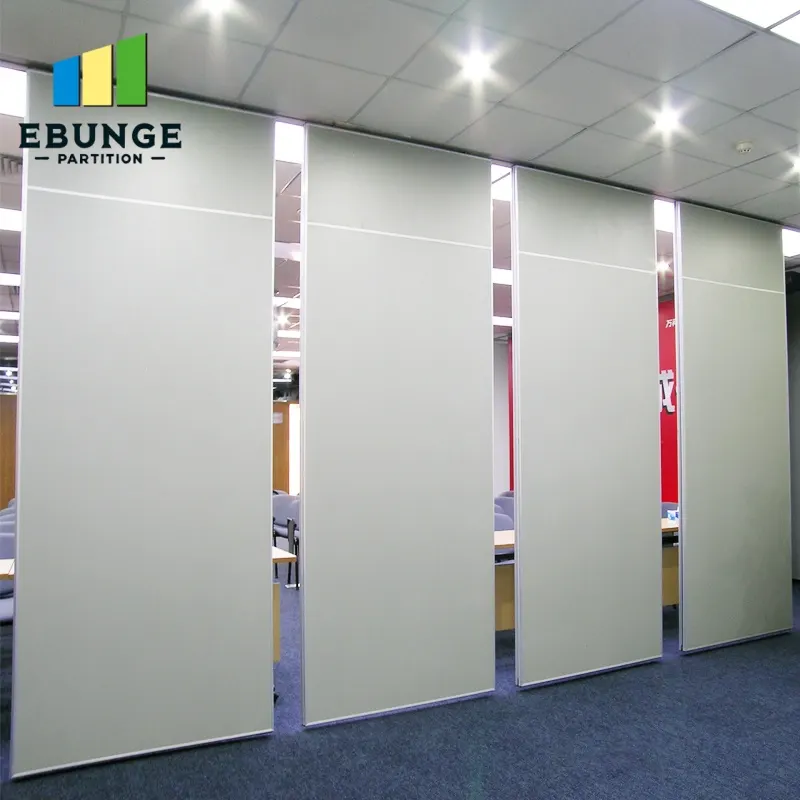
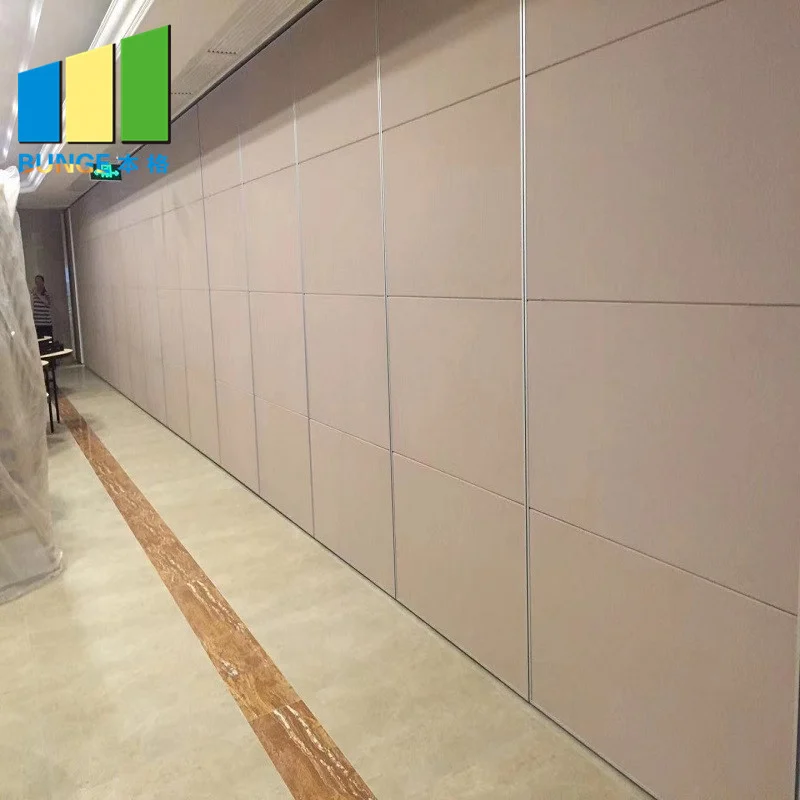
EBUNGE movable wall panels are individually movable, suspended from a top track, cross the opening without a floor track, and park at a planned stacking position. That maintained fact tells you the system is top-hung and clear of the floor along the partition line. It does not tell you how many anchors a given route needs, or how long each fixing will take.
What the quota is really measuring
In practice, a quota is a planning allowance for a defined scope: a reviewed route, a confirmed support strategy and a known set of drawings. Change any of those and the allowance changes. Treat the quota as a project-specific output, not an input copied from another job.
Information to Collect Before Setting a Target
Coordination scope: daily anchor quota.
Start with the layout. Straight, turning and stacking routes should be reviewed from the project drawings, because each route type affects how the track is arranged and where fixing points fall. A route that turns or parks panels in a compact stack is not the same as a single straight run.
Next, collect the support information. The suitability of each route and parking arrangement depends on the approved layout, circulation, ceiling interfaces and operating sequence. If that information is missing or unclear, the correct action is to request clarification, not to estimate.
- Reviewed track route drawing, including straight, turning and stacking sections.
- Confirmed support condition for each part of the route.
- Ceiling or soffit build-up details relevant to the fixing zone.
- Access arrangements for the crew and their equipment.
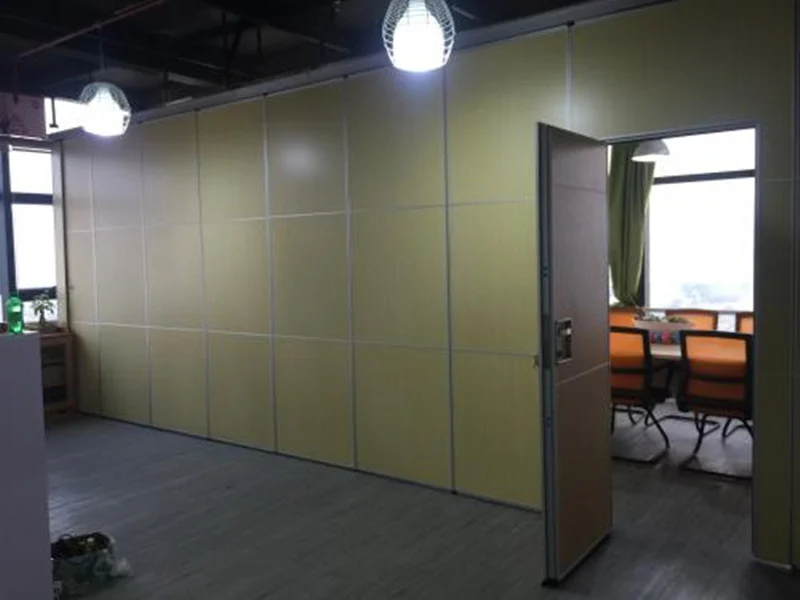
- Any pass-door requirements, which can affect panel and track coordination.
- Project documentation requirements agreed with the main contractor.
Evidence note
Do not derive anchor spacing, load capacity or fixing time from a photograph, a finish sample or a similar-looking project. Where a figure is needed, it must come from the project-specific engineering review.
A Step-by-Step Planning Sequence
Checklist focus: daily anchor quota.
The sequence below keeps the quota tied to verified information. It is a coordination process, not an installation method statement.
- Obtain the current layout drawings and confirm the full track route.
- Identify straight, turning and stacking sections and mark them on the plan.
- Agree the fixing-point locations from the reviewed drawings.
- Check access, working sequence and interface with other trades.
- Define the daily scope in terms of reviewed fixing points, not a guessed count.
- Record assumptions and open questions for the next coordination meeting.
Only after steps one to four are complete does a daily allowance become meaningful. If the support strategy is still open, the quota should be marked provisional.
Coordinating the Crew with Other Trades
Track fixing rarely happens in isolation. Ceiling services, sprinkler runs, lighting and ductwork can all occupy the same zone. A crew that arrives to find the fixing line blocked will lose time regardless of how well the quota was calculated.
Use the coordination meeting to confirm the sequence: when the ceiling zone is released, when the track route is clear and when the fixing crew can work without conflict.
Questions to raise with the design team
Ask whether the support condition has been reviewed for every part of the route, including turning and stacking areas. Ask whether any pass-door positions change the panel arrangement. Ask what documentation the project requires before fixing begins.
What Can and Cannot Be Confirmed from EBUNGE
EBUNGE can discuss confirmed finish options, including laminate, melamine, fabric, leather, glass and other approved surfaces. Pass-door requirements and project documentation can also be discussed. These are useful for planning finishes and interfaces.
What cannot be confirmed generically is the anchor count, spacing, substrate suitability or installation duration for your project. Those require the project’s own drawings and engineering review.
| Planning item | Can be discussed generically | Requires project-specific confirmation |
|---|---|---|
| Track route type | Straight, turning and stacking routes are reviewed from layout | Exact geometry and dimensions |
| Finish selection | Laminate, melamine, fabric, leather, glass and approved surfaces | Final finish schedule and samples |
| Fixing points | Concept of top-hung support along a continuous route | Anchor locations, spacing and support capacity |
| Daily quota | Framework for setting a reviewed daily scope | The actual number for your project |
Common Planning Mistakes to Avoid
One frequent mistake is treating a quota from a previous project as a benchmark. Another is assuming the track can follow any path without a continuous connected overhead route. Every proposed movement path needs that continuous route and a support review.
A third mistake is leaving the support question to the fixing crew on the day. If the drawings do not show a confirmed fixing condition, the crew should stop and escalate rather than improvise. This protects the project and keeps the planning honest.
Keep a visible assumptions log
Record what has been confirmed, what is provisional and who is responsible for each open item. The log becomes the basis for revising the daily quota as information arrives.
Frequently Asked Questions
Can EBUNGE provide a standard daily anchor quota?
No. A daily anchor quota depends on the reviewed route, support condition and project documentation. EBUNGE can discuss the planning framework, but the figure must be confirmed for your specific project.
Do movable partitions need a floor track?
EBUNGE movable wall panels are top-hung and cross the opening without a floor track along the partition line. The panels park at a planned stacking position.
What drawings should be ready before fixing starts?
The current layout showing the full track route, the support information for that route, and any ceiling or coordination details that affect the fixing zone. Missing information should be resolved before work begins.
How do turning and stacking routes affect planning?
They change the track arrangement and the fixing points along the route. Straight, turning and stacking routes should be reviewed from the layout so the daily scope reflects the actual geometry.
Can finishes be selected before the quota is set?
Finish options such as laminate, melamine, fabric, leather, glass and other approved surfaces can be discussed during planning.
What should a contractor do if support details are unclear?
Do not estimate anchor locations or proceed on an unconfirmed support assumption.
Conclusion and Next Steps
Confirm the route, confirm the support, agree the documentation and only then set a daily scope. Keep the quota provisional until the project-specific information is in place.
For product context, review the movable walls range and the planning resources. When your drawings are ready, contact EBUNGE to discuss pass-door requirements, finish options and project documentation for your layout.