
Quick answer: changeover labor reserve
Review focus: changeover labor reserve.
When a room goes offline without warning, the real pressure is not the repair itself. It is the changeover labor reserve unplanned room downtime creates across every adjacent space. A changeover labor reserve is a planned buffer of time, coordination attention, and approved labor capacity that a facility team can redirect when a room becomes unavailable. Panel handling and the operating sequence must be confirmed for the selected layout and project conditions. It is a planning discipline that keeps flexible-space operations from collapsing into ad hoc decisions.
This guide is written for overseas contractors, architects, interior designers, owners, renovation companies, distributors, and construction teams. It explains how to structure a reserve, what evidence to request, and where project-specific confirmation is mandatory. Every recommendation below is bound to maintained product facts, visible evidence limits, and drawing review.
Why Unplanned Downtime Breaks Changeover Plans
Project review term: changeover labor reserve.
Most changeover schedules assume that the rooms named in the plan will be available. Unplanned downtime removes one or more of those rooms from the rotation. The remaining rooms must absorb the same event load, often with the same labor pool and the same setup window.
A reserve does not eliminate disruption. It gives the project team a defined decision path: which rooms can be reconfigured, which routes are already reviewed, and which labor tasks can be shifted without new engineering assumptions. That path must be documented before downtime occurs, not invented during it.
Define the Reserve in Operational Terms
Coordination scope: changeover labor reserve.
Start by describing what the reserve is for. A useful definition separates three elements: time buffer, coordination buffer, and approved task list. The time buffer is the gap between the planned changeover window and the event start.
Write these definitions into the facility operations plan. Avoid vague language such as flexible or quick. Instead, state which rooms are eligible, which layouts are already reviewed, and who confirms that a route remains valid. The suitability of each route and parking arrangement depends on the approved layout, circulation, ceiling interfaces and operating sequence.
Separate Planning Assumptions from Confirmed Facts
Planning assumptions are useful, but they must be labeled. A confirmed fact is something supported by maintained product documentation or a project-specific review. An assumption is a working belief that still needs confirmation.
Build the Reserve Around Reviewed Movement Routes
Movable wall panels are individually movable, suspended from a top track, cross the opening without a floor track, and park at a planned stacking position. Straight, turning, and stacking routes are reviewed from the layout.
When a room goes offline, the replacement room may need a different panel configuration. If the route to the new stacking position has not been checked, the changeover cannot be treated as a routine task.
Route Review Checklist
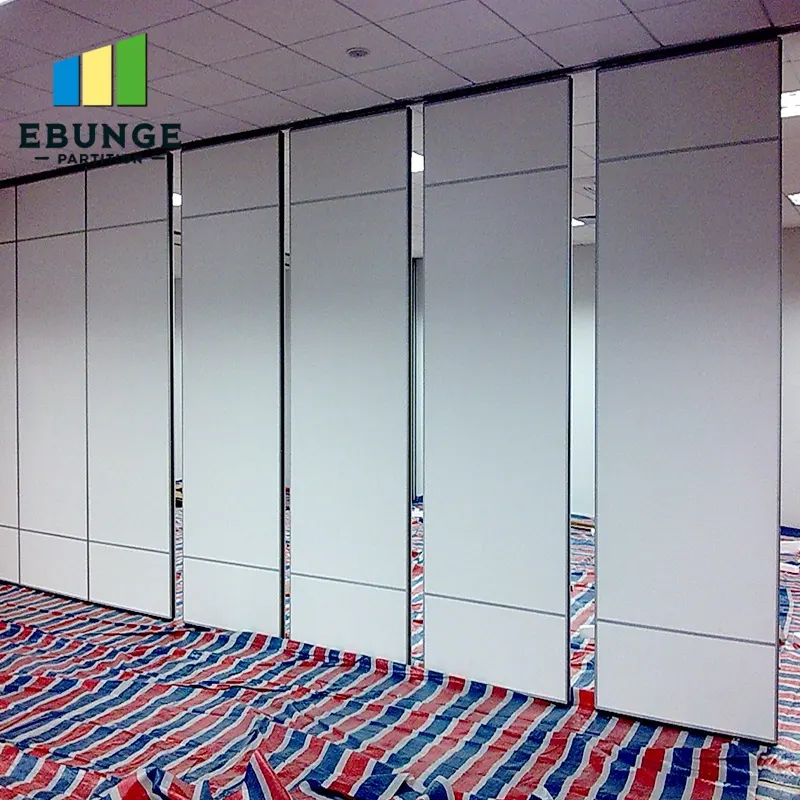
- Confirm the overhead route is continuous and connected for every proposed movement path.
- Confirm the planned stacking position is coordinated with the layout and does not block required circulation.
- Confirm the opening width and turning path are reviewed against the actual room geometry.
- The exact route, junction arrangement, continuous overhead path and parking position must be confirmed from the coordinated project drawings.
- Confirm that project-specific support and dimensional requirements are reviewed by the responsible party.
Visible references can support layout discussion but do not verify hidden construction or performance. A visible route on a plan is not evidence of support capacity or acoustic outcome. Those items require project-specific confirmation.
Coordinate Labor Tasks Without Inventing Capacity
A changeover labor reserve is only useful if the tasks inside it are realistic. Do not invent manpower numbers, operating tools, or task durations.
Each category should have a named responsible role, not a headcount. The goal is coordination clarity, not a staffing formula.
Compact Comparison: Planned Changeover vs. Downtime Changeover
| Planning Element | Planned Changeover | Unplanned Downtime Changeover |
|---|---|---|
| Room availability | Confirmed in advance | Reduced or uncertain |
| Route review | Completed before event | Must be re-confirmed quickly |
| Layout selection | Pre-approved options | Limited to reviewed alternatives |
| Coordination load | Scheduled | Compressed and reactive |
| Evidence boundary | Documented assumptions | Assumptions must be flagged immediately |
This comparison is a planning aid, not a performance claim. It helps teams see where the reserve absorbs pressure and where project-specific confirmation is still required.
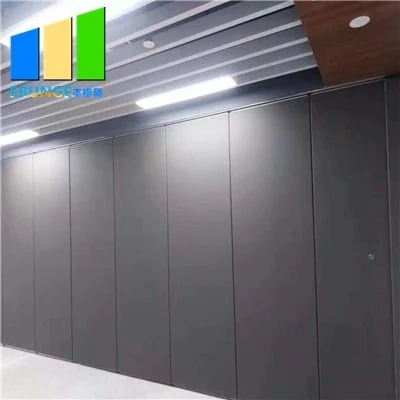
Use Finish and Layout Information Carefully
Confirmed finish options include laminate, melamine, fabric, leather, glass, and other approved surfaces.
For downtime planning, the practical question is whether the replacement room’s approved finish and layout are already documented. If they are not, the reserve should include a confirmation step before the room is committed to the event schedule.
Evidence Note: What a Drawing Can and Cannot Show
A layout drawing can show a proposed route, a stacking position, and a panel arrangement. The exact overhead route and support arrangement must be confirmed by the responsible project team from coordinated drawings. Those items require separate project-specific evidence.
Document Pass-Door and Access Requirements Early
Pass-door requirements and project documentation can be discussed with the supplier during planning.
Keep the documentation trail simple: layout revision, route review status, stacking position confirmation, finish approval, and open items. This trail supports coordination without implying that any performance outcome has been verified.
Set a Review Rhythm for the Reserve
Set a review rhythm that matches the facility’s event cycle. Before each major period, confirm that room availability assumptions still hold, that route reviews remain valid, and that open items have owners.
If a room goes offline, the review rhythm becomes a rapid triage: which reviewed alternatives exist, which routes are still valid, and which tasks can be reassigned. The reserve does not guarantee a successful changeover, but it gives the team a documented starting point.
Numbered Process: Activating the Reserve
- Confirm the affected room and the expected downtime window with the responsible party.
- Identify reviewed alternative rooms and their approved layouts.
- Verify that movement routes and stacking positions remain valid for each alternative.
- Assign coordination roles for room status, route checks, and post-changeover inspection.
- Flag any unresolved pass-door, support, acoustic, or dimensional item for project-specific confirmation.
- Record the decisions and open items in the facility operations log.
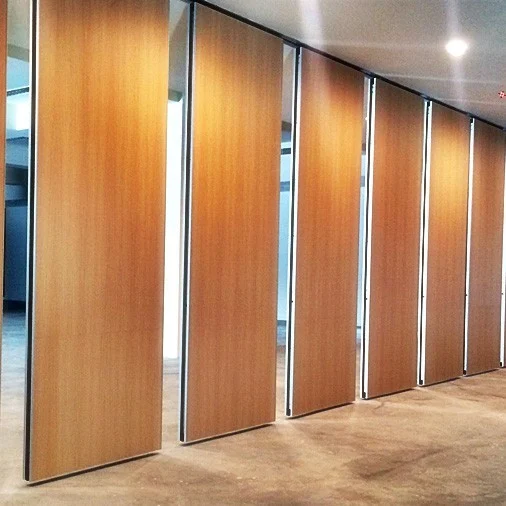
This process is deliberately evidence-bounded. It does not assume hidden capacity, and it does not convert a planning step into a performance promise.
Frequently Asked Questions
What is a changeover labor reserve in facility operations?
It is a planned buffer of time, coordination attention, and approved task categories that a facility team can redirect when a room becomes unavailable. It is not a staffing formula or a performance guarantee.
Can movable partitions eliminate unplanned room downtime?
No. Movable partitions support flexible spatial division, combination, and reconfiguration, but they do not prevent downtime. A reserve helps teams respond using reviewed layouts and routes.
What project information is needed before relying on a reserve?
Teams should confirm room availability assumptions, reviewed movement routes, stacking positions, approved finishes, pass-door requirements, and project-specific support and dimensional requirements.
Do movable wall panels need a floor track?
EBUNGE movable partition panels are top-hung and move without a continuous floor running track or floor hardware along the partition line. Every proposed movement path still requires a continuous connected overhead route and project-specific support review.
How should STC or Rw be treated in a downtime plan?
Do not reduce them to a simple number or infer a project outcome from a rating label. Acoustic requirements must be confirmed for the specific project.
When should the project team contact the supplier?
Contact the supplier early, before the reserve is finalized, so that layout, route, pass-door, and documentation questions can be discussed against the application reference conditions.
Conclusion: Plan the Reserve Before You Need It
A changeover labor reserve for unplanned room downtime is a coordination tool, not a performance claim. It works when it is built on reviewed routes, approved layouts, documented assumptions, and clearly flagged open items. It fails when it relies on hidden capacity or unverified outcomes.
For project teams evaluating movable partitions, the practical next step is to review the movable walls product range, check the planning resources, and then contact the team to discuss layout, route, pass-door, and documentation requirements for the specific project. Confirm all support, acoustic, and dimensional requirements before committing the reserve to an event schedule.