
Quick answer: renovation phasing track zone wedge segment release
Review focus: renovation phasing track zone wedge segment release.
When a renovation must stay partly occupied, the overhead route often becomes the constraint. A renovation phasing track zone wedge segment release is the sequence in which a contractor frees a defined wedge of the track zone while the rest of the building continues to operate. The wedge is a planning unit, not a product feature: it describes the portion of the overhead route that can be handed over, inspected or protected before the next phase begins.
This article sets out a coordination framework for overseas project teams. It stays inside maintained product facts and visible evidence limits. Every dimensional, support, acoustic and sequencing decision still requires review of the application reference drawings and site conditions.
What a Wedge Segment Means in Track Zone Planning
Project review term: renovation phasing track zone wedge segment release.
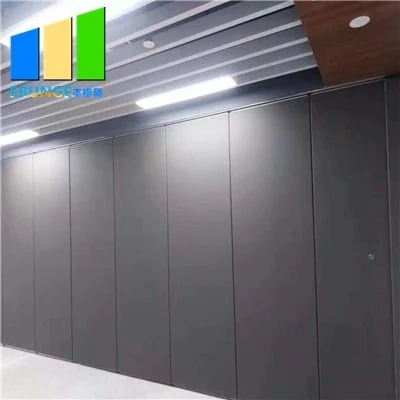
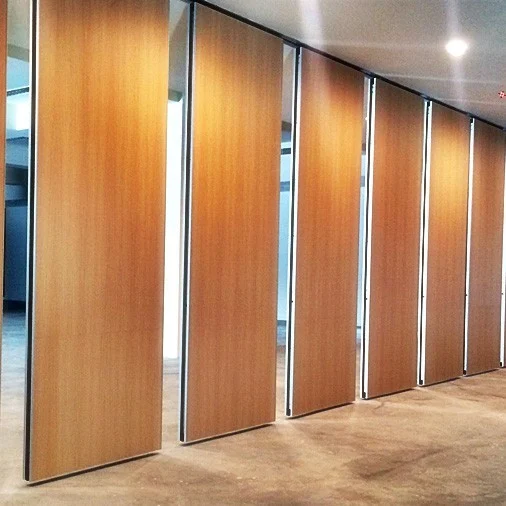
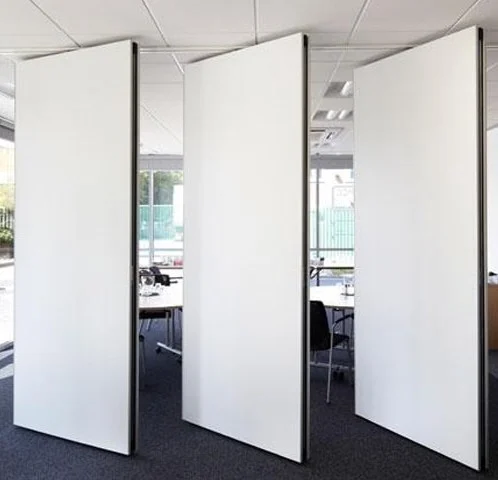
A movable partition panel is individually movable, suspended from a top track, crosses the opening without a floor track, and parks at a planned stacking position. Those four facts shape how a track zone can be divided for phasing. Because panels hang from above, the critical path runs through the overhead structure, not the floor finish.
A wedge segment is therefore a bounded length of that overhead route plus the parking position that serves it. The suitability of each route and parking arrangement depends on the approved layout, circulation, ceiling interfaces and operating sequence. The definition belongs to the project team, not to the partition supplier.
Why the wedge boundary matters more than the panel count
Teams sometimes phase by counting panels. That approach hides the real dependency: a panel can only travel where a continuous connected overhead route exists. If a wedge boundary interrupts that route, the movement path must be re-planned before any release date is agreed.
Route Logic Before Release Dates
Coordination scope: renovation phasing track zone wedge segment release.
Straight, turning and stacking routes are reviewed from the layout. This review should happen before the programme is fixed, because route geometry determines which wedge can be released first and which must wait.
- Mark the full intended movement path on the layout, including every turn.
- Identify the parking position each path serves and confirm it is reachable from the opening.
- Split the path into wedge segments at natural construction or handover boundaries.
- Check that each segment keeps a continuous connected overhead route once the previous wedge is closed.
- Record which segments depend on structure that is not yet complete.
Step four is where most phasing assumptions fail. A wedge that looks independent on a floor plan may still depend on overhead continuity that only exists after a later phase.
Coordinating Parking Positions With Occupied Areas
Checklist focus: renovation phasing track zone wedge segment release.
Parking style is customized to the customer layout and project requirements and may support compact stacking when the coordinated design permits it. During a phased renovation, the parking position is often the hardest element to protect, because it sits in space that operations may want back.
Treat each parking position as a reserved zone with a defined release condition. If the reserved zone is handed to another trade too early, the panels have nowhere to go when the wedge is released.
Questions to settle with the operations team
- Which parking positions must remain available in every phase?
- Which positions can be temporarily unavailable, and for how long?
- Who confirms that a parking zone is clear before a wedge is released?
- How will temporary protection be maintained around the overhead route?
Evidence Boundaries for Track Zone Decisions
Review focus: renovation phasing track zone wedge segment release.
Phasing decisions are frequently made from drawings, photographs or partial site observations. Comparative, absolute and causal statements require corresponding evidence.
Evidence note: a visible track line, finish sample or layout drawing does not confirm support capacity, acoustic performance, fire behaviour, durability or commercial outcome. Confirm each of these against project-specific documentation before relying on it in a programme.
Where evidence is missing, the correct output is a confirmation request, not an assumption.
Handover Sequence Between Wedge Segments
A wedge release is a handover event. It needs a defined start condition, a defined end condition and a named person who accepts the handover. Without that discipline, the track zone becomes a shared grey area between trades.
| Stage | Planning focus | Confirmation needed |
|---|---|---|
| Wedge definition | Boundary, route and parking position | Layout review and route check |
| Pre-release | Overhead continuity and protection | Project-specific support review |
| Release | Handover acceptance and access | Named acceptance and record |
| Post-release | Next wedge dependency | Updated programme review |
The table is a coordination aid, not a specification. Each row must be completed with project-specific information.
Specification Language That Survives Phasing
A renovation phasing track zone wedge segment release specification should describe sequence and responsibility, not performance that has not been confirmed. Useful clauses cover route continuity, parking reservation, protection of the overhead zone and the handover record.
Finish selection can be addressed separately. Confirmed finish options include laminate, melamine, fabric, leather, glass and other approved surfaces. Finish choice does not by itself confirm acoustic, fire or durability performance, so keep those topics in their own evidence track.
Acoustic concepts in plain terms
Where acoustic separation matters, confirm the project-specific requirement and the matching documentation.
Common Phasing Mistakes to Avoid
- Releasing a wedge before the overhead route is continuous through it.
- Allowing the parking position to be absorbed by another trade.
- Visible references can support layout discussion but do not verify hidden construction or performance.
- Phasing by panel count instead of by route and parking logic.
- Leaving handover acceptance unnamed and unrecorded.
Each mistake is avoidable with a short coordination session and a written record. None of them requires new product capability; they require disciplined sequencing.
Frequently Asked Questions
What is a wedge segment in track zone phasing?
It is a bounded portion of the overhead route, plus the parking position that serves it, released as one coordinated unit during a phased renovation.
Can panels move across a gap between wedges?
No. The exact route, junction arrangement, continuous overhead path and parking position must be confirmed from the coordinated project drawings.
Does a floor track affect wedge planning?
EBUNGE movable partition panels are top-hung and cross the opening without a floor track, so the phasing dependency sits in the overhead zone rather than the floor line.
When should the parking position be confirmed?
Before the wedge release date is fixed. Parking style is customized to the layout and project requirements, so it must be coordinated with the operations plan.
Can pass doors be included in a phased scheme?
Pass-door requirements can be discussed with the project team and should be resolved alongside the route and parking review.
What documentation should accompany a release?
Project documentation can be discussed with EBUNGE, and the handover record should name the accepting party and the confirmed conditions.
Conclusion and Next Step
Phasing a track zone in wedge segments works when the plan follows the overhead route, protects the parking positions and records every handover. Keep performance questions in their own evidence track, and confirm support, acoustic and dimensional requirements for the specific project before committing to a programme.
To review route logic, parking coordination and documentation for your renovation, contact the EBUNGE team. You can also review the movable wall range and the planning material in our resources library.