
Quick answer: renovation phasing track zone release
Review focus: renovation phasing track zone release.
Renovation phasing track zone release slices is a sequencing problem before it is an installation problem. When a movable partition track zone must be handed over in stages, the contractor and facility team need one coordinated view of the overhead route, the parking position and the temporary conditions that remain in place while other work continues. This article sets out an evidence-bounded planning approach for overseas project teams. It does not replace project-specific support, acoustic or dimensional confirmation.
Why the Track Zone Becomes the Critical Path
Project review term: renovation phasing track zone release.
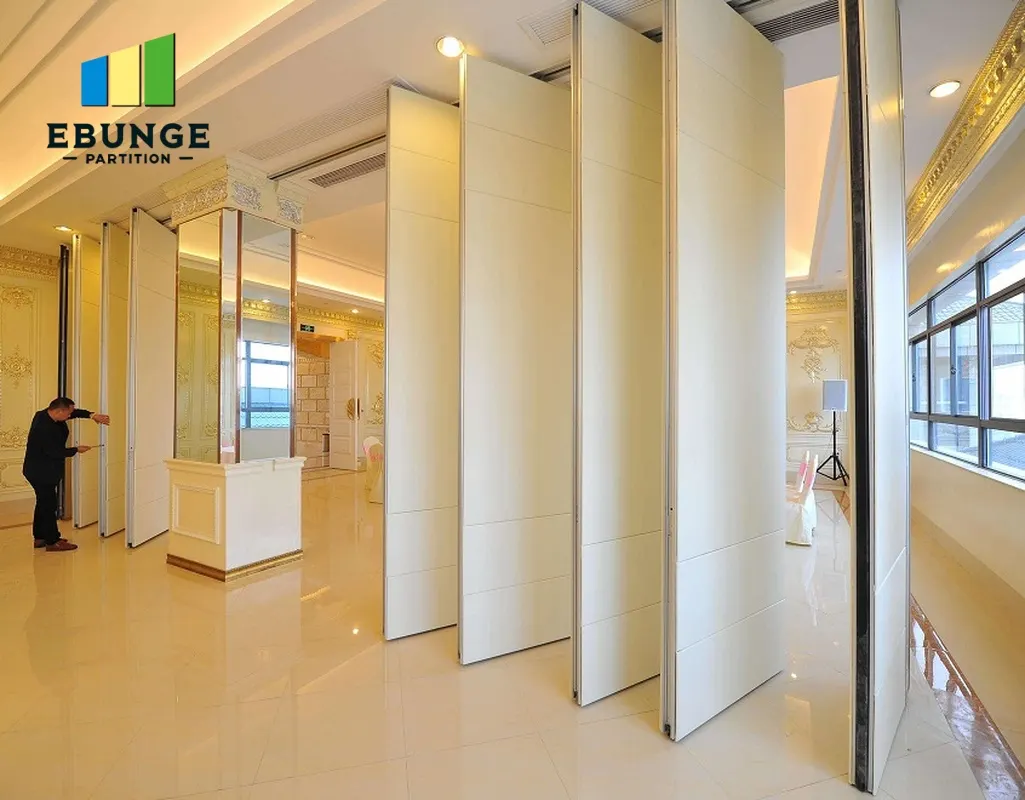
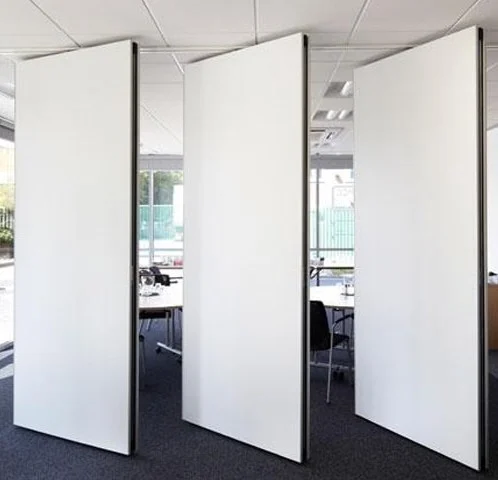
EBUNGE movable partition panels are individually movable, suspended from a top track, cross the opening without a floor track, and park at a planned stacking position. That maintained product context explains why the track zone often controls the handover sequence: the panels cannot be operated until the overhead route is continuous and supported as reviewed for the project.
The suitability of each route and parking arrangement depends on the approved layout, circulation, ceiling interfaces and operating sequence. If the release slices are planned only by room, the track route can be interrupted by work that is still open. The planning task is to align slice boundaries with the route, not only with the floor plan.
Define What a Release Slice Actually Contains
Coordination scope: renovation phasing track zone release.
A release slice is a defined portion of the work that can be accepted, protected and used while other portions remain under construction. For a movable partition track zone, each slice should be described in terms of the overhead route, the parking position, the opening it serves and the adjacent work that must be complete before operation is attempted.
Route, parking and opening are one system
Straight, turning and stacking routes are reviewed from the layout. A slice that releases an opening but not the connected route to the parking position is not a functional slice. The same applies in reverse: a parking area released early may still be unusable if the route to it crosses an open work zone.
Slice boundaries need a stated condition
Each boundary should carry a plain condition statement, such as what must be complete, what must be protected and what must remain accessible for later work. These conditions are project-specific and should be confirmed against the coordinated drawings rather than assumed from a generic sequence.
A Numbered Process for Sequencing Slices
Checklist focus: renovation phasing track zone release.
- Map the full overhead route. Trace the intended path from the opening to the planned parking position, including any turning or stacking movement described in the layout.
- Overlay the renovation programme. Mark which trades and finishes affect each part of the route, and when those parts are expected to be released.
- Draw slice boundaries at route breaks. Place handover boundaries where the route can remain continuous and supported for the slice being released.
- State the condition of each slice. Record what is complete, what is temporary and what must not be loaded or obstructed.
- Review interfaces with the project team. Confirm support, acoustic and dimensional requirements with the responsible parties before the slice is accepted.
- Record the accepted state. Keep a simple handover note so later trades understand which parts of the track zone are live.
Coordination Points That Commonly Cause Rework
Review focus: renovation phasing track zone release.
Most sequencing problems appear at interfaces rather than inside a single trade package. The table below lists common coordination points and the planning question to resolve for each. It is a prompt for discussion, not a statement of performance or capacity.
| Coordination point | Planning question |
|---|---|
| Ceiling and services | Which services must be complete before the overhead route can be treated as continuous for the slice? |
| Structural interface | Has the project-specific support condition been reviewed for the released portion? |
| Finish sequence | Will later finishes obstruct the route or the parking position? |
| Adjacent work | Can other trades work safely while the released slice remains operational? |
| Documentation | Are the coordinated drawings current for the slice being handed over? |
Evidence Boundaries for Phased Handover Statements
Project review term: renovation phasing track zone release.
Phasing documents often drift into claims that the drawings do not support. Keep the following boundaries visible in specifications and handover notes.
Visible references can support layout discussion but do not verify hidden construction or performance. Comparative, absolute and causal statements require matching evidence; otherwise state the exact project-specific confirmation boundary.
Where acoustic separation matters, confirm the project-specific requirement with the responsible acoustic and engineering parties.
What can be discussed from maintained facts
Confirmed finish options include laminate, melamine, fabric, leather, glass and other approved surfaces. Pass-door requirements and project documentation can be discussed. Parking style is customized to the customer layout and project requirements and may support compact stacking when the coordinated design permits it. These points support planning conversations; they do not replace project-specific confirmation.
Checklist Before Releasing a Track Zone Slice
- The overhead route for the slice is continuous and connected as reviewed for the project.
- The planned parking position is reachable from the opening without crossing an open work zone.
- Support, acoustic and dimensional requirements have been confirmed for the released portion.
- Slice conditions are written down, including temporary protections and access needs.
- Later trades have been told which parts of the track zone are live.
- Coordinated drawings reflect the current slice boundary.
- Any pass-door or finish decisions are recorded against the correct slice.
Documentation and Handover Discipline
The record does not need to be complex, but it should identify the slice, the route portion it covers, the parking position, the condition of acceptance and the open items that remain. This helps the facility team understand what can be used and what must wait.
Where the renovation continues around a released slice, protection and access planning should be agreed with the site team. The aim is to avoid a situation where a later trade unknowingly blocks the route or the parking position. Project documentation can be discussed with EBUNGE so that the planning record aligns with the coordinated layout.
Frequently Asked Questions
What is a track zone release slice in a renovation?
It is a defined portion of the track zone work that can be accepted and used while other portions remain under construction. It should include the relevant overhead route, the opening and the parking position.
Can a movable partition operate if only part of the track zone is released?
Only if the released portion forms a continuous connected overhead route to the planned parking position, as reviewed for the project. A partial route that stops at an open work zone is not a functional slice.
Do movable partitions need a floor track for phased handover?
EBUNGE movable partition panels are top-hung and cross the opening without a floor track. The planning focus is therefore the overhead route, its support condition and the parking position.
How should acoustic requirements be handled in a phased release?
Acoustic requirements should be confirmed for the project rather than inferred from a finish or drawing.
What information should be recorded for each slice?
Record the slice boundary, the route portion covered, the parking position, the condition of acceptance and any open items. Keep the record aligned with the coordinated drawings.
When should the project team review the phasing plan?
Review it before slice boundaries are fixed, and again whenever the coordinated layout or programme changes. Support, acoustic and dimensional requirements should be confirmed with the responsible parties.
Conclusion and Next Step
Renovation phasing track zone release slices should be planned around the overhead route, the parking position and the opening as one connected system. Keep each slice condition explicit, avoid unsupported performance conclusions, and confirm project-specific support, acoustic and dimensional requirements before handover. For planning support and documentation discussion, contact EBUNGE. You can also review movable walls and the resources pages for maintained product context.