
Quick answer: ceiling build tolerance absorption track
Review focus: ceiling build tolerance absorption track.
Ceiling build tolerance absorption track dropped bulkhead is a coordination question, not a single product feature. When a top-hung movable partition track meets a dropped bulkhead, several trades and several layers of construction meet at one narrow interface. The exact route, junction arrangement, continuous overhead path and parking position must be confirmed from the coordinated project drawings. Who absorbs the tolerance depends on the project’s design responsibility, the support strategy and the approved shop drawings.
What the Interface Actually Contains
Project review term: ceiling build tolerance absorption track.
A movable partition panel is individually movable, suspended from a top track, crosses the opening without a floor track and parks at a planned stacking position. At a dropped bulkhead, the track is not floating in the ceiling void. It needs a continuous connected overhead route and project-specific support review. The suitability of each route and parking arrangement depends on the approved layout, circulation, ceiling interfaces and operating sequence.
The interface therefore contains at least three separate questions: where the track sits, what carries it, and how the finished ceiling closes around it. Each question can carry its own tolerance. Combining them into one vague allowance is where coordination usually breaks down.
Why Tolerance Has to Be Assigned, Not Absorbed by Default
Coordination scope: ceiling build tolerance absorption track.
Build tolerance is the accumulated variation between designed position and installed position. The exact overhead route and support arrangement must be confirmed by the responsible project team from coordinated drawings. No single trade can responsibly absorb all of it without a written decision.
If the ceiling contractor absorbs everything, the track may lose its intended relationship to the support route. If the partition installer absorbs everything, the visible ceiling line may suffer. If the architect leaves it open, the site team will decide under time pressure. The safer approach is to name who absorbs what, in the drawings, before installation begins.
A Drawing Review Checklist for the Track and Bulkhead Junction
Checklist focus: ceiling build tolerance absorption track.
Use this checklist as a coordination aid. It does not replace project-specific engineering, acoustic or dimensional confirmation.
- Route continuity: confirm the overhead route is continuous and connected across the full opening and into the parking position.
- Setting-out datum: agree the datum from which track position and ceiling finish are measured.
- Tolerance ownership: state which trade absorbs which variation, and where the adjustment zone sits.
- Finish interface: confirm how the approved finish and ceiling closure meet without unplanned gaps.
- Parking position: verify the stacking route and its relationship to the bulkhead and adjacent construction.
- Pass-door needs: raise pass-door requirements early if the layout includes them.
- Documentation: record agreed revisions so site decisions do not drift from the design.
Straight, Turning and Stacking Routes
Review focus: ceiling build tolerance absorption track.
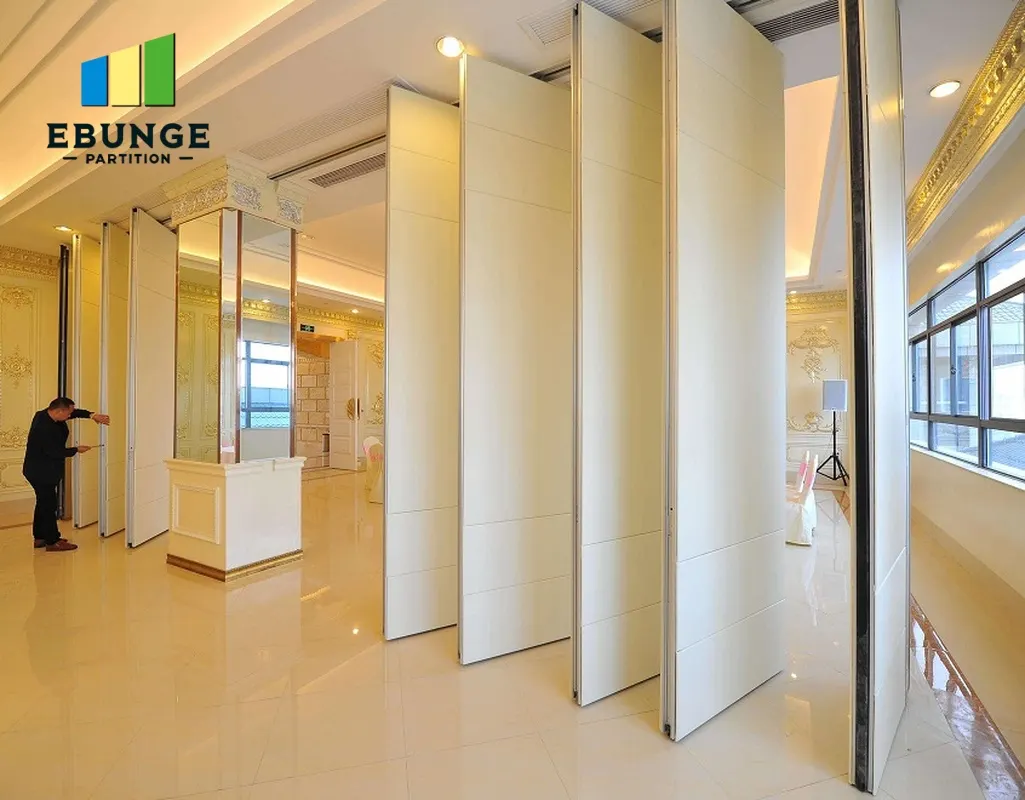
Straight, turning and stacking routes are reviewed from the layout. A bulkhead may sit directly above a straight run, or it may occur near a turn or a parking position. Each condition changes what the ceiling interface must accommodate.
Straight runs
On a straight run, the main coordination question is usually the relationship between the track line and the bulkhead face. The ceiling finish must close cleanly while the track remains on its supported route.
Turns and junctions
The layout review should show how the turn is supported and how the ceiling plane resolves around it.
Stacking positions
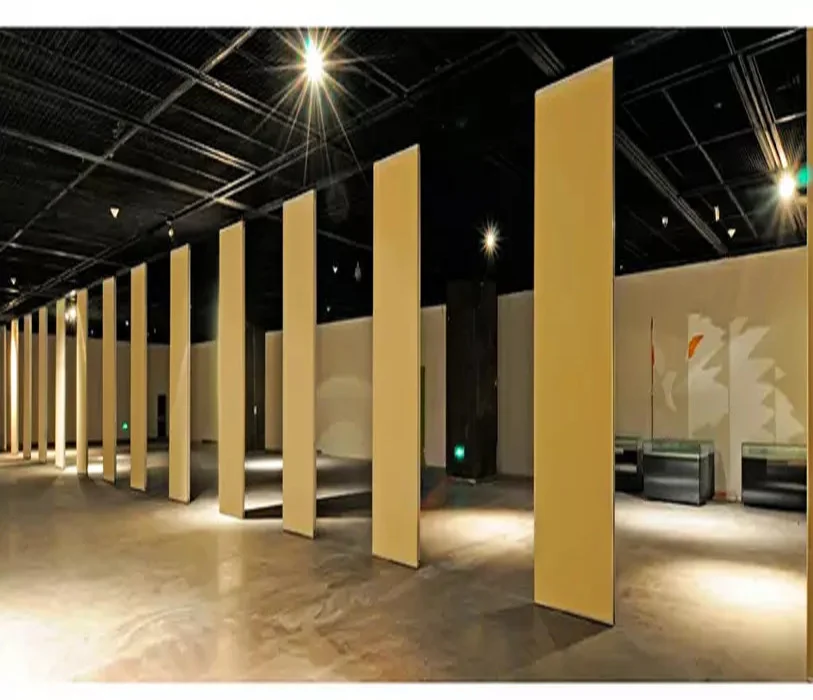
Parking style is customized to the customer layout and project requirements and may support compact stacking when the coordinated design permits it. The stacking position is part of the route review, not an afterthought.
Acoustic Concepts at the Ceiling Interface
Project review term: ceiling build tolerance absorption track.
Actual performance depends on the complete assembly, the interface detailing and the project-specific configuration.
Generic seal concepts can be discussed, but seal materials and tested values must come from matching evidence. Visible references can support layout discussion but do not verify hidden construction or performance.
Who Absorbs What: A Responsibility Framework
The following framework is a discussion tool, not a contractual allocation. Final responsibility must follow the project’s design and construction agreements.
| Interface item | Typical coordination question | Evidence needed |
|---|---|---|
| Ceiling framing variation | Who sets the finished ceiling datum? | Approved ceiling drawings and setting-out notes |
| Bulkhead construction | Does the bulkhead carry or avoid the track support? | Structural and support review |
| Track position | How is the track aligned to the opening and parking route? | Layout and route drawings |
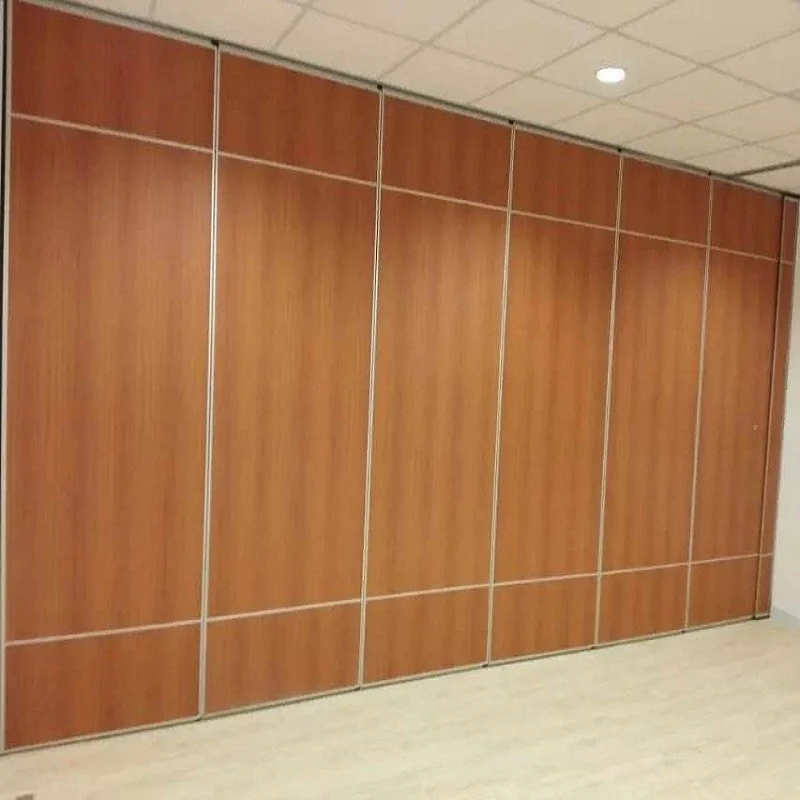
| Visible closure | How does the ceiling finish meet the track zone? | Finish and detail drawings |
| Acoustic interface | What performance is required at the junction? | Project-specific acoustic evidence |
Evidence Boundaries Buyers Should Respect
Do not assume that a visible gap will be acoustically sealed without a specified detail.
Every proposed movement path requires a continuous connected overhead route and project-specific support review. Visible shape, finish or drawing does not prove hidden performance.
Where evidence is missing, the correct action is to request confirmation, not to fill the gap with an assumption. This is especially important when the bulkhead is added late in the design process.
Documentation and Project Communication
Pass-door requirements and project documentation can be discussed with the supplier. Good documentation should show the track route, the support condition, the ceiling interface and the agreed tolerance allocation. It should also record who is responsible for each confirmation.
For overseas projects, time-zone and language differences make written coordination more important, not less. A clear drawing mark-up with a named responsibility is more useful than a verbal agreement on site. Review the movable partition wall product context and the resources page as starting points, then confirm project-specific requirements directly.
Frequently Asked Questions
Who normally absorbs ceiling build tolerance at a track and bulkhead junction?
There is no universal answer. The allocation depends on the project’s design responsibility, the support strategy and the approved drawings. The important step is to name the responsible party in writing before installation.
Can the dropped bulkhead carry the movable partition track?
That must be confirmed by a project-specific support review.
Does a floor track help absorb tolerance at this interface?
EBUNGE movable partition panels are top-hung and move without a continuous floor running track or floor hardware along the partition line. Tolerance coordination therefore focuses on the overhead route and the ceiling interface.
How should acoustic performance be addressed at the junction?
Provide the current layout, opening dimensions, ceiling information, intended room use, and relevant project drawings for review. The exact overhead route and support arrangement must be confirmed by the responsible project team from coordinated drawings.
What finish options are available for the panels?
Confirmed finish options include laminate, melamine, fabric, leather, glass and other approved surfaces.
When should pass-door requirements be raised?
Pass-door requirements should be raised early, because they affect the layout, the route review and the documentation. They can be discussed with the supplier as part of project planning.
Conclusion
Ceiling build tolerance absorption at a track and dropped bulkhead junction is a shared coordination problem. Who absorbs which tolerance should be decided in the drawings, supported by project-specific evidence.
Before installation, confirm support, acoustic and dimensional requirements for the application reference. Where information is missing, request it rather than infer it. Contact EBUNGE to discuss your layout, route review and documentation needs.