
Quick answer: back room booking
Review focus: back room booking.
When two bookings sit back-to-back, the room must be returned to a usable state between them. For teams writing a changeover policy back-to-back room booking rules framework, the goal is not to promise a fixed turnaround time. It is to define what must be checked, who confirms it, and which statements require project-specific evidence. Movable partitions can support flexible division and reconfiguration, but their behaviour depends on the coordinated layout, the overhead route and the approved finish package.
This article sets out an evidence-bounded approach for contractors, architects, designers, owners and renovation teams. The exact overhead route and support arrangement must be confirmed by the responsible project team from coordinated drawings.
Why back-to-back bookings expose weak changeover rules
Project review term: back room booking.
A single booking gives a venue room to absorb small delays. Back-to-back bookings remove that buffer. If the changeover policy is vague, staff improvise, and the next client may enter a space that is not ready.
Panel handling and the operating sequence must be confirmed for the selected layout and project conditions. It is also consistency. A policy should state which room states are acceptable, who inspects them, and what happens when a panel route or parking position does not match the drawing.
What a changeover policy should control
At minimum, the policy should cover the sequence of checks, the person responsible for each check, the condition of the partition line, and the parking position. It should also define how exceptions are recorded so that recurring issues reach the project team rather than being absorbed silently by staff.
Start with the confirmed product facts
Coordination scope: back room booking.
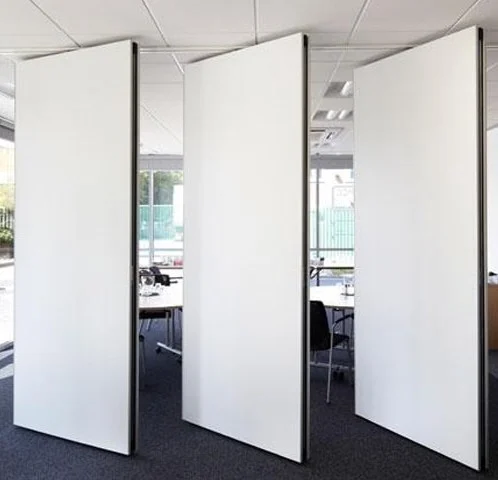
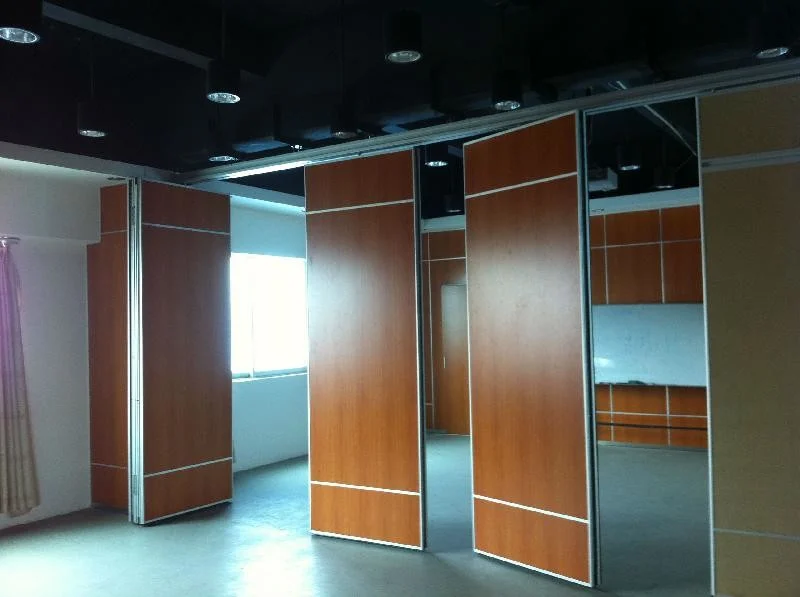
EBUNGE movable wall panels are individually movable. They are suspended from a top track and cross the opening without a floor track. They park at a planned stacking position. Straight, turning and stacking routes are reviewed from the layout.
These facts shape the changeover policy. Because panels are top-hung, the floor along the partition line stays clear of a continuous running track. The exact route, junction arrangement, continuous overhead path and parking position must be confirmed from the coordinated project drawings.
What the policy must not assume
Visible references can support layout discussion but do not verify hidden construction or performance. Those are separate evidence questions. A finish sample or a layout sketch is not a performance certificate.
Map the changeover route before writing rules
Checklist focus: back room booking.
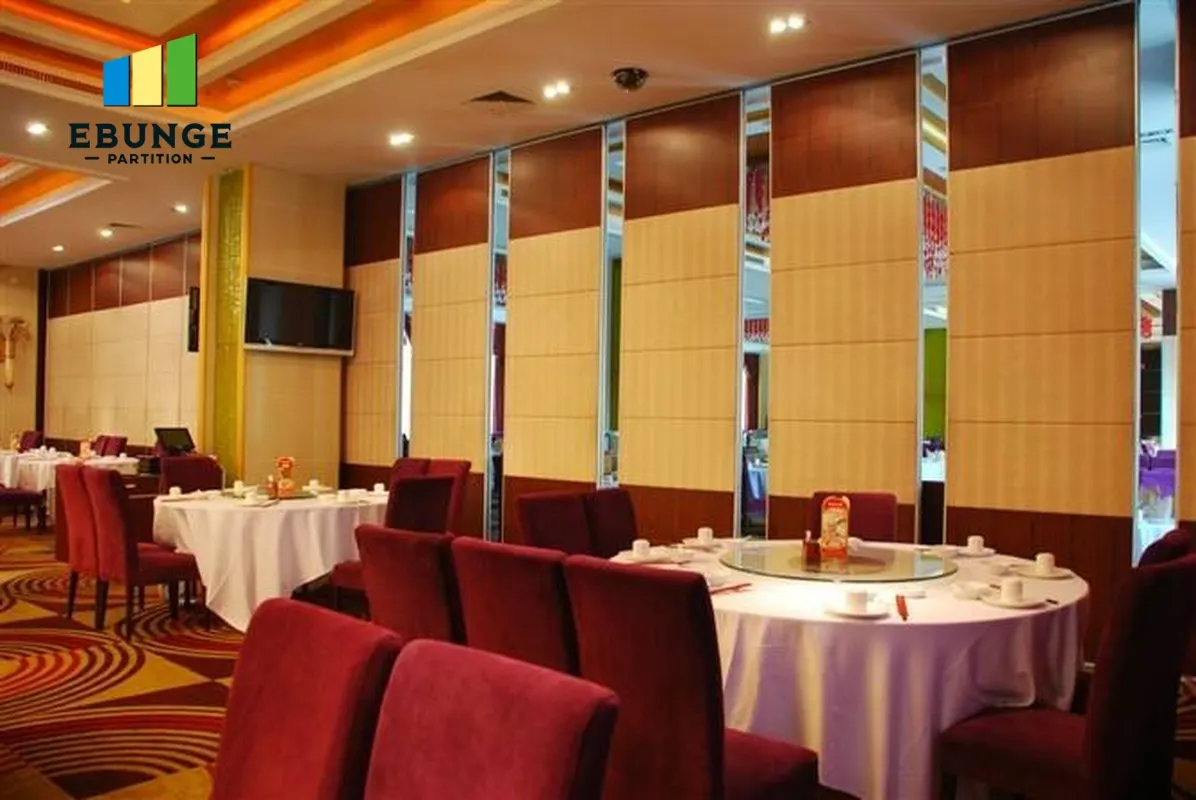
The route is the backbone of the policy. A panel that must travel from a closed position to a parking position needs a continuous connected overhead route. The policy should describe that route in plain language and reference the approved drawing.
Where the layout includes a turn, the policy should identify the turning point and the clear zone around it. Where panels stack, the policy should name the stacking position and state who confirms it is clear before the changeover begins.
Route review checklist
- Confirm the opening width and the closed partition line against the approved layout.
- Confirm the overhead route is continuous and connected for every proposed movement.
- Confirm turning points and stacking positions are shown on the coordinated drawing.
- Confirm the parking zone is free of stored furniture, signage and temporary equipment.
- Confirm the person responsible for route inspection before each changeover.
Define room states and handover checks
Review focus: back room booking.
A useful policy describes room states rather than vague intentions. For example: closed and locked for a private session; open and parked for a combined layout; or partially configured for a smaller meeting. Each state should have a short inspection list.
The inspection list should be practical. It can cover panel alignment, the parking position, the condition of the floor along the partition line, and any visible damage. It should not claim acoustic or fire performance unless that has been confirmed for the specific project.
Example state sequence
- Previous booking ends; the room is cleared of client equipment.
- The responsible staff member checks the route and parking zone against the drawing.
- Panels are moved individually along the approved route to the planned stacking position.
- The next room state is set and inspected against the policy checklist.
- Any exception is recorded and passed to the project or facilities lead.
Coordinate finishes with the changeover routine
Project review term: back room booking.
Confirmed finish options include laminate, melamine, fabric, leather, glass and other approved surfaces. The suitability of each route and parking arrangement depends on the approved layout, circulation, ceiling interfaces and operating sequence.
If a client asks for a specific finish, the project team should confirm availability and suitability for the application. The changeover policy can then note any handling requirements that the finish supplier or project team has approved.
Finish coordination questions
| Question | Why it matters | Who confirms |
|---|---|---|
| Is the finish approved for this room type? | Different areas may have different expectations. | Designer and owner |
| Does the finish change handling during changeover? | Staff need consistent instructions. | Project team |
| Are spare or replacement panels planned? | Affects long-term operations, not a performance claim. | Owner and supplier |
Set evidence boundaries for acoustic and support claims
Coordination scope: back room booking.
Support is equally project-specific.
Evidence note
Treat every performance statement as unconfirmed until the project team provides matching evidence for the specific layout, finish, support condition and acoustic requirement. Visible drawings and photographs do not prove hidden performance.
Document pass doors and project-specific requirements
Pass-door requirements and project documentation can be discussed with the EBUNGE team. If a room needs a pass door within the partition line, that requirement should be captured early because it affects the layout, the route and the changeover sequence.
The policy should also record who owns each document: the approved layout, the finish schedule, the support review and any acoustic confirmation.
FAQ: changeover policy and back-to-back bookings
What is a changeover policy for back-to-back room bookings?
It is a written set of rules for returning a room from one booking to the next. It defines room states, inspection steps, responsibilities and exception reporting. For movable partitions, it should also reference the approved route and parking position.
Do movable partitions need a floor track for changeover?
Confirmed EBUNGE panels are top-hung and cross the opening without a floor track. The floor along the partition line stays clear of a continuous running track.
Can the changeover policy guarantee a specific turnaround time?
No. Turnaround depends on the room, the layout, the number of panels, staffing and the sequence of tasks. The policy should define checks and responsibilities rather than promise a fixed time.
How should acoustic performance be handled in the policy?
If acoustic separation is required, confirm the target rating and the supporting evidence for the specific configuration with the project team.
Which finishes can be considered?
Confirmed options include laminate, melamine, fabric, leather, glass and other approved surfaces. Suitability for a particular room, cleaning routine or client expectation should be confirmed for the project.
When should the project team be involved?
Involve them before the policy is finalised. They can review the layout, route, parking position, support conditions, pass-door requirements and documentation needs.
Conclusion: rules that stay inside the evidence
A strong changeover policy for back-to-back bookings is specific about responsibilities and honest about limits. It uses confirmed product facts, references the approved layout, and sends performance questions to the people who can confirm them.
Review the movable walls product page for maintained product context, and use the resources section for further planning guidance. When your layout, route or documentation needs review, contact EBUNGE to discuss the project-specific requirements.