
Quick answer: score bidder track fixing method
Review focus: score bidder track fixing method.
When a tender package arrives without a marking guide, procurement teams still need a defensible way to score bidder track fixing method statements. The challenge is not finding a single correct answer; it is separating what a bidder has actually documented from what the evaluation team is assuming. This article offers an evidence-bounded framework to score bidder track fixing method statement marking guide submissions without inventing performance, engineering or commercial conclusions.
Why a Missing Marking Guide Changes the Scoring Task
Project review term: score bidder track fixing method.
A marking guide normally tells evaluators which criteria carry weight and what evidence satisfies each level. Without one, the risk shifts from inconsistent scoring to invisible assumptions. Evaluators may reward confident language, familiar brands or polished drawings rather than verifiable project coordination.
For movable partition track fixing, the scoring task should focus on whether the bidder has addressed the overhead route, support interface and project-specific review. It should not reward claims that cannot be checked against drawings, specifications or confirmed product facts.
Define the Evidence Boundary Before Opening Bids
Coordination scope: score bidder track fixing method.
Before reading any method statement, agree on what the evaluation team can and cannot verify. This prevents the scoring exercise from drifting into unsupported performance comparisons.
What evaluators can reasonably check
- Whether the bidder describes a continuous overhead route for the proposed panel movement.
- The suitability of each route and parking arrangement depends on the approved layout, circulation, ceiling interfaces and operating sequence.
- Whether the bidder distinguishes between confirmed product facts and project-specific assumptions.
- Whether the submission identifies what must be confirmed before installation.
What evaluators should not infer
Do not treat a finish sample or a venue example as proof of a application reference.
A Six-Step Process to Score Track Fixing Method Statements
Checklist focus: score bidder track fixing method.
Use a repeatable sequence so every bidder is assessed against the same questions. The steps below are designed for evaluation teams working without a formal marking guide.
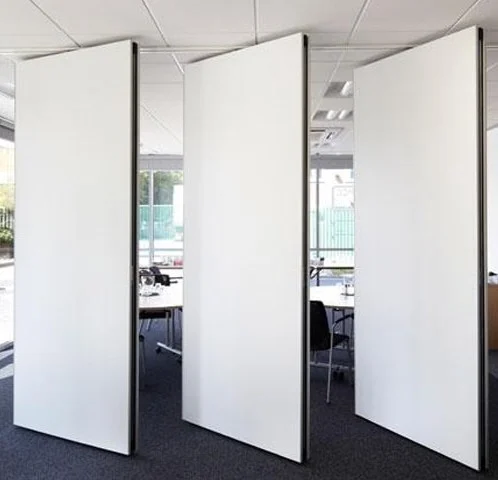
- Confirm scope alignment. Check that the method statement addresses the actual opening, turning and stacking routes shown in the layout.
- Trace the overhead route. Look for a continuous connected overhead route. The exact route, junction arrangement, continuous overhead path and parking position must be confirmed from the coordinated project drawings.
- Review support interface description.
- Check parking logic. Parking style is customized to the customer layout and project requirements. The statement should show how the planned stacking position relates to the room geometry.
- Assess documentation clarity. Pass-door requirements and project documentation can be discussed. Reward submissions that clearly separate confirmed items from items still to be confirmed.
- Score the confirmation plan. A strong bidder states what must be verified before fabrication or installation, rather than presenting assumptions as facts.
Build a Compact Scoring Matrix Without Inventing Weights
You do not need a published marking guide to create a transparent comparison. The table below uses qualitative levels rather than invented scores. Adapt the criteria to your project and record the evidence behind each rating.
| Criterion | Weak evidence | Moderate evidence | Strong evidence |
|---|---|---|---|
| Overhead route description | Generic statement only | References layout but not turning or stacking | Traces straight, turning and stacking routes from the layout |
| Support interface | No mention of supporting structure | Mentions support generally | Identifies project-specific support review points |
| Parking and stacking | No parking position shown | Shows a position without coordination notes | Aligns parking with layout and project requirements |
| Documentation boundary | Claims presented as facts | Some items flagged for confirmation | Clear separation of confirmed facts and open items |
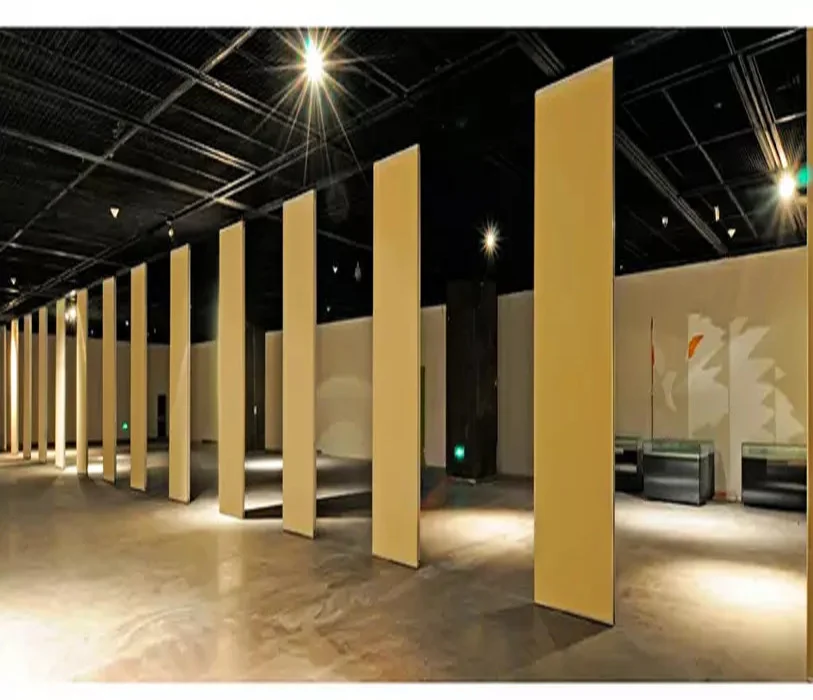
How to Handle Acoustic and Finish Statements in Bids
Visible references can support layout discussion but do not verify hidden construction or performance. Confirmed finish options include laminate, melamine, fabric, leather, glass and other approved surfaces.
If a bidder references acoustic ratings, ask for the project-specific evidence that supports the claim.
Red Flags and Evidence Notes for Evaluators
Some statements should trigger a clarification request rather than a higher score. Use the following evidence note to keep the evaluation grounded.
Evidence note: A method statement is a coordination document, not a performance certificate. Score what the bidder has documented and what the bidder commits to confirm.

Watch for method statements that describe panel movement without a continuous overhead route, that present parking positions without layout coordination, or that treat a generic finish or venue example as proof of a application reference. These are not necessarily disqualifying, but they should lower confidence until clarified.
FAQ: Scoring Track Fixing Method Statements Without a Guide
What should evaluators do when no marking guide is provided?
Agree on an evidence boundary before reading bids. Focus on documented coordination, continuous overhead routes, support interface descriptions and confirmation plans rather than confident language or assumed performance.
Can a bidder’s track fixing method statement prove acoustic performance?
No.
How should parking and stacking be assessed?
Parking style is customized to the customer layout and project requirements. Assess whether the bidder aligns the planned stacking position with the layout and whether the overhead route remains continuous to that position.
What if a bidder mentions finishes such as laminate or glass?
Treat finish references as design information, not as evidence of project outcomes.
When should evaluators request clarification?
Request clarification when a statement implies performance without evidence, when the overhead route is unclear, when support interfaces are not described, or when pass-door and documentation requirements are left unresolved.
Conclusion: Score the Evidence, Not the Confidence
Scoring bidder track fixing method statements without a marking guide is manageable when the evaluation team agrees on evidence boundaries first. Reward submissions that trace the overhead route, address project-specific support review, align parking with the layout and clearly separate confirmed facts from open items.
The exact overhead route and support arrangement must be confirmed by the responsible project team from coordinated drawings. To discuss movable wall options, pass-door requirements or project documentation, contact EBUNGE. You can also review movable walls and browse additional resources for procurement and tender review coordination.