
Quick answer: corridor junction circulation review
Review focus: corridor junction circulation review.
A movable partition track corridor junction circulation review is the point where architectural intent meets everyday movement. When a top-hung partition route crosses a corridor, the review must confirm that the overhead path, the parking position and the remaining clear route all work together. This article sets out an evidence-bounded framework for that review. It does not replace project-specific support, acoustic or dimensional confirmation.
Movable wall panels are individually movable, suspended from a top track, cross the opening without a floor track, and park at a planned stacking position. Those maintained facts shape every recommendation below. Straight, turning and stacking routes are reviewed from the layout, so the drawing set is the primary evidence.
Why a Corridor Junction Changes the Review
Project review term: corridor junction circulation review.
A corridor junction is rarely a simple opening. It may serve as an escape route, a service route, a reception approach or a connection between zones. A partition track crossing that junction introduces an overhead element into a space where people, trolleys and doors already compete for room.
The review therefore asks three questions. Where does the track run? Where do panels park? What clear route remains when the partition is open, closed and in transit? None of these can be answered from a finish sample or a photograph. They require the coordinated layout.
What the review is not
The suitability of each route and parking arrangement depends on the approved layout, circulation, ceiling interfaces and operating sequence. The exact overhead route and support arrangement must be confirmed by the responsible project team from coordinated drawings.
Drawing Information to Collect Before Review
Coordination scope: corridor junction circulation review.
Start with the current architectural and reflected ceiling plans. Mark the proposed track line, the opening, the junction and the intended parking zone. Note any doors, glazing, columns, services or changes in ceiling height that fall within the route.
Then add the circulation layer. Show primary and secondary movement paths, accessible routes, and any areas where queues or deliveries occur. This is the evidence base for the review, and it should be dated and version-controlled.
Evidence note
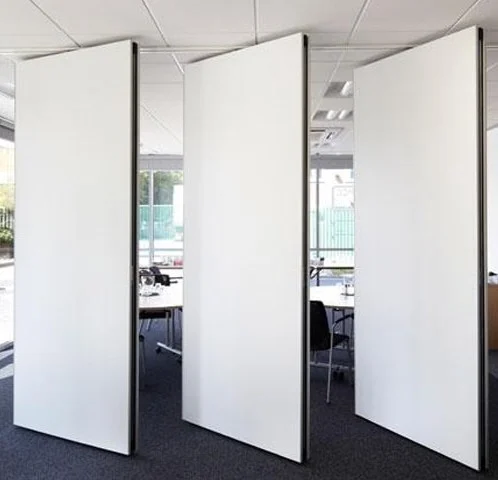
Every proposed movement path requires a continuous connected overhead route and project-specific support review. Panels cannot travel across an untracked gap. Do not infer support, load or acoustic outcomes from a visible drawing shape alone.
A Step-by-Step Circulation Review Process
Checklist focus: corridor junction circulation review.
- Confirm the route. Trace the straight, turning and stacking routes from the layout and check that the overhead path is continuous.
- Locate the parking position. Identify where panels will stack and whether that position interferes with the junction, a doorway or a service zone.
- Test the open and closed states. Check clear width and turning space at the junction in both configurations.
- Review the transit state. Consider the moment panels move along the track, not only the finished open or closed condition.
- Coordinate interfaces. Align the track route with ceilings, services, lighting and adjacent door swings.
- Record confirmation boundaries. List what still requires project-specific support, acoustic and dimensional confirmation.
Decision Checklist for the Project Team
Review focus: corridor junction circulation review.
Use this checklist in design and coordination meetings. It keeps the discussion on maintained facts and visible evidence rather than assumptions.
- Is the track route shown as continuous across the junction?
- Is the parking position coordinated with corridor use?
- Does the junction remain usable when the partition is open, closed and moving?
- Are pass-door requirements identified and discussed?
- Are finish options such as laminate, melamine, fabric, leather or glass noted for the relevant faces?
- Are project documentation and confirmation responsibilities assigned?
Coordination With Other Trades
The track does not exist in isolation. Ceiling grids, sprinklers, diffusers, lighting and signage all occupy the same zone. Early coordination reduces the risk of a late redesign that changes the circulation picture.
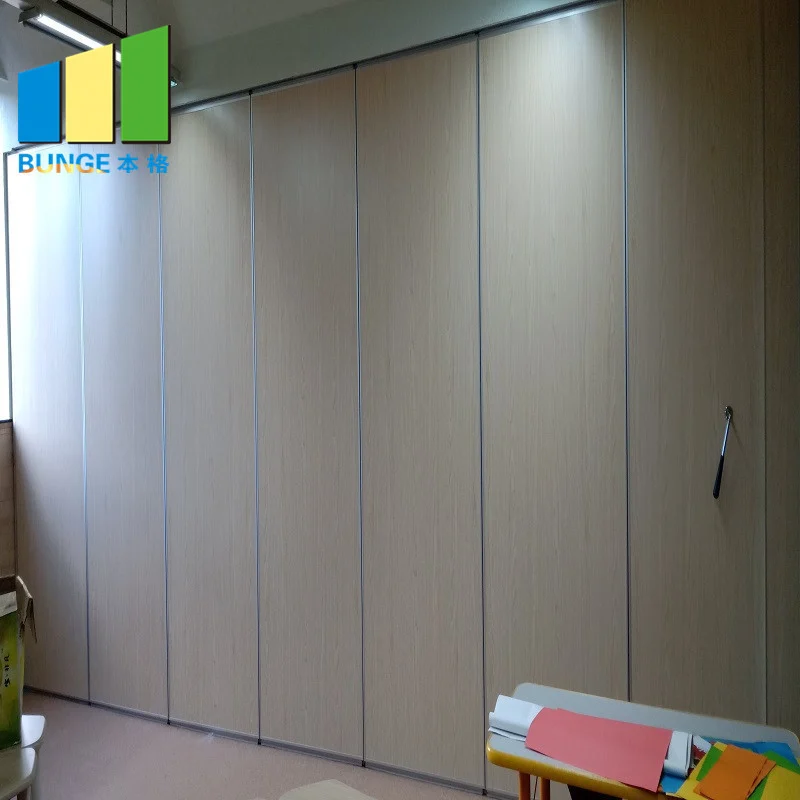
Where a junction is busy, consider whether the parking position can be moved to a quieter section of the route. Parking style is customized to the customer layout and project requirements, and compact stacking may be possible when the coordinated design permits it. That is a design decision, not a default.
Questions to raise with the design team
Ask who owns the ceiling interface, who confirms the support strategy, and who signs off the final route. Ask how the junction performs on a busy day, not only at handover. Ask what documentation is needed for approvals.
Common Assumptions That Weaken the Review
One recurring assumption is that a track can cross any gap as long as the opening looks aligned. In practice, the route must be continuous and supported, and that requires review. It does not.
A third assumption is that the parking position can be decided late. Parking affects corridor use, door swings and service access, so it belongs in the early layout discussion. Treating it as a detail postpones a circulation problem rather than solving it.
Documentation and Confirmation Boundaries
Good documentation separates confirmed facts from items still to be verified. Confirmed finish options include laminate, melamine, fabric, leather, glass and other approved surfaces. Pass-door requirements and project documentation can be discussed with the supplier.
Everything else, including support, acoustic and dimensional requirements, remains project-specific. Record the open items, the responsible party and the date.
Frequently Asked Questions
What is a movable partition track corridor junction circulation review?
It is a drawing-based review of how a top-hung partition track crosses a corridor junction and how people continue to move through that space when the partition is open, closed and in transit.
Does the partition need a floor track at the junction?
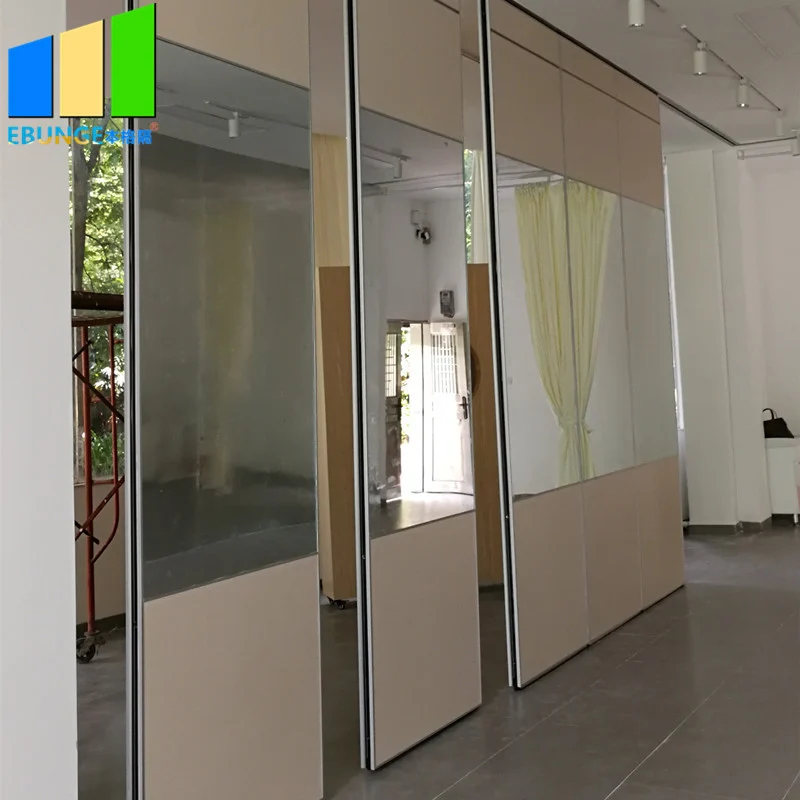
No. The panels are suspended from a top track and cross the opening without a floor track. The review focuses on the overhead route, the parking position and the remaining clear circulation.
Can the track turn a corner at a junction?
The exact route, junction arrangement, continuous overhead path and parking position must be confirmed from the coordinated project drawings. The proposed path needs a continuous connected overhead route and project-specific support review.
Where should panels park near a corridor junction?
Parking style is customized to the layout and project requirements. The chosen position should avoid blocking the junction, doorways and service routes, and should be coordinated early.
Which finishes can be considered?
Confirmed options include laminate, melamine, fabric, leather, glass and other approved surfaces.
What must still be confirmed for my project?
Support, acoustic and dimensional requirements remain project-specific. Pass-door requirements and project documentation can be discussed, and the confirmation boundary should be recorded in the drawing set.
Conclusion and Next Step
A corridor junction is a coordination point, not just a line on a plan. Reviewing the track route, parking position and remaining circulation early keeps the design grounded in maintained facts and visible evidence.
For project-specific guidance, review the movable walls product range, explore the planning resources, or contact the team to discuss your layout, pass-door requirements and documentation needs.