
Quick answer: corridor nodal point circulation review
Review focus: nodal point circulation review.
A stacking pocket corridor nodal point circulation review matters most when a movable partition parks exactly where several circulation routes meet. In that location, the pocket is not only a storage zone; it becomes part of how people, carts, trolleys and service movements read the corridor. This article sets out an evidence-bounded way to review that condition using maintained product facts and project-specific drawing checks, without assuming hidden performance.
Why a Corridor Nodal Point Changes the Review
Project review term: nodal point circulation review.
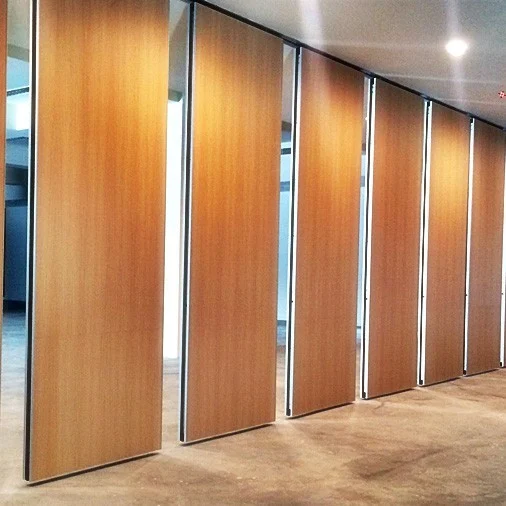
A nodal point is a place where routes converge: a corridor junction, a lift lobby approach, a service corridor crossing or a lobby threshold. When a stacking pocket sits there, the review must consider both the open partition line and the parked panel position. EBUNGE movable wall panels are individually movable, suspended from a top track, cross the opening without a floor track, and park at a planned stacking position. That parking position is the element that interacts with the nodal point.
The review should not treat the pocket as a purely technical detail. It affects how the corridor is read by users, how wayfinding works and how the space is maintained. The aim is to identify what must be confirmed from drawings, not to infer performance from a layout sketch.
Start With the Route Logic, Not the Panel
Coordination scope: nodal point circulation review.
Before discussing finishes or acoustic concepts, map the routes. Straight, turning and stacking routes are reviewed from the layout. At a nodal point, those three route types often overlap, so the review should separate them clearly.
Straight routes through the junction
Identify the primary straight movement through the nodal point. Ask whether the parked panels sit outside that line or whether they narrow it. The answer must come from the coordinated layout, not from an assumption about panel size.
Turning routes at the junction
Turning movements are often wider than straight ones. A stacking pocket at a corner can change the usable turning envelope. The review should mark the turning path on the drawing and confirm it with the project team.
Stacking routes to the pocket
The stacking route is the path panels follow from the opening to the parking position. Every proposed movement path requires a continuous connected overhead route and project-specific support review. The exact route, junction arrangement, continuous overhead path and parking position must be confirmed from the coordinated project drawings.
Drawing Checks for the Stacking Pocket
Checklist focus: nodal point circulation review.
Use a structured drawing review so the nodal point is assessed consistently. The following checklist is a coordination tool, not a performance statement.
- Mark the nodal point and all converging routes on the same plan.
- Show the open partition line and the parked panel position.
- Confirm the overhead route is continuous and connected.
- The suitability of each route and parking arrangement depends on the approved layout, circulation, ceiling interfaces and operating sequence.
- Note where the stacking pocket meets corridor finishes or services.
- Record which items still need project-specific confirmation.
Those items require separate confirmation.
Accessibility and Circulation Review Coordination
Accessibility and Circulation Review coordination should bring together the architect, contractor, interior designer and owner representative. Each party sees a different risk at a nodal point. The architect may focus on spatial clarity; the contractor on buildability; the owner on daily operation.
The coordination meeting should confirm the route logic, the parking position and the documentation needed for the next stage. Pass-door requirements and project documentation can be discussed with EBUNGE as part of that process. This is a discussion point, not a promise of a particular configuration.
Acoustic Concepts at a Nodal Point
At a corridor nodal point, the review may consider how the pocket interacts with adjacent spaces, but any acoustic requirement must be confirmed for the specific project.
Visible references can support layout discussion but do not verify hidden construction or performance.
Evidence Boundaries for the Review
An evidence-bounded review separates what is known from what must be confirmed. The following evidence note sets out that boundary.
Evidence note: Confirm project-specific support, acoustic and dimensional requirements before treating any layout as final.
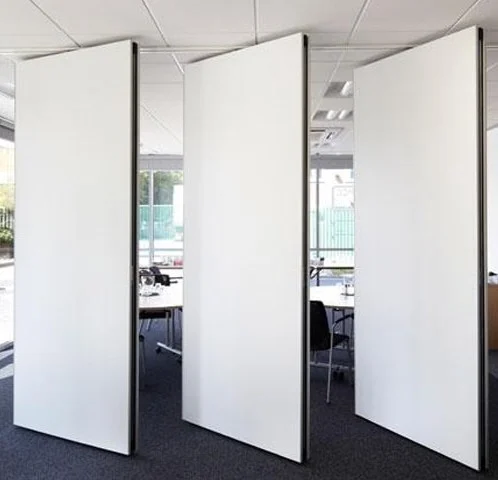
This boundary protects the project team from making commitments that the available evidence does not support. It also keeps the review focused on coordination rather than assumption.
A Step-by-Step Review Process
The process below can be used as a working sequence for the nodal point review.
- Collect the current layout drawings and mark the nodal point.
- Identify straight, turning and stacking routes separately.
- Confirm the overhead route is continuous and connected.
- Review the parking position against the route logic.
- List all items requiring project-specific confirmation.
- Agree the next coordination step with the project team.
This sequence is deliberately simple. It keeps the review grounded in the layout and in maintained product facts rather than in unsupported conclusions.
Common Coordination Questions
Teams often ask whether a stacking pocket can sit at a nodal point at all. The answer depends on the coordinated design, the route logic and the project-specific support review. It is not a generic yes or no.
Another common question is whether a finish choice affects circulation. Finish options are a separate decision from route planning. They should be recorded, but they should not be used to justify a circulation conclusion.
For more general planning context, the resources page and the movable walls product page provide maintained public information. Project-specific configuration still requires confirmation.
FAQ
What is a stacking pocket corridor nodal point circulation review?
It is a drawing-based review of how a movable partition parking position interacts with converging circulation routes at a corridor junction. It focuses on route logic, parking position and coordination, not on assumed performance.
Can a stacking pocket be placed at a corridor nodal point?
It can be considered where the coordinated design permits it. The review must confirm the route logic, the continuous overhead route and the project-specific support requirements. No generic placement rule should be assumed.
Do movable partitions need a floor track at the nodal point?
EBUNGE movable wall panels are top-hung and move without a continuous floor running track or floor hardware along the partition line. The parking position and route still require project-specific review.
How should acoustic requirements be handled in the review?
Any acoustic requirement must be confirmed for the specific project and should not be inferred from a finish or drawing.
What documentation should be prepared for coordination?
Prepare current layout drawings, marked routes, the proposed parking position and a list of items requiring confirmation. Pass-door requirements and project documentation can be discussed with EBUNGE as part of the coordination process.
Which finishes can be considered?
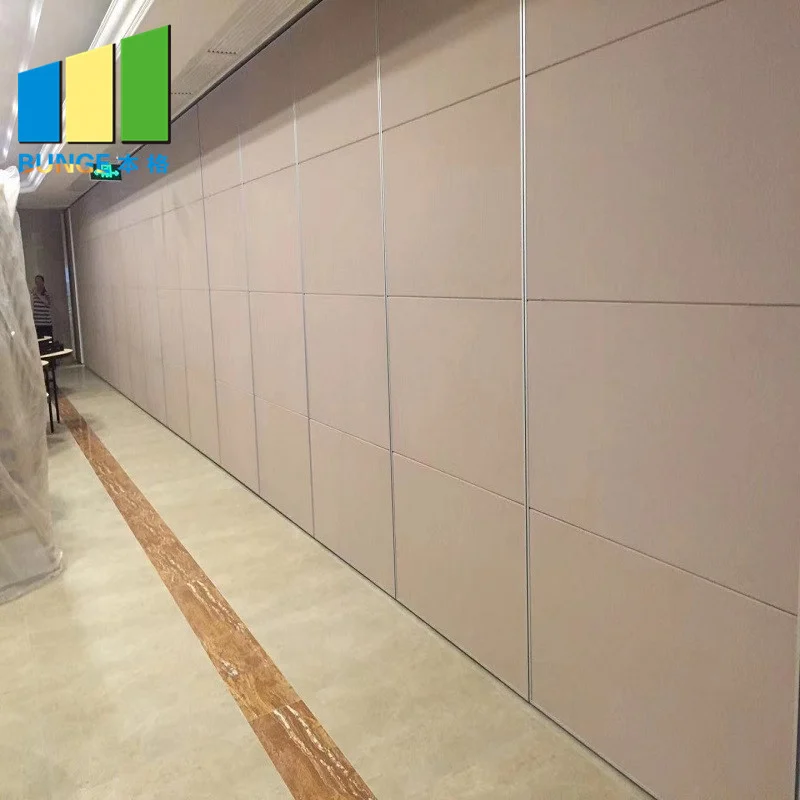
Confirmed finish options include laminate, melamine, fabric, leather, glass and other approved surfaces. Finish selection is separate from circulation and acoustic confirmation.
Conclusion and Next Step
A stacking pocket corridor nodal point circulation review is a coordination exercise. Maintained product facts support the review, but they do not replace drawing review or engineering confirmation.
If your project involves a nodal point, contact EBUNGE to discuss pass-door requirements, project documentation and the next coordination step. Confirm project-specific support, acoustic and dimensional requirements before finalizing any layout.