
Quick answer: architect coordination partition interface query close-out before tender
Review focus: architect coordination partition interface query close-out before tender.
An architect coordination partition interface query close-out before tender is not a single meeting. It is a disciplined sequence that converts open questions about routes, parking, finishes and documentation into recorded decisions. When those decisions stay open, tender returns become harder to compare and site coordination becomes reactive. This guide sets out a practical, evidence-bounded workflow for closing interface queries before the tender package is issued.
Why Interface Queries Survive to Tender Stage
Project review term: architect coordination partition interface query close-out before tender.
Movable wall panels are individually movable and suspended from a top track. They cross the opening without a floor track and park at a planned stacking position. That simple description hides several interfaces: the overhead route, the parking zone, the adjacent finishes and the opening itself.
Queries survive when these interfaces are drawn but not resolved. A ceiling line may be shown without confirming that the overhead route is continuous and supported. A parking bay may be indicated without checking what it conflicts with. A finish may be named without confirming the approved surface category.
The close-out task is to separate what is confirmed from what still needs project-specific review. That separation is what makes a tender package defensible.
Start With the Movement Route, Not the Panel
Coordination scope: architect coordination partition interface query close-out before tender.
Straight, turning and stacking routes should be reviewed from the layout. The route is the first interface because it determines where panels can travel and where they can rest.
Route review questions
- Is the overhead route continuous across every proposed movement path?
- Does the route turn, and if so, is the turning geometry shown on the layout?
- Is the planned stacking position clear of doors, services, fixed furniture and circulation?
- Are adjacent ceiling or soffit conditions shown where the route passes?
The exact route, junction arrangement, continuous overhead path and parking position must be confirmed from the coordinated project drawings. Every proposed movement path requires a continuous connected overhead route and project-specific support review. If the route is not continuous, the query is not closed.
Parking and Stacking Coordination
Checklist focus: architect coordination partition interface query close-out before tender.
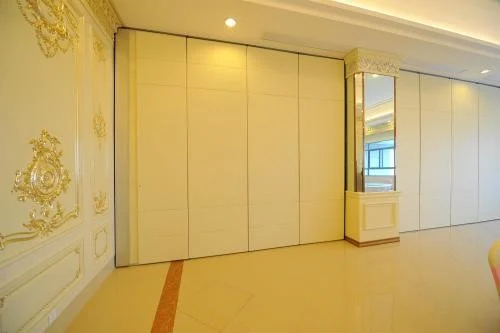
Parking style is customized to the customer layout and project requirements. It may support compact stacking when the coordinated design permits it. That flexibility is useful, but it also means parking cannot be assumed from a generic detail.
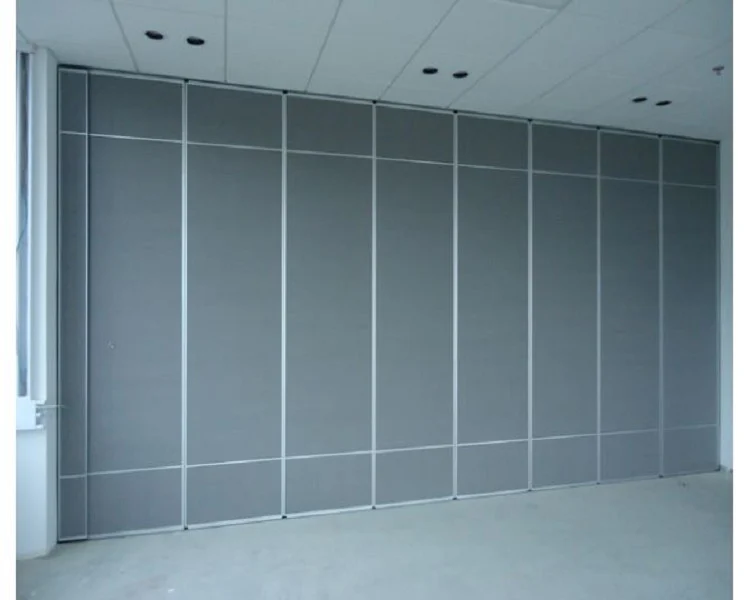
Architects should confirm the stacking position early because it affects adjacent room use, escape routes, service access and finish protection. A parking bay that works on plan may conflict with a door swing or a wall return in practice.
Parking close-out checklist
- Mark the planned stacking position on the layout.
- Check the approach path into that position.
- Confirm what the stacked panels will sit near or against.
- Record any protection or clearance requirement as a project-specific item.
- Note who must confirm the final position before fabrication.
This checklist does not replace engineering review. It simply ensures the question is asked before tender rather than after award.
Finish Selection and Documentation
Review focus: architect coordination partition interface query close-out before tender.
Confirmed finish options include laminate, melamine, fabric, leather, glass and other approved surfaces. Each option carries different coordination implications for edges, joints, cleaning expectations and sample approval.
A finish name in a specification is not the same as an approved sample. Architects should record the finish category, the approval route and any project-specific requirement that affects the interface with adjacent materials.
| Interface item | What to record before tender | Evidence boundary |
|---|---|---|
| Finish category | Approved surface type and sample status | Do not infer cleaning or durability performance from the finish name |
| Edge and joint treatment | Coordination requirement with adjacent finishes | Confirm project-specific detailing |
| Sample approval | Who approves and when | Approval does not confirm acoustic or structural performance |
This table is a coordination aid, not a performance statement. The suitability of each route and parking arrangement depends on the approved layout, circulation, ceiling interfaces and operating sequence.
Acoustic Concepts and Their Limits
Project review term: architect coordination partition interface query close-out before tender.
A rating is meaningful only when the tested assembly, the project condition and the supporting documentation match.
Seals and acoustic concepts can be explained generically, but the actual performance of a partition depends on the complete assembly and the project-specific interface. Architects should avoid writing a performance figure into a tender document unless it is supported by matching evidence for that configuration.
Evidence note
Do not derive hidden acoustic, fire, durability, load or maintenance performance from a visible shape, finish, photograph or drawing. Comparative, absolute and causal statements require corresponding evidence; otherwise state the exact project-specific confirmation boundary.
This boundary protects the design team and keeps tender comparisons meaningful.
Pass Doors, Openings and Adjacent Trades
Coordination scope: architect coordination partition interface query close-out before tender.
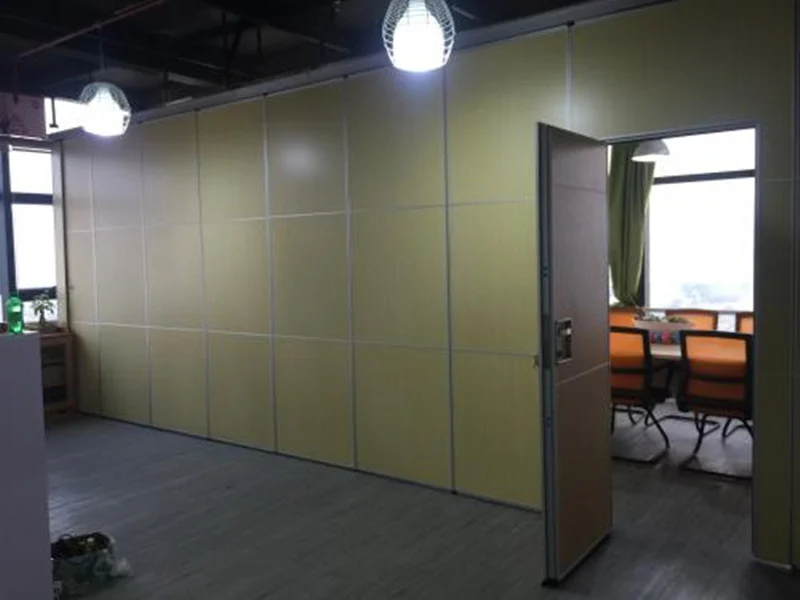
Pass-door requirements and project documentation can be discussed as part of the interface review. A pass door changes the opening sequence and the adjacent wall or frame condition, so it should be resolved before tender.
Adjacent trades matter too. Ceiling grids, lighting, sprinklers, air terminals and wall returns all interact with the overhead route and parking zone. If those interfaces are left to site coordination, the tender package carries hidden risk.
Interface register headings
- Opening and pass-door condition
- Overhead route and support review status
- Parking position and clearance
- Adjacent finishes and sample approval
- Documentation required for fabrication release
An interface register does not need to be complex. It needs to show what is confirmed, what is pending and who owns the next action.
Building the Close-Out Record
The close-out record is the evidence that queries were addressed. It should reference the layout, the route review, the parking position, the finish approval and any project-specific support or acoustic confirmation still required.
Architects should avoid closing a query with an assumption. If a requirement depends on project-specific support, acoustic or dimensional review, say so explicitly. That statement is more useful to a tenderer than a vague performance promise.
Use the movable walls product page for maintained product context and the resources page for planning material. Neither replaces drawing review for a specific project.
Frequently Asked Questions
What is the first interface query to close before tender?
Start with the movement route. Confirm whether the overhead route is continuous across every proposed path and whether turning or stacking geometry is shown on the layout.
Can parking be assumed from a standard detail?
No. Parking style is customized to the customer layout and project requirements. The planned stacking position should be marked and reviewed against adjacent conditions.
Do finish options affect the interface review?
Yes. Laminate, melamine, fabric, leather, glass and other approved surfaces each have coordination implications for edges, joints and sample approval. Record the approved category and approval route.
Can I specify an acoustic rating from a drawing?
No. A rating is meaningful only when the tested assembly and project condition match the supporting documentation.
What should the close-out record contain?
It should reference the layout, route review, parking position, finish approval and any project-specific support, acoustic or dimensional confirmation still required.
When should pass-door requirements be discussed?
Before tender. Pass-door requirements and project documentation can be discussed as part of the interface review so the opening sequence and adjacent conditions are resolved.
Conclusion and Next Step
Closing partition interface queries before tender is a coordination habit, not a performance claim. Review the route, confirm the parking position, document finish approvals and state clearly where project-specific support, acoustic or dimensional confirmation is still required.
If your team is preparing a tender package and needs to discuss pass-door requirements, documentation or layout coordination, contact EBUNGE to review the project-specific items before the package is issued.