
Quick project answer
Review focus: room booking rules.
Panel handling and the operating sequence must be confirmed for the selected layout and project conditions. Booking platforms often treat rooms as instantly available, while changeover policy describes the sequence of moving panels, clearing routes and restoring the layout. For overseas contractors, architects, designers and owners, the gap is rarely a software problem alone. It is a coordination problem that starts with drawings, continues through specification, and ends with a facility team expected to deliver a realistic turnover.
This article uses an evidence-bounded framework. It does not assume hidden performance, measured results or completed projects. Instead, it shows where booking rules and changeover policy must meet, which questions require project-specific confirmation, and how to keep the specification honest.
Why Booking Rules and Changeover Policy Drift Apart
Project review term: room booking rules.
Booking rules are usually written for availability, not for physical movement. A room may be shown as free at 10:00 and booked again at 10:30, but the changeover policy may require panels to travel from a stacking position, cross the opening and settle into a new configuration. If the route is not reviewed, the calendar becomes an aspiration rather than an operating plan.
The mismatch grows when different teams own different documents. Sales or revenue teams set booking intervals. Facilities teams manage changeover. Design teams specify the partition. Contractors install what the drawings show. Unless these groups share one route review, the booking rule can outpace the changeover policy without anyone intending it.
What the mismatch looks like on site
The exact route, junction arrangement, continuous overhead path and parking position must be confirmed from the coordinated project drawings. None of these require a performance claim to be useful. They simply require the layout to be reviewed against the booking pattern.
Start With the Layout, Not the Calendar
Coordination scope: room booking rules.
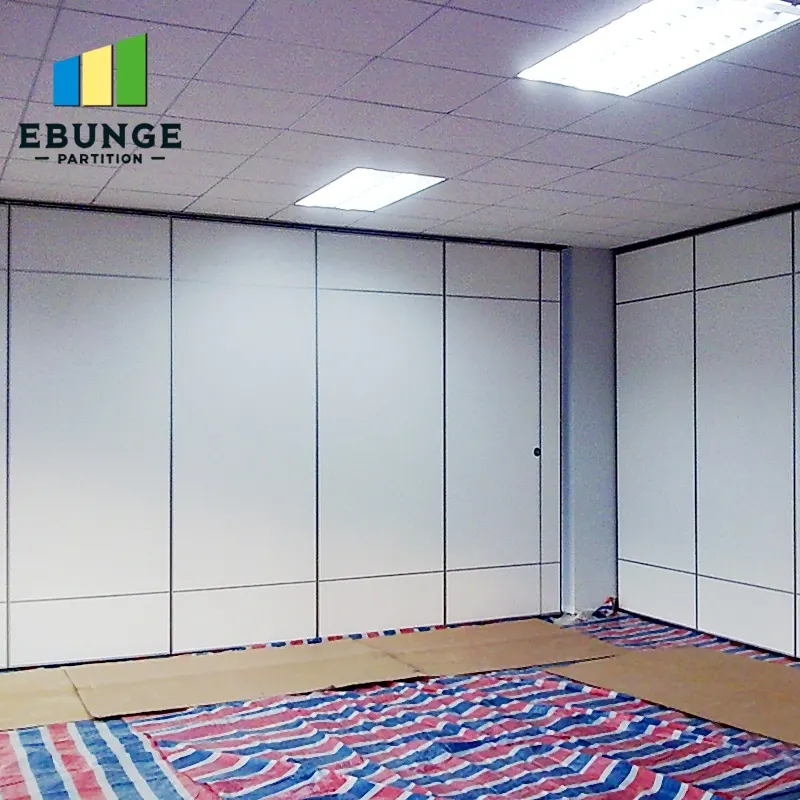
EBUNGE movable wall panels are individually movable, suspended from a top track, cross the opening without a floor track, and park at a planned stacking position. That maintained product context is the right starting point. It tells the project team that the changeover policy depends on a continuous overhead route and a coordinated parking location.
Straight, turning and stacking routes are reviewed from the layout. This means the booking rule should be tested against the drawing before it is published. If the room must be divided into two smaller rooms for part of the day and restored to one large room later, the route review must cover both states.
Questions for the first drawing review
- Where does each panel park when the room is fully open?
- Does the route from parking to the closed position cross any fixed obstruction?
- Are turning points shown, or only the final partition line?
- Does the booking pattern require a pass door in any configuration?
- Which team confirms support and dimensional requirements before specification?
Build a Changeover Policy That Matches the Booking Rule
Checklist focus: room booking rules.
A changeover policy is a written sequence. It should describe how the space moves from one booked state to another, who is responsible, and what must be true before the room is released. The policy does not need to promise a time. It needs to identify the steps that the layout can support.
When the booking rule is tighter than the policy, the project team has three honest options: adjust the booking interval, adjust the layout, or confirm a different operating approach with the responsible parties. Choosing an option without evidence would create a false expectation.
Numbered process for coordination
- Collect the booking pattern for a typical week, including peak changeover periods.
- Overlay that pattern on the partition layout, including straight, turning and stacking routes.
- Mark every point where the route depends on a project-specific support or dimensional confirmation.
- Draft the changeover policy as a sequence, not a promise.
- Review the policy with facilities, design and construction teams before specification is fixed.
- Record open items and confirm them through the project documentation process.
Evidence Boundaries for Acoustic and Dimensional Claims
Review focus: room booking rules.
The suitability of each route and parking arrangement depends on the approved layout, circulation, ceiling interfaces and operating sequence. If acoustic separation matters to the booking pattern, the project team must confirm the requirement with project-specific evidence.
The same boundary applies to dimensions, support and movement. Visible references can support layout discussion but do not verify hidden construction or performance. Confirm project-specific support, acoustic and dimensional requirements with the responsible technical team.
Compact evidence note
| Statement type | What is needed |
|---|---|
| Product movement | Maintained product facts and layout review |
| Acoustic separation | Project-specific acoustic confirmation |
| Support and dimensions | Project-specific drawing review |
| Finish suitability | Approved finish option and project confirmation |
Finish Choices and Pass-Door Requirements
Project review term: room booking rules.
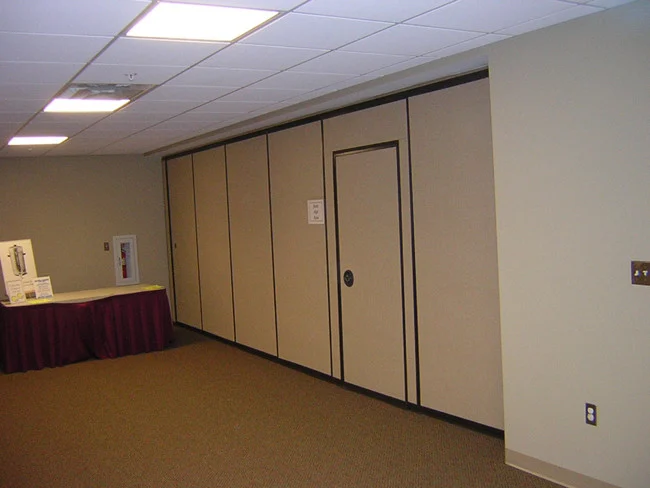
Confirmed finish options include laminate, melamine, fabric, leather, glass and other approved surfaces. Those questions belong to the project-specific confirmation process.
Pass-door requirements and project documentation can be discussed with the EBUNGE team. A pass door may be relevant when the booking pattern requires people to move between divided spaces without reopening the full partition. The need should be identified during layout review, not after the booking rule is published.
Where internal resources help
Project teams can review the movable walls product page for maintained product context and the resources page for planning material. These references support coordination; they do not replace project-specific drawings or technical confirmation.
Specification Language That Reduces Mismatch
Coordination scope: room booking rules.
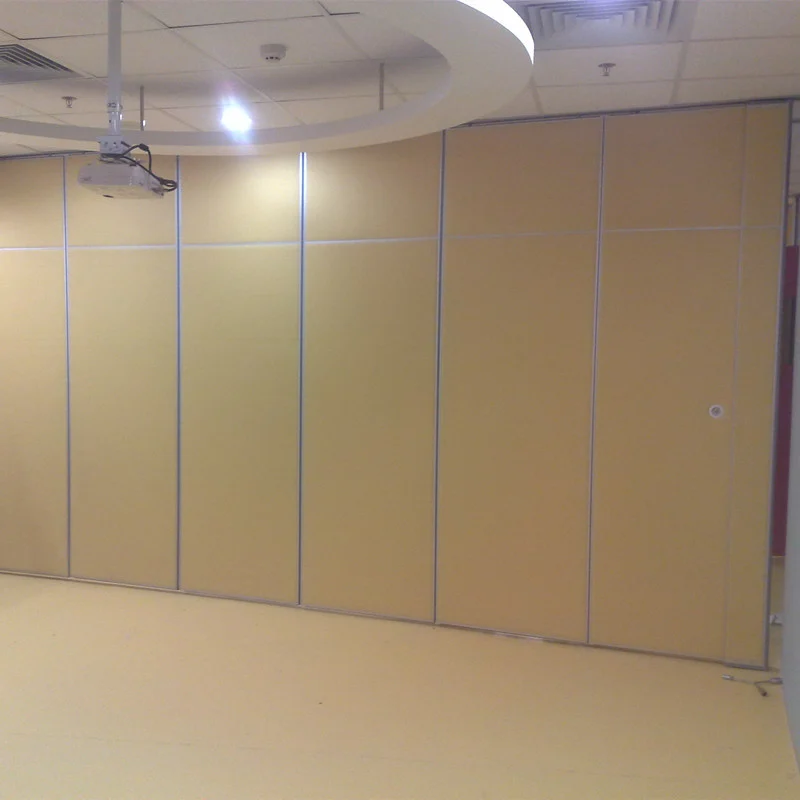
Specification should describe the route, the parking position and the operating sequence without inventing performance. A useful specification clause might state that panels are top-hung and move without a continuous floor running track along the partition line, and that parking style is customized to the layout. It should also state that support, acoustic and dimensional requirements are confirmed per project.
This language keeps the booking rule and the changeover policy in the same conversation. It also gives contractors and distributors a clear boundary: they can plan the visible movement, but they must not promise hidden results.
FAQ: Room Booking Rules and Changeover Policy
What is a room booking rules changeover policy mismatch?
It is the gap between the turnover interval promised by a booking system and the physical changeover sequence the room can support. The mismatch is usually found during layout review, not after installation.
Do movable partitions need a floor track for changeover?
EBUNGE movable wall panels are top-hung and cross the opening without a floor track. The route still requires a continuous connected overhead path and project-specific support review.
Can the booking rule be changed instead of the layout?
Yes. Adjusting the booking interval is one honest option when the changeover policy cannot match it. The decision should involve facilities, design and ownership teams.
How should acoustic requirements be handled?
Acoustic separation must be confirmed with project-specific evidence rather than assumed from a finish or drawing.
When should pass-door requirements be discussed?
Pass-door requirements and project documentation can be discussed during layout review. Early discussion helps the changeover policy reflect how people actually move between booked spaces.
What information should be ready before specification?
Confirm support, acoustic and dimensional requirements with the responsible technical team.
Conclusion: Align the Calendar With the Drawing
Start with the layout, review the routes, write the changeover sequence, and keep every performance claim inside its evidence boundary. This approach protects the project team from false expectations and gives the facility a workable operating plan.
To discuss your project, contact EBUNGE with your layout, booking pattern and open questions. The team can review pass-door requirements, project documentation and the coordination points that need confirmation.