
Quick project answer
Review focus: movable partition tender.
Movable partition tender unit rate inconsistency detection is a review discipline, not a pricing trick. It helps contractors, architects, designers, owners and renovation teams see whether each bidder is pricing the same scope, the same movement routes and the same documentation. Because movable panels are individually movable, suspended from a top track, cross the opening without a floor track and park at a planned stacking position, the priced scope must follow those physical realities. This article offers an evidence-bounded framework. It does not replace project-specific support, acoustic and dimensional confirmation.
Why Unit Rates Drift Apart in the Same Tender
Project review term: movable partition tender.
Unit rates can diverge even when bidders receive identical documents. The cause is usually scope interpretation, not arithmetic. One bidder may price a straight run only; another may include turning and stacking routes reviewed from the layout. One may assume a simple finish; another may carry laminate, melamine, fabric, leather, glass or another approved surface.
Pass-door requirements and project documentation can also be read differently. When these items sit outside the measured unit, the rate comparison becomes misleading. The goal is not to force identical numbers but to expose what each number contains.
A Five-Step Review Process for Tender Comparison
Coordination scope: movable partition tender.
- Normalise the measured item. Confirm what the unit rate covers: panel area, opening, route or package. Write the definition beside each rate.
- Map the movement route. Mark straight, turning and stacking routes on the layout. A route that is not drawn cannot be assumed.
- List finish assumptions. Record which approved surface each bidder priced and whether samples or documentation are referenced.
- Separate pass-door and documentation items. Note whether these are included, excluded or listed as provisional.
- Flag unsupported statements. Remove or qualify any claim that lacks matching project evidence.
This process keeps the review anchored to visible documents. The suitability of each route and parking arrangement depends on the approved layout, circulation, ceiling interfaces and operating sequence.
Scope Variables That Change the Priced Unit
Route geometry and parking position
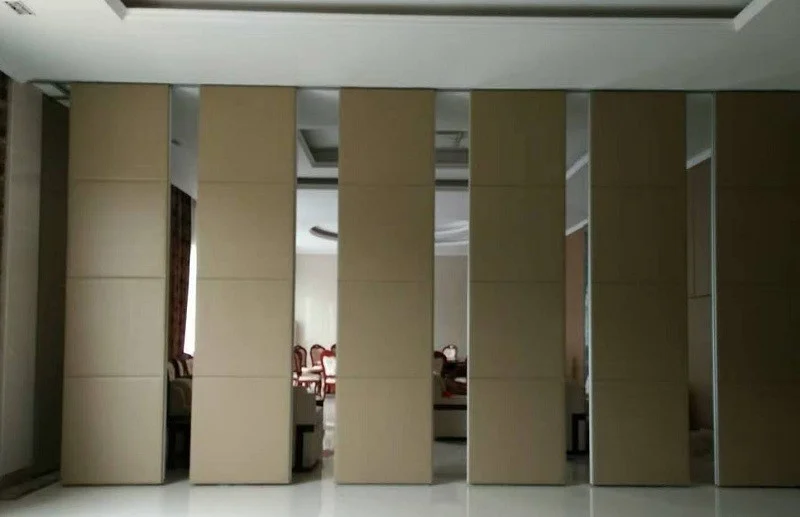
Straight, turning and stacking routes are reviewed from the layout. Parking style is customised to the customer layout and project requirements and may support compact stacking when the coordinated design permits it. If one bidder prices a single straight run and another prices a route with turns and a planned stacking position, their unit rates are not comparable.
Finish and surface selection
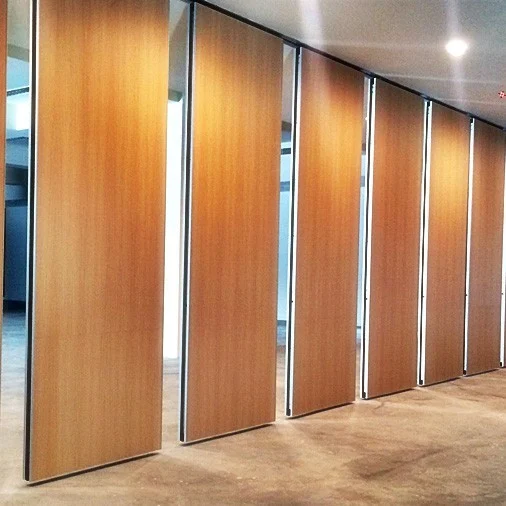
Confirmed finish options include laminate, melamine, fabric, leather, glass and other approved surfaces. Each option carries different sourcing and handling assumptions. A tender that does not state the finish cannot be compared on rate alone.
Pass doors and documentation
Pass-door requirements and project documentation can be discussed with the supplier. Whether these are inside or outside the unit rate is a common source of inconsistency.
Evidence Boundaries When Reading a Rate
Do not infer acoustic, fire, durability, load, maintenance, certification or commercial performance from a visible shape, finish, photograph or drawing. Comparative, absolute and causal statements require corresponding evidence; otherwise state the exact project-specific confirmation boundary.
Where acoustic separation matters, confirm the project-specific requirement with the supplier and the design team.
Visible references can support layout discussion but do not verify hidden construction or performance. The review should stay within what the tender documents actually show.
Comparison Table: What to Check Before Accepting a Rate
| Review item | Question to ask | Evidence to request |
|---|---|---|
| Measured unit | What does the rate cover? | Written scope definition |
| Movement route | Are straight, turning and stacking routes shown? | Marked layout drawing |
| Finish | Which approved surface is priced? | Finish schedule or sample reference |
| Pass doors | Included, excluded or provisional? | Door schedule and notes |
| Documentation | What is issued and when? | Document register |
Use this table as a working sheet. It turns a vague rate comparison into a structured scope comparison.
Coordination Between Procurement and Design Teams
The layout defines the movement route, the parking position and the opening width. Without it, bidders fill gaps with assumptions.
Architects and interior designers can mark the intended routes and stacking zones. Contractors can confirm site conditions and interfaces. Owners and renovation teams can confirm which rooms are examples and which are fixed. Distributors and construction teams can then align their quotations to the same baseline.
Where information is missing, record it as an open item rather than guessing.
Documentation and Clarification Questions
Send the same clarification questions to every bidder. Ask how each rate treats the measured unit, the route, the finish, pass doors and documentation. Ask bidders to state exclusions in writing.
Keep a single document register so responses can be compared. If a bidder cannot support a statement with project-specific evidence, treat that statement as unconfirmed. This is not a rejection; it is a boundary.
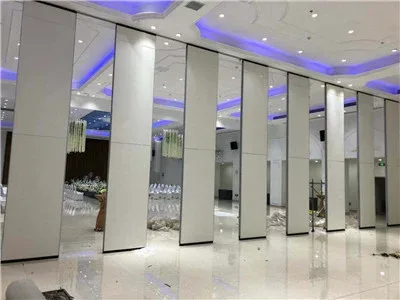
For maintained product context, see the movable walls product page. For broader planning material, see the resources page.
FAQ: Movable Partition Tender Unit Rate Inconsistency Detection
What is movable partition tender unit rate inconsistency detection?
It is the process of comparing tender rates by first confirming that each rate covers the same scope, route, finish and documentation. It exposes differences in assumptions rather than only differences in price.
Why do unit rates differ between bidders for the same tender?
Bidders may interpret the measured unit, movement route, finish selection, pass-door requirements or documentation scope differently. These differences are common and should be clarified in writing.
Can I compare rates without a layout drawing?
Not reliably. Straight, turning and stacking routes are reviewed from the layout. Without a layout, the route and parking position remain assumptions, and the rate comparison loses its baseline.
How should acoustic requirements be handled in the tender?
State the project-specific acoustic requirement and ask the supplier to confirm how it will be addressed.
What should be excluded from a rate comparison?
Keep the comparison to documented scope items.
Who should coordinate the review?
Procurement and Tender Review coordination usually involves the contractor, design team and owner. Each party confirms the information it controls, and open items are recorded rather than assumed.
Conclusion and Next Step
Detecting inconsistent unit rates across a movable partition tender is about aligning scope before comparing numbers. Confirm the measured unit, mark the movement routes, state the finish, separate pass doors and documentation, and record every assumption.
Every project still requires confirmation of support, acoustic and dimensional requirements. To discuss your layout, pass-door needs and project documentation, contact the EBUNGE team.