
Quick project answer
Review focus: corridor bend circulation review.
A stacking pocket corridor bend circulation review belongs early in layout development, not after finishes are chosen. When a parking position lands near a turn, the review connects three things: how panels travel, how people move, and what the drawings actually prove. EBUNGE movable wall panels are individually movable, suspended from a top track, cross the opening without a floor track, and park at a planned stacking position. That maintained fact set is the starting point; everything else must be confirmed against your own project drawings, support conditions and dimensional requirements.
Why a Corridor Bend Changes the Review
Project review term: corridor bend circulation review.
A straight run gives the eye one clear line. A bend introduces a second direction, and that is where coordination gaps appear. The stacking pocket corridor bend circulation review asks whether the overhead route stays continuous and connected through the turn, whether the parked panels sit where the layout intends, and whether the corridor still reads clearly to someone walking it for the first time.
None of those questions can be answered from a finish sample or a photograph. They are drawing questions. Treat the review as a coordination exercise, not a product selection exercise.
Route Logic: Straight, Turning and Stacking
Coordination scope: corridor bend circulation review.
Straight, turning and stacking routes are reviewed from the layout. That means the review should follow the same sequence the panels would follow, from the closed position to the parked position.
Straight travel
Confirm the overhead route is continuous and connected along the full travel path. The exact route, junction arrangement, continuous overhead path and parking position must be confirmed from the coordinated project drawings.
Turning travel
At a bend, the route changes direction. The review should show how the turn is supported and how the panel path relates to the corridor envelope. Project-specific support review is required; do not infer capacity from a drawing symbol.
Stacking position
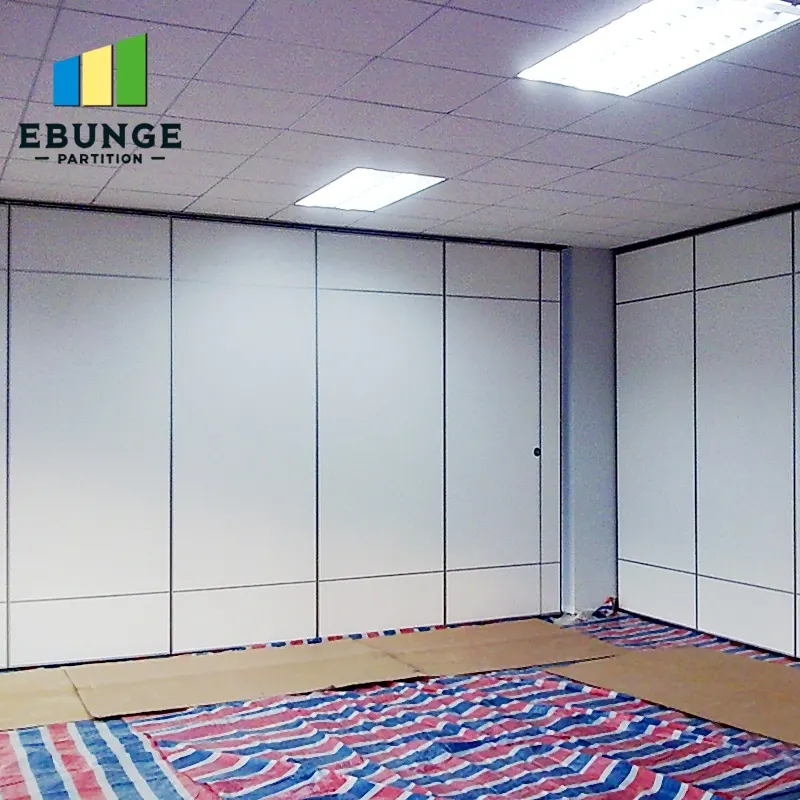
Parking style is customized to the customer layout and project requirements and may support compact stacking when the coordinated design permits it. The pocket location, approach angle and surrounding clearances all belong in the same review.
A Drawing Review Checklist for the Bend
Use this checklist to keep the conversation evidence-based. It is a coordination aid, not a substitute for project-specific engineering.
- Mark the closed position, the open position and the planned stacking position on the same plan.
- Trace the overhead route through the bend and confirm it is shown as continuous and connected.
- Show the corridor envelope at the bend, including any change in width or ceiling condition.
- Identify who is responsible for support review and record the confirmation boundary.
- Note pass-door requirements, if any, and where they sit relative to the bend.
- List the finish options under consideration so they can be checked against the approved surface list.
- Record open questions rather than filling them with assumptions.
Accessibility and Circulation Review Coordination
Accessibility and Circulation Review coordination is about keeping the panel route and the people route legible together. A bend is a decision point for a building user: continue, turn, or pause. If the stacking pocket sits there, the review should confirm the corridor still communicates that choice clearly.
This is also where project teams tend to overreach. Visible references can support layout discussion but do not verify hidden construction or performance. Those require matching evidence. Where evidence is not yet available, state the confirmation boundary plainly and keep the item open.
Finish Options and What They Do Not Prove
Confirmed finish options include laminate, melamine, fabric, leather, glass and other approved surfaces. Finish selection matters to the visual result and to how the pocket reads against the corridor. The suitability of each route and parking arrangement depends on the approved layout, circulation, ceiling interfaces and operating sequence.
If acoustic separation is part of the brief, discuss it conceptually. Acoustic requirements must be confirmed for the specific project.
Evidence Boundaries Before You Specify
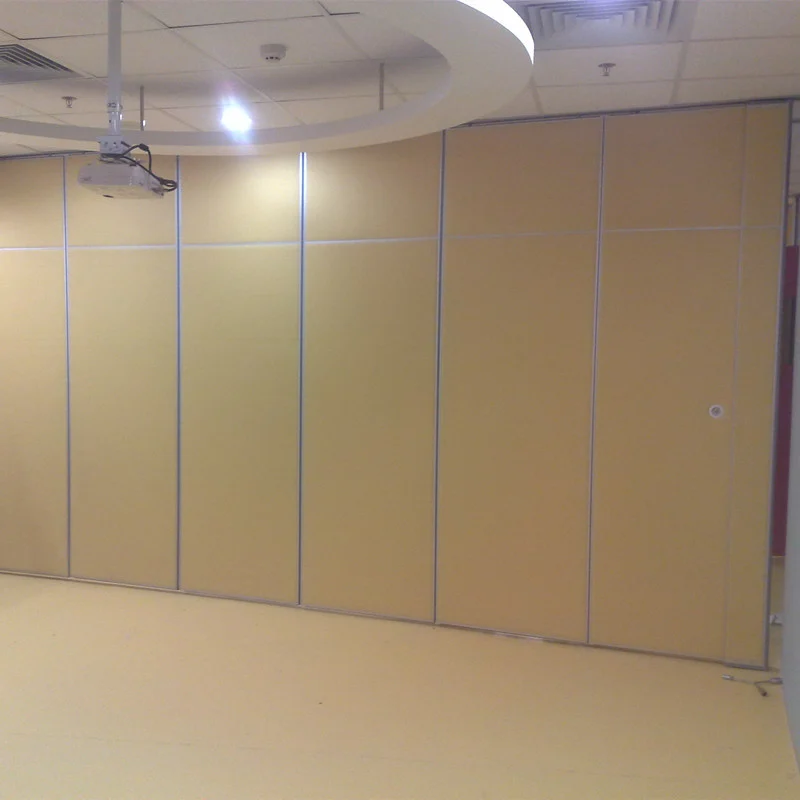
Visible shape, finish, photograph or drawing is not evidence of hidden acoustic, fire, durability, load, maintenance, certification or commercial performance. Comparative, absolute and causal statements require corresponding evidence; otherwise remove them or state the exact project-specific confirmation boundary.
This boundary protects everyone. It keeps the specification honest, and it prevents a coordination drawing from being read as a performance guarantee. When a claim cannot be supported, the correct move is to name the confirmation required and who will provide it.
Questions to Resolve With the Project Team
- Is the overhead route shown as continuous and connected through the bend?
- Has the planned stacking position been reviewed against the corridor envelope?
- Who confirms support conditions, and at what stage?
- Are pass-door requirements defined, and do they affect the bend?
- Which finishes are approved for this project, and who confirms them?
- What documentation is required for the submission package?
Pass-door requirements and project documentation can be discussed with the EBUNGE team. Bring the layout, the route logic and the open questions; that is enough to start a productive review.
FAQ: Stacking Pocket Corridor Bend Circulation Review
What is a stacking pocket corridor bend circulation review?
It is a drawing-based coordination review that checks how top-hung movable panels travel from the closed position to a planned stacking position when that parking location sits near a corridor turn. It covers route continuity, the corridor envelope and the confirmation boundaries that still need project-specific evidence.
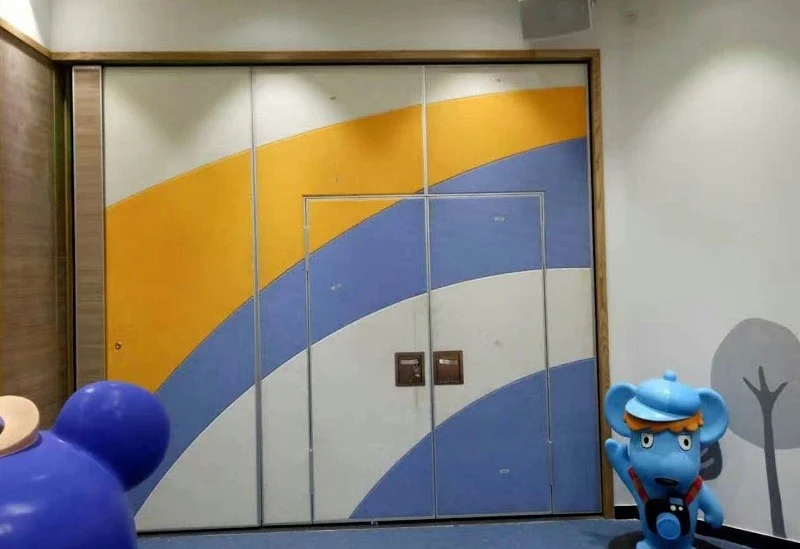
Do movable partitions need a floor track along the partition line?
No. EBUNGE movable wall panels are top-hung and move without a continuous floor running track or floor hardware along the partition line.
Can panels travel across a gap in the overhead route?
No. Every proposed movement path requires a continuous connected overhead route and project-specific support review. A break in the route is a design issue to resolve before the layout is finalized.
Does the finish choice affect acoustic performance?
Finish selection is a visual and surface decision. Confirmed finish options include laminate, melamine, fabric, leather, glass and other approved surfaces.
How should STC or Rw be used in the specification?
Confirm the acoustic requirement for your project with the appropriate evidence.
What should we send for an initial review?
Send the layout showing the closed position, the open position and the planned stacking position, plus any notes on pass-door requirements and required project documentation. The team can then discuss the route logic and the confirmations your project still needs.
Conclusion and Next Step
A stacking pocket corridor bend circulation review is most useful when it stays close to maintained facts and visible evidence. Confirm the overhead route is continuous and connected, review the straight, turning and stacking paths from the layout, and keep unsupported performance claims out of the specification. Where acoustic, support or dimensional questions remain, name the confirmation boundary and resolve it with the project team.
To discuss your layout, pass-door requirements or project documentation, contact the EBUNGE team. You can also review the movable wall product range and browse the project planning resources before the next coordination meeting.