
Quick answer: tender returnable schedule completeness
Review focus: tender returnable schedule.
Partition tender returnable schedule completeness verification is the discipline of confirming, before bids are opened, that every required returnable item is present, internally consistent and traceable to a drawing, a confirmed product fact or an explicit project-specific confirmation boundary. For overseas contractors, architects, interior designers, owners and renovation teams, this check protects the evaluation stage from avoidable clarification cycles. It does not replace technical review; it makes that review possible on a level basis.
Why Completeness Is a Pre-Bid Discipline, Not a Post-Bid Cleanup
Project review term: tender returnable schedule.
A returnable schedule is the tender’s evidence request list. If items are missing, bidders either guess or qualify. Both outcomes weaken comparability. Reviewers should treat completeness as a gate that runs before opening, using the same schedule structure for every bidder.
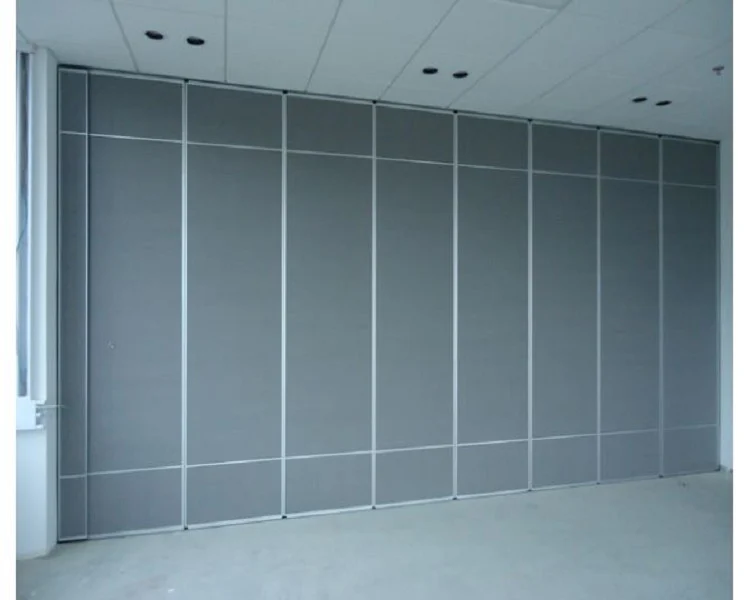
Movable partition scope adds a specific dimension: panels are individually movable, suspended from a top track, cross the opening without a floor track and park at a planned stacking position. Straight, turning and stacking routes are reviewed from the layout. If the schedule does not ask for those routes, the tender cannot be evaluated consistently.
Map Every Schedule Line to a Drawing or a Confirmed Fact
Coordination scope: tender returnable schedule.
Start by building a two-column working list: schedule item on the left, evidence source on the right. Acceptable sources are limited. They include the project drawing set, the specification, a confirmed EBUNGE product fact, or a written statement that the item requires project-specific confirmation.
Anything else is an assumption. Assumptions are the main cause of incomplete returnable schedules, because they feel resolved while remaining unverified.
Evidence note: what a reviewer can and cannot infer
Visible shapes, finishes and photographs do not prove acoustic, fire, durability, load, maintenance or commercial performance. Comparative or absolute statements require matching evidence; otherwise the schedule should state the exact project-specific confirmation boundary.
A Six-Step Verification Sequence Before Bid Opening

Checklist focus: tender returnable schedule.
- Confirm the schedule version. Check that the returnable list matches the latest addenda and drawing issue.
- Check scope coverage. Verify that every partition line, opening and stacking position in the layout has a corresponding schedule entry.
- Check route coverage. Confirm the schedule asks for straight, turning and stacking routes where the layout shows them.
- Check finish coverage. Confirm the schedule names the required finish category, such as laminate, melamine, fabric, leather, glass or another approved surface.
- Check pass-door and documentation items. Confirm whether pass-door requirements and project documentation are requested as returnables.
- Check confirmation boundaries. Confirm the schedule states which items require project-specific support, acoustic and dimensional confirmation.
Build a Decision Checklist Reviewers Can Apply Consistently
A checklist keeps reviewers aligned when multiple packages are assessed in parallel. It also creates a defensible record of what was requested before opening.
- Does each schedule item have a named evidence source?
- Are top-track and clear-floor conditions described without implying an untracked gap?
- Are parking and stacking positions shown on the layout rather than described only in text?
- Are finish categories listed without implying cleaning, structural or acoustic performance?
- Are pass-door requirements stated as a returnable item where relevant?
- Are project-specific support, acoustic and dimensional confirmations explicitly requested?
- Is the schedule free of unsupported performance, engineering or commercial conclusions?
Handle Acoustic and Dimensional Items Without Overclaiming
The suitability of each route and parking arrangement depends on the approved layout, circulation, ceiling interfaces and operating sequence. Reviewers should ask bidders to state the basis of any acoustic statement and to identify what still requires project-specific confirmation.
Dimensional items follow the same logic. Opening width, height, route geometry and stacking space interact. The schedule should request the information needed to review those interactions without demanding conclusions the drawings cannot yet support.
Compact comparison: weak versus stronger schedule wording
| Weak wording | Stronger wording |
|---|---|
| “Provide acoustic partition.” | “State acoustic basis and identify project-specific confirmation required.” |
| “Panels move as needed.” | “Describe straight, turning and stacking routes shown on the layout.” |
| “Finish to match interior.” | “Confirm finish category from approved options.” |
| “Include all accessories.” | “List returnable items and pass-door requirements.” |
Coordinate Procurement and Tender Review Across Disciplines
Completeness is a shared responsibility. Procurement reviewers own the schedule structure; architects and designers own drawing consistency; contractors own buildability questions; owners own acceptance criteria. A short coordination pass before opening prevents each group from assuming another has checked an item.

For product context, reviewers can refer to the movable wall systems page and the project resources library. These support general planning; they do not replace project-specific confirmation.
Frequently Asked Questions
What does partition tender returnable schedule completeness verification actually check?
It checks that every required returnable item is present, traceable to a drawing, a confirmed product fact or a stated confirmation boundary, and free of unsupported conclusions.
When should the completeness check happen?
Before bid opening. Running it earlier keeps the evaluation stage focused on comparable submissions rather than missing information.
Can reviewers infer acoustic performance from a finish or drawing?
No. Visible references can support layout discussion but do not verify hidden construction or performance. Acoustic statements require matching project-specific evidence.
How should routes and stacking be described in the schedule?
The schedule should ask bidders to describe straight, turning and stacking routes as shown on the layout, with a continuous connected overhead route and project-specific support review.
What finish categories can be requested?
Confirmed options include laminate, melamine, fabric, leather, glass and other approved surfaces. The schedule should name the category without implying performance.
Where do pass-door requirements fit?
Pass-door requirements and project documentation can be discussed and should be listed as returnable items where the project needs them.
Conclusion and Next Step
To discuss project-specific support, acoustic and dimensional requirements, contact the EBUNGE team with your layout and schedule questions.