
Quick project answer
Review focus: bid clarification log.
A partition tender bid clarification log award survival strategy depends on one discipline: every question, answer, and assumption must be traceable from pre-bid to final award. For overseas contractors, architects, and owners evaluating movable walls, the clarification log is not a formality. It is the record that prevents post-award disputes about scope, interfaces, and evidence. This guide explains how to structure that log so it remains useful after the contract is signed.
Why a Clarification Log Matters for Movable Partition Tenders
Project review term: bid clarification log.
Movable partition panels are individually movable, suspended from a top track, cross the opening without a floor track, and park at a planned stacking position. Those facts create coordination questions that a generic tender log often misses. A clarification log captures the answers while they are still negotiable.
Without a maintained log, bidders may price different assumptions about track support, stacking space, or finish compatibility. After award, those differences become change orders or disputes. The log is the single source of truth for what was asked, what was answered, and what remains open.
Core Fields Every Clarification Entry Should Carry
Coordination scope: bid clarification log.
A useful log entry is more than a question and an answer. It needs an owner, a date, a status, and a link to the drawing or specification it affects. This structure lets you filter open items before award and defend closed items afterward.
- Clarification ID: a unique reference used in addenda and meeting minutes.
- Raised by: the party who submitted the question.
- Topic area: track, stacking, finish, pass-door, documentation, or interface.
- Question as asked: the exact wording, not a paraphrase.
- Answer and source: who answered and which document supports it.
- Status: open, answered, superseded, or closed.
- Linked drawing or specification: the exact revision affected.

How to Run the Log Through the Tender Period
Checklist focus: bid clarification log.
The log should start before bids are issued and continue through evaluation. Each stage has a different purpose, and mixing them creates confusion.
Pre-bid: define the evidence boundary
Before bidders respond, state what evidence will be required for each claim. The suitability of each route and parking arrangement depends on the approved layout, circulation, ceiling interfaces and operating sequence.
Mid-tender: log every question consistently
The exact route, junction arrangement, continuous overhead path and parking position must be confirmed from the coordinated project drawings. If the answer depends on the layout, say so. Straight, turning, and stacking routes are reviewed from the layout, and every proposed movement path requires a continuous connected overhead route and project-specific support review.
Evaluation: close or escalate open items
Before award, every open item should be either closed with a documented answer or escalated as a commercial or technical risk. An open item that survives award without resolution becomes an assumption, and assumptions are expensive.
Decision Checklist Before You Award
Use this checklist to confirm the log is complete enough to survive award.
- Every bidder question has a unique ID and a linked drawing revision.
- All answers cite a document, a drawing, or a written confirmation.
- Open items are listed with an owner and a deadline.
- Finish options are confirmed against the approved schedule.
- Pass-door requirements are documented if applicable.
- Project documentation requirements are listed for post-award submission.
- Acoustic and dimensional requirements are marked for project-specific confirmation.
Common Failure Points That Break a Log After Award
Most logs fail for predictable reasons. Recognizing them early keeps the record defensible.
Verbal answers that never reach the log
If an answer was given in a meeting but not written into the log, it effectively does not exist. Require that any verbal clarification be confirmed in writing before it is treated as binding.

Drawing revisions that outpace the log
When drawings are revised, the log must reference the new revision. An answer tied to an obsolete drawing can mislead the project team after award.
Unsupported performance assumptions
Visible references can support layout discussion but do not verify hidden construction or performance. Comparative and absolute statements require corresponding evidence. If evidence is missing, the log should state the exact project-specific confirmation boundary.
Evidence Note: What the Log Should and Should Not Claim
The clarification log records questions, answers, and document references. Those items require project-specific support, acoustic, and dimensional confirmation from the responsible parties.
Confirmed finish options include laminate, melamine, fabric, leather, glass, and other approved surfaces. Treat them as selections to be confirmed against the project specification.
FAQ: Partition Tender Bid Clarification Log Award Survival
What is a bid clarification log in a partition tender?
It is a structured record of every question, answer, and assumption raised during the tender period. It links each item to a drawing or specification revision so the project team can trace decisions after award.
How does the log support movable partition coordination?
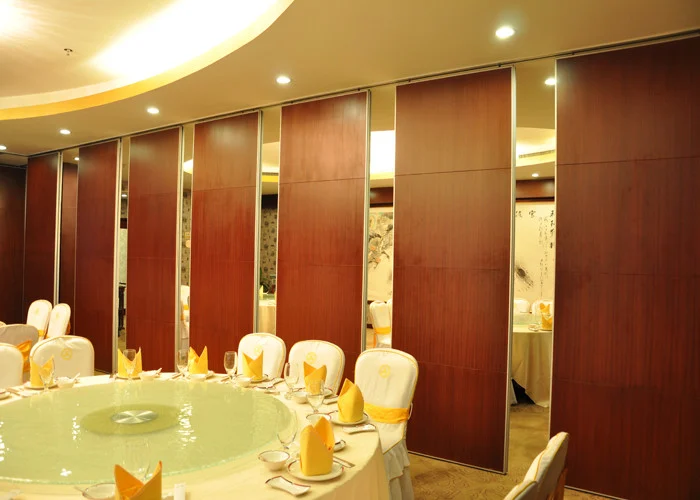
Movable partitions are top-hung and cross the opening without a floor track. The log captures coordination questions about track support, stacking positions, and movement routes before they become post-award changes.
Should acoustic performance be recorded in the log?
Record the question and the required evidence, but do not treat a finish sample or a generic statement as proof.
How do we handle open items at award?
Open items should be listed with an owner, a deadline, and a clear statement of what remains unconfirmed. If an item cannot be closed, it should be escalated as a risk rather than left as an assumption.
Can the log include finish and pass-door selections?
Yes. Confirmed finish options include laminate, melamine, fabric, leather, glass, and other approved surfaces. Pass-door requirements and project documentation can be discussed and recorded as project-specific items.
Who should own the clarification log?
The owner or lead consultant should own the log, with input from the contractor, architect, and suppliers. A single owner prevents duplicate entries and ensures every answer is traceable.
Conclusion: Keep the Log Alive After Award
A clarification log that survives award is not the one with the most entries. It is the one where every entry is traceable, every open item is visible, and every performance claim has a stated evidence boundary. For movable partition projects, that means confirming support, acoustic, and dimensional requirements with the responsible parties before work proceeds.
To discuss project-specific requirements, review the movable walls product page, explore technical resources, or contact EBUNGE to coordinate documentation and clarification for your next tender.